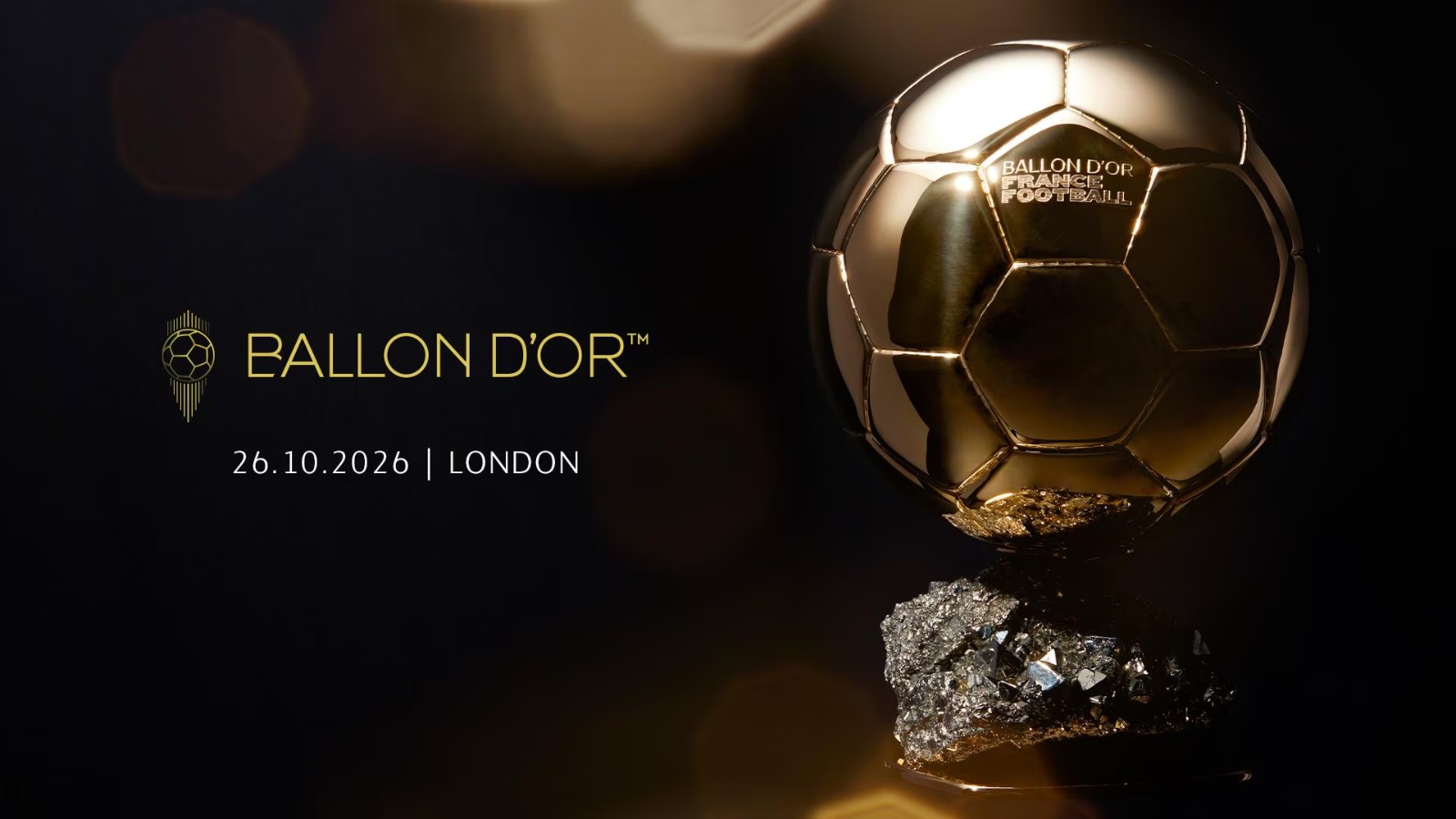
The battle for world football’s most coveted individual honour reaches its climax on Monday night as French superstar Kylian Mbappé, Barcelona sensation Lamine Yamal, England captain Harry Kane and Bayern Munich’s Michael Olise headline a formidable field of contenders for the 2026 Ballon d’Or.
In what promises to be a glamorous evening of suspense, celebration and footballing history, the world’s leading players will gather at London’s iconic Palladium Theatre for the 70th edition of the prestigious awards, with the identity of the men’s winner remaining officially undisclosed ahead of the ceremony.
The event, scheduled to begin at 8pm London time, equivalent to 9pm in Nigeria, will mark the first time the Ballon d’Or ceremony has been staged in the British capital, breaking with its longstanding association with Paris.
The historic relocation commemorates English football legend Sir Stanley Matthews, who became the inaugural recipient of the award in 1956.
Organised by France Football in partnership with UEFA, the ceremony will celebrate outstanding performances across men’s and women’s football, with individual brilliance, team achievements and sporting excellence taking centre stage.
Mbappé, Yamal, Kane Lead Star-Studded Contest
Among the leading names attracting attention is Real Madrid forward Kylian Mbappé, whose attacking brilliance and international reputation have made him one of the most recognisable footballers of his generation.
The French captain faces competition from teenage Barcelona sensation Lamine Yamal, whose emergence among football’s elite has marked him out as one of the sport’s most exciting young talents.
England striker Harry Kane also enters the spotlight following his exploits with Bayern Munich, alongside club teammate Michael Olise, whose creativity and attacking performances have earned him a place among the nominees.
The contest also features defending champion Ousmane Dembélé, who claimed the men’s Ballon d’Or in 2025.
Other prominent nominees include Manchester City striker Erling Haaland, Paris Saint-Germain midfielder Vitinha, Real Madrid forward Vinícius Júnior and Georgian international Khvicha Kvaratskhelia.
With an array of established superstars and emerging talents on the 30-man shortlist, the awards will recognise performances during a period that included major domestic competitions, continental tournaments and the 2026 FIFA World Cup.
The breadth of the shortlist reflects the competition among players from Europe’s leading clubs and beyond.
However, Victor Osimhen and Ademola Lookman, two of Nigeria’s most prominent attacking talents, were omitted from the shortlist announced in September.
Their exclusion means Nigeria will have no representative competing for the men’s top individual prize at this year’s ceremony.
The development contrasts with recent years when Nigerian footballers featured prominently in discussions surrounding major international individual honours.
Nevertheless, African interest remains represented through other nominees, including Senegalese forward Sadio Mané, whose name appears among the candidates.
The absence of Nigerian players has also renewed attention to the demanding standards required to secure recognition among the world’s leading footballers.
Historic London Ceremony Marks 70 Years
The choice of London as host city adds historical significance to this year’s celebration.
Since its establishment in 1956, the Ballon d’Or has evolved into one of football’s most recognised symbols of individual achievement, honouring generations of players whose performances have shaped the game.
Sir Stanley Matthews, the legendary English winger, won the inaugural award seven decades ago, making London a symbolic destination for the anniversary edition.
UEFA and France Football said the decision to stage the ceremony in England reflects both the award’s origins and its expanding international profile.
The ceremony will be hosted by former Arsenal and France striker Thierry Henry alongside renowned sports broadcaster Kate Scott.
Beyond the men’s prize, organisers will recognise excellence in women’s football, goalkeeping, youth development, coaching and club performances.
Barcelona and Spain midfielder Aitana Bonmatí, who won the women’s Ballon d’Or in 2025, is among the major names associated with this year’s women’s contest.
The event will also feature the Sócrates Award, which celebrates football personalities involved in initiatives promoting social responsibility and positive change.
How World’s Best Player Will Be Decided
Unlike awards determined through public voting, the Ballon d’Or is decided by an international panel of specialist football journalists.
Under the official regulations, the men’s award will be determined by journalists representing the top 100 countries in the FIFA world rankings, while the women’s award will involve representatives from the top 50 countries.
Each juror will select 10 players from the shortlist of 30, ranking them according to their assessment of individual performances, collective achievements and other established criteria.
The voting system allocates points as follows:
| Position |
Points |
| First |
15 |
| Second |
12 |
| Third |
10 |
| Fourth |
8 |
| Fifth |
7 |
| Sixth |
5 |
| Seventh |
4 |
| Eighth |
3 |
| Ninth |
2 |
| Tenth |
1 |
The nominee with the highest cumulative total will be declared the winner.
Where two or more players finish with identical points, the number of first-place votes will serve as the initial tiebreaker, followed by second-place votes and subsequent positions if necessary.
The procedure is designed to produce a collective judgment from football journalists across different countries and footballing cultures
Ahead of the ceremony, organisers have promised extensive coverage, including arrivals, behind-the-scenes developments, interviews and announcements as the awards unfold.
The official Ballon d’Or platform is expected to begin its live coverage at 4pm London time, ahead of the evening’s main proceedings.
Fans around the world will be watching to discover whether Dembélé can retain the crown or whether another leading contender will secure the trophy.
For Yamal, the evening represents another significant milestone in a remarkable young career. For Mbappé, Kane and Olise, it offers the prospect of recognition at the highest level of individual football achievement.
Yet, despite the widespread speculation surrounding the leading nominees, the final outcome will be determined by the independent voting process rather than pre-ceremony predictions.
As the world’s football elite assemble beneath the lights of London, one of the game’s most enduring debates is set for another defining chapter. Amid the glamour, anticipation and fierce competition, only one player will emerge with the golden trophy, joining the distinguished roll of football legends whose names have become inseparable from the history of the Ballon d’Or.