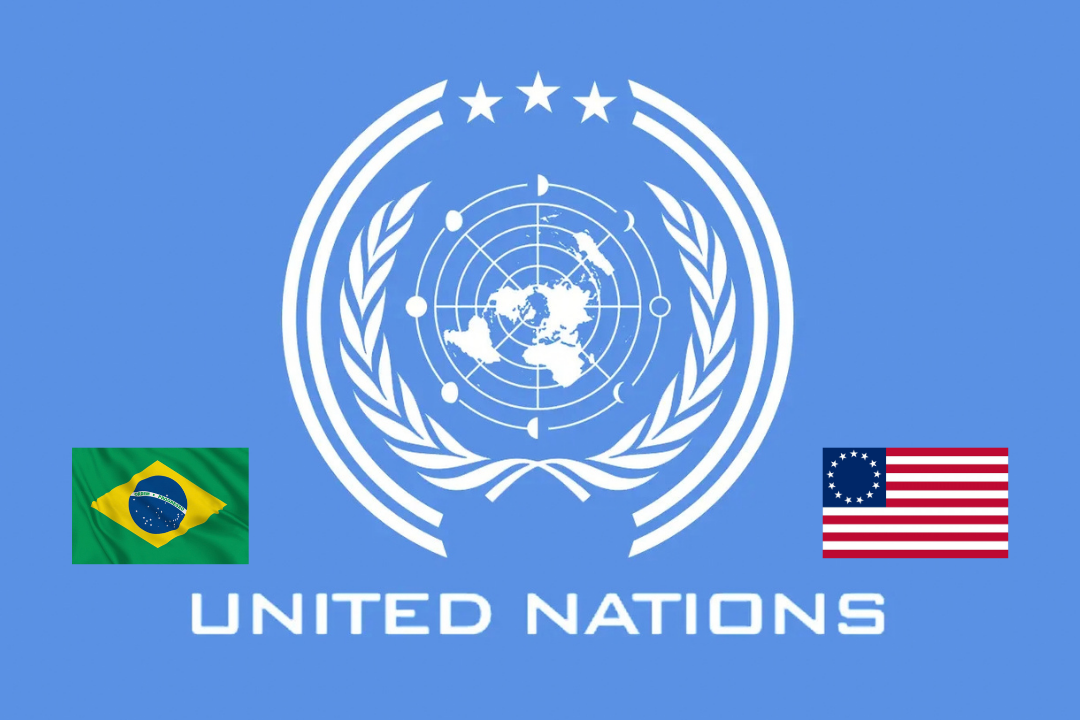
Brazil opens the United Nations General Assembly General Debate every September, followed immediately by the United States as the host country.
Neither the Charter of the United Nations nor the official UNGA Rules of Procedure contains a single clause mandating this order.
The arrangement survives entirely on institutional habit. It began as an ad-hoc fix during the earliest gatherings of the world body in the late 1940s, before the UN Secretariat formalized it as permanent convention at the 10th General Assembly session in 1955.
The Cold War Impasse That Handed Brazil the Podium
In the shadow of the 1945 San Francisco Conference, the opening hours of the General Assembly were paralyzed by mutual suspicion between Washington and Moscow.
Neither superpower would allow the other the symbolic triumph of setting the global agenda from the rostrum. Mid-sized and non-aligned delegations ducked the opening slot entirely, terrified that taking the floor first would force them to take sides in a hardening Cold War divide.
Brazilian diplomat Oswaldo Aranha broke the deadlock.
Presiding over the First Special Session of the General Assembly in 1947, Aranha stepped up to the microphone when other capitals hesitated. Brazil kept volunteering in subsequent sessions, creating a practical precedent that the UN Secretariat simply codified by 1955 to avoid annual diplomatic skirmishes. Although we still had some speeches that shook the assembly in recent times.
Diplomatic historians also treat the permanent speaking slot as an unspoken consolation prize. Latin American states had lobbied hard to secure Brazil a permanent, veto-wielding seat on the UN Security Council alongside the victorious Allied powers, a bid the major powers quietly killed.
The Host Nation Privilege and the Precedence Matrix
The United States claims the second podium appearance under a host nation courtesy extended to the head of state providing the physical stage in New York.
Every American president uses this slot to counter the global themes raised by Brazil and lay down Washington’s foreign policy doctrines before an assembly of more than 140 heads of state.
Beyond these first two slots, the UN Department for General Assembly and Conference Management establishes the roster through a strict precedence hierarchy:
| Protocol Tier / Variable |
Procedural Status |
Operational Enforcement |
| First Speaker |
Permanent Convention (Since 1955) |
Brazil opens the plenary |
| Second Speaker |
Host Nation Courtesy |
United States of America |
| Tier 1 Official Rank |
Primary Precedence |
Sitting Heads of State (Presidents, Monarchs) |
| Tier 2 Official Rank |
Secondary Precedence |
Heads of Government (Prime Ministers) |
| Tier 3 Official Rank |
Subordinate Order |
Foreign Ministers and Cabinet Envoys |
| Tier 4 Official Rank |
Closing Plenary Order |
Permanent Representatives and Ambassadors |
| Regional Rotation |
Geographic Parity |
Balance maintained across Africa, Asia, Americas, Europe |
| Request Timing |
Administrative Log |
Exact date and time formal request was logged |
Rank dictates position. A sitting head of state automatically bumps a prime minister down the order, while prime ministers take precedence over foreign ministers and permanent ambassadors.
If a government downgrades its delegation at the last minute—substituting a cabinet minister for an absent president—that country loses its prime-time morning slot and drops down the order, regardless of its economic weight or military posture.
The UN’s voluntary 15-minute speaking cap is treated as an empty suggestion.
A small light flashes on the rostrum when a leader exceeds the limit, but protocol officers rarely cut a head of state’s audio. The resulting overruns stretch the debate late into the night, though modern speeches rarely approach Fidel Castro’s 1960 record of four and a half hours, or Muammar Gaddafi’s 96-minute address in 2009.
Corridor Bargaining on the Neutral Soil of Manhattan
The speeches delivered beneath the gold emblem and green marble backdrop are mostly theatre for domestic audiences back home.
The real utility of High-Level Week plays out in the quiet bilateral rooms, midtown hotel suites, and delegate lounges off First Avenue, where foreign ministers and security chiefs conduct backchannel negotiations away from television cameras.
The presence of rival governments on neutral, extraterritorial ground in New York allows for contacts that would trigger political backlash if held in home capitals.
Critical backchannel talks—from quiet negotiations between Western and Middle Eastern envoys to grain transit agreements and sovereign debt workouts—are thrashed out in these rooms while formal speeches run in the background on plenary monitors.
Because entry and protection in New York are guaranteed under the 1947 UN Headquarters Agreement, the annual September gathering remains the only recurring diplomatic arena that forces adversaries into the same building.
Television broadcasts focus on the rhetoric from Brazil and the United States, but the actual political business of High-Level Week happens in the corridors, long after both opening speakers have left the building.