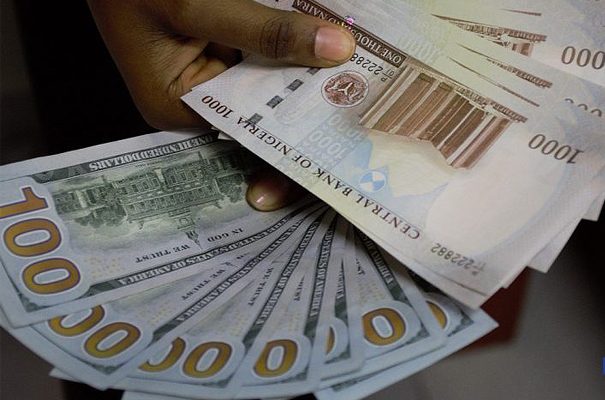
Nigeria’s gross foreign exchange reserves have crossed the $54 billion threshold, marking an unprecedented liquidity high engineered through aggressive central bank orthodox tightening, foreign portfolio inflows, and stabilized domestic crude production.
This dramatic reserve accretion provides the Central Bank of Nigeria (CBN) with sufficient import cover to defend the naira and meet short-term multilateral debt obligations.
However, the longevity of this reserve expansion hinges heavily on the composition of these inflows, which remain exposed to the volatility of global crude prices, hot-money portfolio flows, and outstanding forward contract obligations.
Dissecting the Surge: Core Drivers of Reserve Accretion
The primary catalyst behind the reserve expansion is the CBN’s decisive pivot toward orthodox monetary policy, particularly elevated benchmark interest rates that have revived foreign investor interest.
By sustaining high yields on short-term sovereign instruments, specifically Open Market Operations (OMO) bills and Nigerian Treasury Bills, the apex bank successfully attracted billions of dollars in foreign portfolio investments.
International asset managers seeking competitive real returns across emerging markets have channeled capital back into the Nigerian Autonomous Foreign Exchange Market (NAFEM), drastically boosting autonomous dollar liquidity.
Crude oil revenue recovery has also played an indispensable role in rebuilding the nation’s external buffers.
Improved security coordination across the Niger Delta corridors curbed systemic pipeline tapping, allowing national crude oil and condensate output to sustain levels above 1.6 million barrels per day.
This production stability, combined with relatively firm global energy benchmarks and improved remittances from the Nigerian National Petroleum Company Limited, supplied consistent sovereign foreign currency receipts that outpaced routine public-sector debt servicing.
A third structural pillar has been the systematic clearing of verified foreign exchange backlogs owed to airlines, foreign manufacturers, and commercial banks.
By liquidating legacy swap positions and unblocking stalled dollar repatriation channels, the monetary authority rebuilt institutional credibility, encouraging international oil companies and domestic exporters to repatriate their export proceeds through official banking channels.
Diaspora remittance flows through approved International Money Transfer Operators (IMTOs) also expanded substantially following the harmonization of exchange rate windows, diverting foreign currency traffic away from informal parallel markets into verifiable central bank vaults.
| Reserve Accretion Component |
Primary Transmission Channel |
Structural Vulnerability Rating |
| Foreign Portfolio Investments (FPI) |
High-yield OMO bills and Treasury instruments via NAFEM |
High (Reversal risk during global rate cuts) |
| Crude Oil & Gas Receipts |
NNPCL joint-venture export sales and petroleum taxes |
Moderate (Tied to global prices and pipeline security) |
| Diaspora Remittances |
Formalized IMTO corridors and official banking windows |
Low (Relatively stable household inflows) |
| Multilateral Budget Loans |
Direct dollar disbursements from World Bank and AfDB |
Low (Fixed repayment and concessionary profiles) |
Gross versus Net Reserves: The Underlying Balance Sheet Reality
A critical analytical question surrounding the $54 billion figure is the precise divergence between reported gross reserves and net liquid holdings.
Gross reserves reflect the total sum of foreign currency assets visible on the central bank’s published balance sheet, including third-party encumbrances.
These headline figures routinely encompass committed foreign exchange forward contracts, long-term currency swap agreements with domestic commercial banks, and statutory deposits from regional institutions.
When calculating the net liquid reserve—the actual unencumbered cash balance directly accessible to defend the currency in an emergency—deductions must be made for these legal balance sheet commitments.
While the CBN has significantly trimmed its swap liabilities compared to prior fiscal cycles, financial analysts estimate that a measurable portion of headline reserves remains locked in deferred contractual settlements.
This technical distinction determines how much intervention power the monetary authorities genuinely possess if private capital abruptly retreats from frontier markets.
Vulnerability to Hot Money and Portfolio Reversals
The heaviest operational risk confronting Nigeria’s $54 billion war chest is the concentration of footloose capital inside sovereign debt markets.
Foreign portfolio capital attracted primarily by 20-plus percent yields on short-term debt instruments can depart with the same speed at which it arrived.
If the United States Federal Reserve or the European Central Bank adopt prolonged monetary easing, high-yield arbitrage trades in emerging markets remain lucrative.
Conversely, any unexpected shift toward tighter global monetary conditions, geopolitical escalation, or local yield compression could trigger rapid divestment by foreign fund managers.
When these short-term instruments mature, foreign investors convert their naira proceeds back into dollars for repatriation, creating sudden, sharp liquidation pressure on the central bank’s reserves.
Without a proportionate expansion in non-oil physical exports, relying on carry-trade inflows to maintain high gross reserves creates a fragile equilibrium that requires perpetually high domestic borrowing rates.
Impact on Exchange Rate Stability and Sovereign Credit Ratings
The immediate macroeconomic benefit of the reserve surge has been a visible reduction in exchange rate volatility across both official and parallel markets.
Sustained reserve accretion provides the central bank with sufficient tactical intervention capital to smooth out seasonal demand spikes without artificially fixing the price of the naira.
Commercial lenders have reported improved access to letters of credit, while multinational companies have experienced fewer delays in securing foreign exchange for supply imports.
This external asset accumulation has also strengthened Nigeria’s sovereign debt profile among international credit rating institutions.
Agencies such as Fitch Ratings, Moody’s, and S&P Global monitor foreign reserves as a fundamental indicator of sovereign liquidity and external debt sustainability.
A verified buffer above $50 billion lowers the implied default risk on Nigeria’s outstanding Eurobonds, compressing sovereign risk premia and reducing borrowing costs should the federal government tap international capital markets for infrastructure refinancing.
Structural Conditions for Long-Term Reserve Sustainability
For Nigeria to sustain its foreign exchange reserves without perpetual dependence on volatile debt flows, structural reforms across the real economy must outpace financial engineering.
Monetary policy measures alone cannot permanently anchor an import-dependent economy that continues to purchase intermediate manufactured goods, specialized capital equipment, and refined chemicals from overseas.
The operational ramp-up of domestic petroleum refining capacity represents the most pivotal structural offset to import-driven reserve depletion.
Historically, the importation of refined petroleum products swallowed up to 30 percent of the nation’s foreign exchange demand, creating an exhausting drain on external reserves.
By transitioning from a net importer of refined fuel to a domestic refiner utilizing local crude inputs, the domestic economy retains billions of dollars within the domestic financial circuit, permanently curtailing commercial dollar demand.
Simultaneously, the federal government must advance value-added non-oil export corridors, particularly across solid minerals, processed agricultural goods, and digital software services.
Unless raw cashew nuts, cocoa, lithium, and gold are processed locally before export, Nigeria’s trade balance will remain tethered to the volatile cycles of global raw commodity markets.
Expanding port efficiency, modernizing rail logistics, and eliminating bureaucratic bottlenecks at export terminals are essential prerequisites for translating non-oil economic activity into steady, sovereign foreign currency receipts.
The $54 billion reserve level provides the Nigerian economy with rare fiscal breathing room and short-term monetary defense.
Whether this liquidity milestone marks a durable structural transformation or merely a temporary high depends entirely on the state’s ability to replace volatile portfolio inflows with permanent export earnings and domestic industrial production.