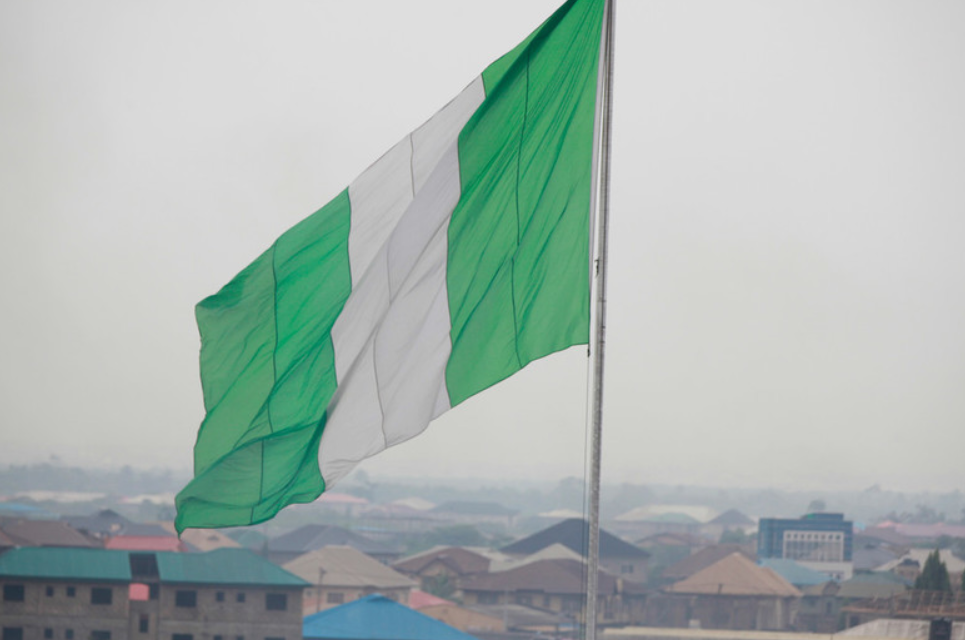
Nigeria has had 36 states and a Federal Capital Territory since October 1996. In the thirty years since, not one new state has been created, despite dozens of formal requests, several constitution review cycles, and an amount of political noise that would suggest otherwise. Understanding why requires looking at how the existing 36 were made, because the method used then is no longer available.
Every state Nigeria has was created by a soldier
That sentence sounds like polemic. It is just the record.
In 1967, General Yakubu Gowon abolished the regional structure and created twelve states: North-Western, North-Eastern, Kano, North-Central, Benue-Plateau, Kwara, Western, Lagos, Mid-Western, Rivers, South-Eastern and East-Central. The timing was not accidental. It came weeks before the civil war, and splitting the Eastern Region was part of the calculation.
In 1976, General Murtala Mohammed’s government carved seven more out of the twelve, taking the country to nineteen. Bauchi, Benue, Borno, Imo, Niger, Ogun and Ondo date from that exercise.
General Ibrahim Babangida added Akwa Ibom and Katsina in 1987, making twenty-one. On 27 August 1991 he created nine more in one announcement, taking the total to thirty. Then in October 1996, General Sani Abacha’s regime created six more on the recommendation of the National Constitutional Conference, and Nigeria arrived at 36.
Five exercises, five military governments, zero referendums. A decree was written and a state existed. The 1999 Constitution deliberately closed that door, and the door it left open is very narrow.
What Section 8 actually demands
Section 8 of the 1999 Constitution sets out a sequence, and every stage has to clear before the next one matters.
A request must first be supported by a two-thirds majority of the members representing the affected area in the Senate, in the House of Representatives, in the relevant State House of Assembly, and in the local government councils of that area. Four separate two-thirds thresholds, all in the same direction.
Then the proposal must be approved in a referendum by at least two-thirds of the people of the area where the demand originated.
Then the referendum result must be approved by a simple majority of all the states of the federation, expressed through a simple majority of members in their Houses of Assembly. Read that again: Kebbi and Ekiti get a vote on whether a new state is carved out of Delta.
Finally, the National Assembly must pass the proposal by a two-thirds majority in each chamber.
The referendum is the stage that has never once been reached. Nigeria has held no national referendum under this constitution, and there is no established legal machinery for running one under Section 8. INEC would need a specific mandate, a defined voter roll for the affected area, and a funded timetable.
None of that exists. Ordinary turnout in Nigerian general elections has struggled to pass 30 percent in recent cycles, and the section demands two-thirds approval, which raises an unresolved question about whether two-thirds of registered voters or two-thirds of those who show up is the standard.
Where the current push stands
In February 2025, the House of Representatives Committee on Constitution Review, chaired by Deputy Speaker Benjamin Kalu, presented a report disclosing 31 separate requests for new states. Had all of them passed, Nigeria would have had 67 states. Kalu was blunt about the status: “Although we have received 31 requests for state creation, none has met the constitutional requirements for amendment.”
The reaction split along familiar lines. The Yoruba socio-cultural group Afenifere and the Arewa Consultative Forum both rejected the proposal. The Resource Centre for Human Rights and Civic Education described it as a strategy of political deception and distraction, which captures the suspicion that state creation talk surfaces most loudly when the National Assembly needs to look busy.
By late October 2025, the approach had changed. A joint Senate and House Committee on Constitution Review, at a two-day retreat in Lagos co-chaired by Deputy Senate President Barau Jibrin and Deputy Speaker Kalu, worked through 69 bills, 55 state creation requests, 2 boundary adjustment requests and 278 local government creation requests.
The committee resolved to approve six new states, one per geopolitical zone. If ratified, that takes Nigeria to 42, distributed as eight in the North West, seven each in the North East, North Central, South West and South South, and six in the South East. A subcommittee chaired by Senate Chief Whip Tahir Monguno of Borno North was set up to determine which areas the six would come from.
The demands have not slowed since. By 6 June 2026 the House committee had logged 56 requests: 14 from the North Central, including Okun, Okura and Confluence out of Kogi, and Apa and Benue Ala out of Benue; 10 each from the South South and South West, including Toru-Ebe, Ibadan, Lagoon and Ijebu; 8 each from the North East and North West; and 6 from the South East, including Anim, Orlu and Anioma.
Anioma is the request that has travelled furthest. Senator Ned Nwoko, representing Delta North, sponsored a bill to create it from the nine local government areas of Delta North. The bill has passed second reading and a public hearing, and Nwoko has said President Tinubu and 97 senators support it.
That claim is his, not an independent count, but the political logic behind it is real: the South East is the only zone with five states while others have six or seven, and Anioma is one route to correcting the arithmetic without redrawing anyone else’s map.
The question nobody wants to answer first
A state is not a flag. It is a people, a governor, a deputy, a House of Assembly, commissioners, a judiciary, a civil service and a capital city with buildings that do not currently exist.
The 2025 BudgIT report found that 28 of the existing 36 states depend on federal allocations from the Federation Account for at least 55 percent of their revenue, and 21 of them depend on FAAC for at least 70 percent. These are the states we already have. Adding six more, or thirty-one more, means the same monthly pool from oil receipts and VAT split into more pieces, while each new piece carries a full set of political salaries.
The counterargument deserves a fair hearing, because it is not nonsense. States created in 1991 and 1996 brought federal presence to places that had none. Distance from a state capital is a real governance cost in a country this size, and some of the loudest demands come from minority groups who have spent decades being administered from a capital where they hold no political weight. Anioma’s case is partly about the South East’s five-state disadvantage in a federation where allocation and appointments follow state count. Those are structural grievances, not vanity.
What tends to go unexamined is whether a new state fixes them. If a new state arrives 70 percent dependent on FAAC, it has swapped remote administration for local administration that still cannot fund itself.
What has to happen next?
The Monguno subcommittee has to name the six areas. The National Assembly has to pass the amendment by two-thirds in both chambers. A referendum framework has to be built essentially from nothing. Then at least 19 State Houses of Assembly have to concur.
The 10th National Assembly’s term runs out in June 2027, and as of mid-2026 that leaves under a year. Constitution amendments in Nigeria have a habit of dying at the state assembly stage even after clearing Abuja, and this one has an unbuilt referendum standing between it and the state assemblies.
The realistic reading is that the 31-state proposal was never going anywhere, the six-state resolution is a serious attempt at something achievable, and the referendum requirement is the wall it will hit. Anyone promising a new state before 2027 is describing a wish, not a process.