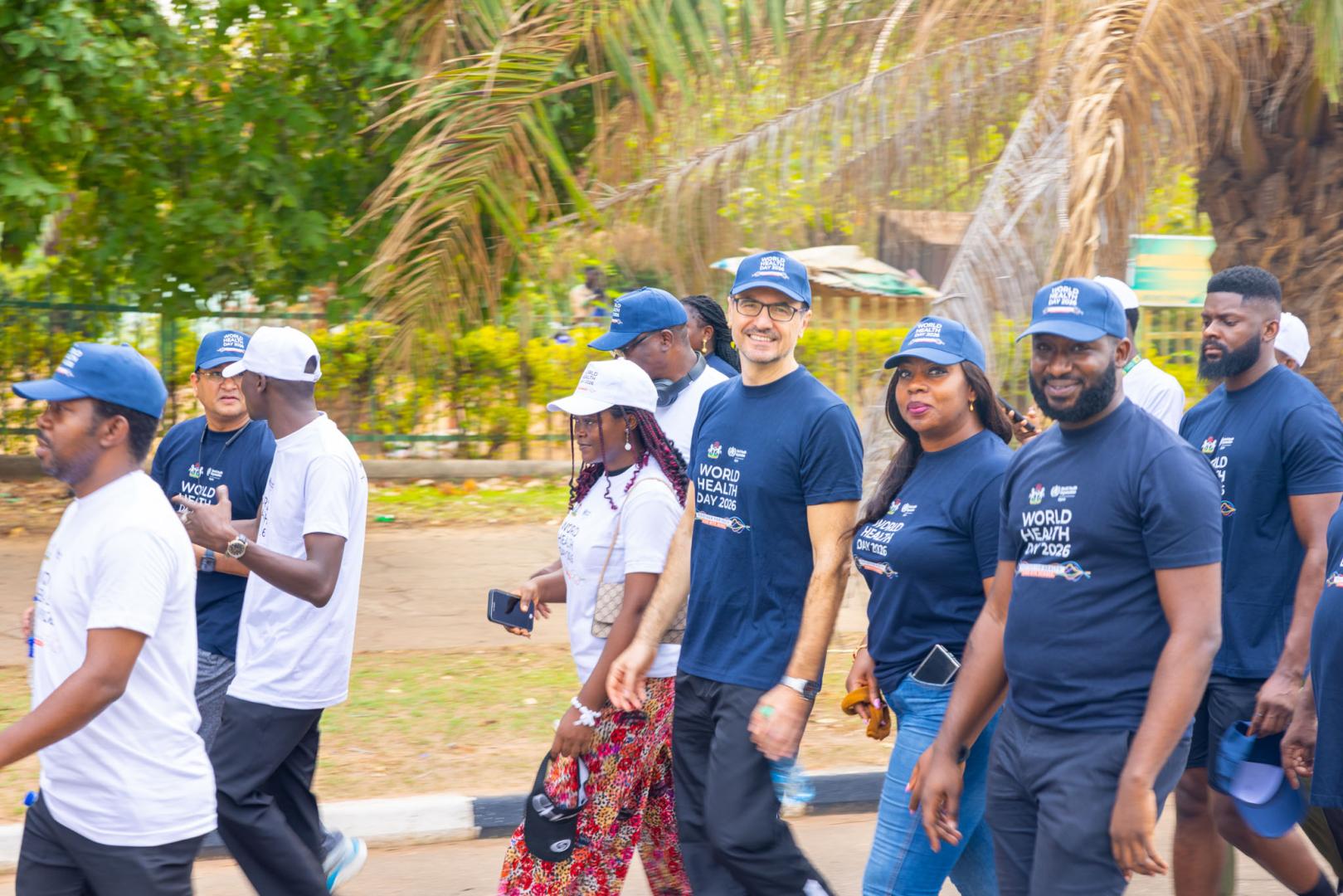
On World Health Day 2026, under the theme “Together for health. Stand with science,” Nigeria is highlighting how evidence-based approaches are strengthening public health and improving outcomes across the country.
To reinforce this commitment, Nigeria continues to implement national priorities outlined in the Nigeria Health Sector Renewal Investment Initiative (NHSRII), ensuring that scientific evidence directly informs policy and practice.
Scientific evidence remains vital for effective public health actions—guiding disease prevention, enabling early detection of outbreaks, and informing timely responses. In Nigeria, these strategies are being implemented on a large scale through government leadership and partnership with entities, including the World Health Organization (WHO).
Nigeria, home to more than 230 million people, has made measurable progress through sustained investment in evidence-based interventions led by the Federal Ministry of Health and Social Welfare.
Polio eradication: Nigeria contributed to the certification of the WHO African Region as free of wild poliovirus in 2020, following years of coordinated vaccination and surveillance.
Guinea worm eradication: The disease was eliminated through community-based surveillance and improved access to safe water, with the last case reported in 2008.
Onchocerciasis (River Blindness) control: Mass drug administration programmes continue to reduce transmission and prevent disability in endemic communities.
HPV vaccination: Since its introduction in 2023, more than 5 million adolescent girls have been reached, providing protection against cervical cancer.
At a press briefing to mark World Health Day, the Minister of State for Health and Social Welfare, Dr Iziaq Salako, said: “Nigeria’s progress demonstrates the value of evidence-based policies in improving health outcomes. “Nigeria’s progress shows that when health decisions are guided by science and evidence, they deliver measurable improvements in people’s lives. Our priority is to sustain and scale these gains to reach every community.”
He added: “Our goal is clear: every Nigerian, regardless of income or location, should have access to quality healthcare without financial hardship, and we are strengthening systems to make this a reality.”
Across Nigeria, data from health facilities and laboratories are informing public health action. Strengthened surveillance systems are supporting early detection and response to priority diseases, including cholera, Lassa fever and measles.
In October 2025, Nigeria implemented one of the largest integrated health campaigns in Africa, demonstrating how coordinated, evidence-based approaches can expand access to essential services and protect vulnerable populations.a
Across 19 northern states, Oyo State and the Federal Capital Territory, the campaign reached millions of children:
• 59.8 million children (9 months–14 years) were vaccinated against measles and rubella
• 42.6 million children (under five) received the novel oral polio vaccine type 2 (nOPV2)
• 13.4 million children (under five) were reached with the bivalent oral polio vaccine (bOPV)
By integrating multiple interventions, the campaign improved efficiency, increased coverage, and helped reduce access gaps, ensuring more children are protected from vaccine-preventable diseases, particularly in underserved communities.
Thousands of health workers have been trained in Integrated Disease Surveillance and Response (IDSR), while digital reporting platforms are improving the timeliness and accuracy of disease reporting. These efforts are contributing to improved outbreak preparedness and response, reducing delays in detection and treatment.