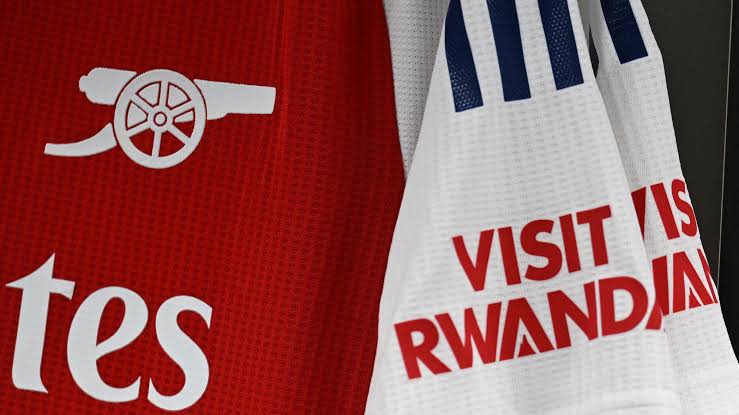
The Democratic Republic of Congo (DRC) has called on European football giants Arsenal, Bayern Munich, and Paris Saint-Germain (PSG) to cut ties with their Visit Rwanda sponsorships, citing Rwanda’s alleged involvement in the ongoing humanitarian crisis in eastern DRC.
The appeal follows intense fighting in the region, with M23 rebels—reportedly backed by Rwanda—seizing control of Goma, the largest city in eastern DRC.
The UN estimates that more than 400,000 people have been displaced this year alone.
DR Congo’s Foreign Minister, Thérèse Kayikwamba Wagner, sent letters to the owners of Arsenal and PSG, as well as Bayern Munich president Herbert Hainer, questioning the morality of their partnerships.
She argued that the sponsorship funds may be linked to the illicit trade of minerals from conflict zones, fueling further instability.
“Rwanda’s culpability in this conflict is undeniable,” Kayikwamba Wagner wrote in her letter to Arsenal. “It is time the club ended its blood-stained sponsorship deal. If not for your own consciences, then for the victims of Rwandan aggression.”
The Visit Rwanda campaign has been a major branding effort for the East African nation, with Arsenal signing a sleeve partnership in 2018, PSG joining in 2019, and Bayern Munich striking a five-year deal in 2023.
Rwanda has also expressed interest in hosting a Formula 1 race and is set to stage cycling’s World Road Championships in September.
However, rights groups argue that these initiatives divert attention from the country’s “abysmal track record” on human rights.
The Rwandan government has dismissed such claims, with its chief tourism officer, Irene Murerwa, calling them “a distraction from the outstanding achievements Rwanda has made.”
The conflict in eastern DRC, which dates back to the 1990s, has escalated rapidly in recent weeks.
The UN reports that at least 700 people have been killed in Goma since Sunday, with M23 rebels advancing toward Bukavu, the capital of South Kivu province.
M23, a Tutsi-led armed group, claims to be fighting for minority rights, while the DRC government insists they are backed by Rwanda to gain control over the region’s mineral wealth.
Rwanda denies direct military involvement, stating its troops are stationed along the border only for national security purposes.