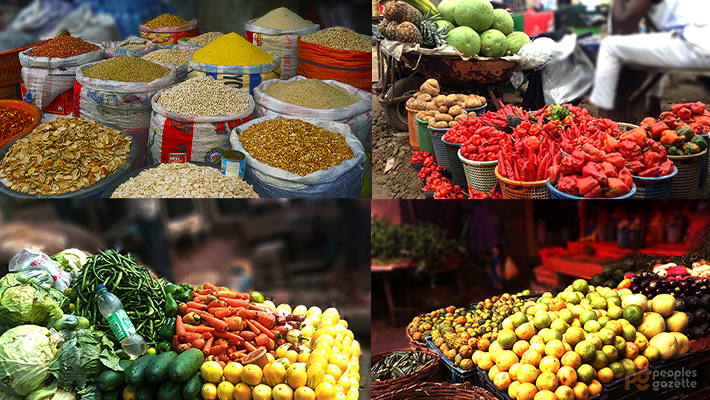
The Nigerian government is set to address food insecurity in the country through reliable data.
To this effect, the Federal Ministry of Agriculture and Food Security, in collaboration with technical experts, has launched a state-level Cadre Harmonisé (CH) analysis aimed at identifying regions grappling with food and nutrition insecurity.
The Cadre Harmonisé is an analytical tool designed to assess food and nutrition security comprehensively.
It provides a thorough evaluation of current and projected food security situations by combining quantitative data (like crop yields and market prices) with qualitative insights from local communities.
Read Also: “Reduce Fuel, Food Prices” – Ndume To Tinubu
The state-level CH analysis is being implemented across 26 states and the Federal Capital Territory, with contributions from partners including FAO, the Permanent Inter-State Committee for Drought Control in the Sahel (CILSS), Action Against Hunger, the Famine Early Warning Systems Network, and UNICEF, among others.
Dr. Dishi Khobe, the Special Adviser to the Adamawa State Governor on Food Security, emphasized the significance of this exercise in generating reliable data to pinpoint areas severely affected by poverty, food shortages, and malnutrition.
He stated, “The main goal is to combat food insecurity; the poor are getting poorer due to the rising cost of living, and we lack reliable data to support our people effectively.”
Read Also: FAO Warns Nigeria Over Worsening Food Insecurity As Devastating Floods Continue
Dr. Khobe highlighted the CH exercise’s long-standing track record, remarking, “We have followed the CH exercise for a long time and observed that the trends are accurate and factual; it has shown hotspots on the map for immediate intervention.”
He further mentioned that the state government is committed to enhancing its involvement in the project, ensuring continuity when supporting partners withdraw. “We can fully take over without leaving any gaps,” he added.
Mr. Bulama Dauda, Monitoring and Evaluation Officer at the Federal Ministry of Agriculture and Food Security, elaborated on the objectives of the analysis.
He explained that the CH involves assessing the food and nutrition landscape in specific areas, including Local Government Areas and states, which is critical for developing effective response plans. “The results are used globally, particularly in West Africa and the Sahel countries, to guide responses to food and nutrition crises, support decision-making, planning, implementation, and budgeting for interventions,” Dauda noted.