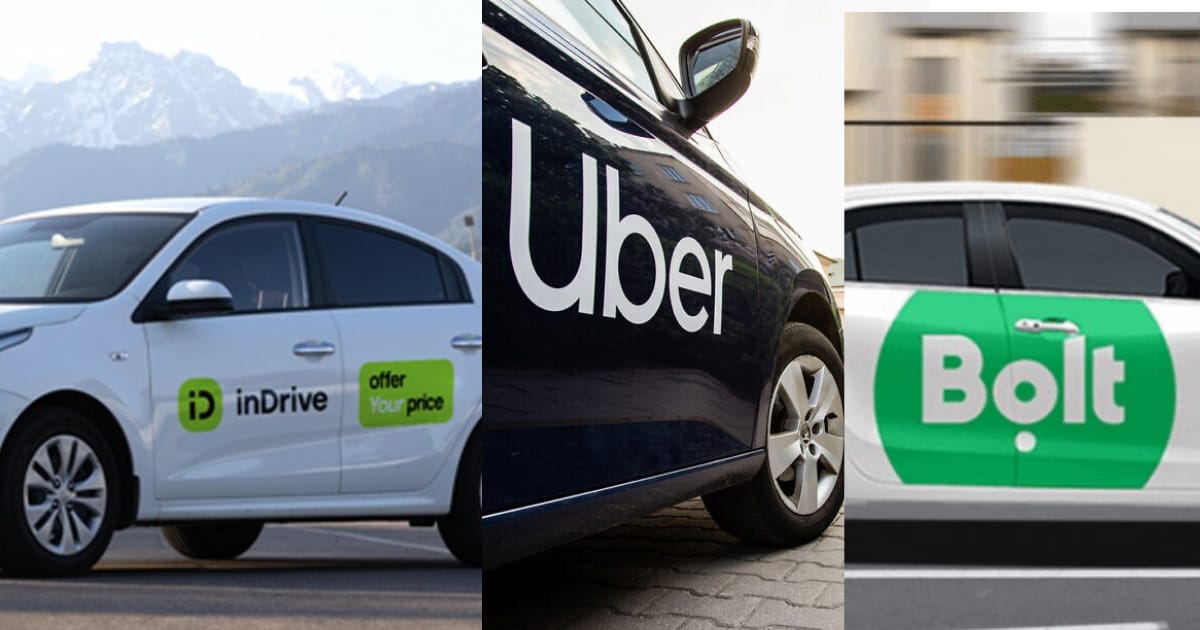
The Lagos State Government has been requested to approve a collective agreement by drivers affiliated with the Amalgamated Union of App-based Transporters of Nigeria (AUATON), which aims to regulate the ride-hailing business in the state.
This was said in an interview by AUATON’s South-West zonal chairman, Kolawole Aina, who said that the pact intends to guarantee that its members will be regulated and have their welfare well-taken care of.
The drivers’ request for involvement implies that they have not been well-treated by the policies of several platforms, including Bolt, InDrive, and Uber.
According to Aina, the document put together for the state is seeking to, among others, address low pricing, high commission, and the activation and deactivation of drivers at will by app-based companies.
Read Also: Bolt invests N20m in safety measures for Nigerian users
The agreement accepted at the federal level
While noting that before the creation of the union in 2023, there had been a series of agitations among various groups of drivers, with many app-based companies alleging maltreatment, the AUATON executive said:
“As a union, we saw the problems, created solutions and presented the solutions to government. It was accepted by the federal ministries of transport and labour, but the Lagos State government did not give us a listening ear.
“The document, which we call the collective agreement, is about how the government, app-based companies, drivers, and riders can have a fair share of responsibilities in the industry.
“It will be a system where each ride can be monitored by all the four communities, and each community can mutually benefit.”
As part of the propositions to the government, the drivers are also seeking mandatory insurance and provision of security for their members.
Read Also: Auto Execs Are Coming Clean, Say EVs Aren’t Working
“The issues of insurance and security have become very important. I cannot remember the number of drivers that have died on the job this year alone or lost properties to their customers or riders,” Aina said.
He regretted that the association’s deputy president died of fatigue inside his car this year, also noting that “Criminally-minded customers, sometimes, order rides, and during the ride, they kill the driver and steal the car and sell it.”
“This is where insurance comes in. All trips will be insured; the driver, riders, property in the cars and the car itself will be insured,” said Aina.
He decried algorithm management instead of human management in app-based companies, saying that machines are making decisions that humans should make.