- It Is Detrimental To Investment, Economic Growth, CPPE Laments
- Multiple Interest Rate Hikes Boosted Nigerians’ Confidence In Naira- CBN
- CBN To Boost Liquidity In Banks With N1.4trn Supply In 3 Months- Cardoso
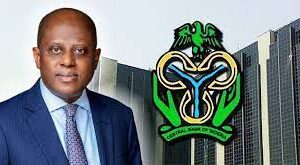
Rising from its two day meeting between September 23rd to 24th, 2024, the Monetary Policy Committee of the Central Bank of Nigeria has again for the fifth time raised Nigeria’s interest rates by 50 basis points from 26.75% to 27.25% to tighten the inflation rate which stands at 32.15%.
This decision has generated heated debate from critical stakeholders in the country.
Leading the condemnation of the hike, economic think-tank, Centre For The Promotion Of Private Enterprise (CPPE) lamented that the latest policy choice of the apex bank is at variance with the mood of most economic players and the desire to promote economic recovery and growth.
Reacting to the announcement in a statement sent to The Matrix by the CEO of the think-tank, Mr Muda Yusuf, he lamented that while other investors in the economy are craving for a breath of fresh air, the CBN chose to tighten the noose on them by resorting to a further tightening of monetary policy.
The statement reads, “It is quite troubling that at a time when manufacturers, entrepreneurs and other investors in the economy are craving for a breath of fresh air, the CBN chose to tighten the noose on them by resorting to a further tightening of monetary policy.
“The latest policy choice of the apex bank is at variance with the mood of most economic players and the desire to promote economic recovery and growth.
“What manufacturers and other investors need at this time is some oxygen and stimulus, not policy measures that would worsen an already suffocating situation.
“MPR at 27.25%; CRR at 50% and asymmetric corridor at +500 and -100 are very difficult monetary condition to bear for most businesses, given the prevailing macroeconomic and structural conditions” he stated.
READ ALSO: CBN Denies Reintroducing Cyber Security Levy, Clarifies Guidelines
Continuing, Yusuf lamented that the second quarter Gross Domestic Product GDP numbers showed clearly that the economy was still in a floundering mode as many critical sectors of the economy slowed.
“These include manufacturing and other subsector of the industrial sector such as cement, food and beverage, chemicals and pharmaceuticals, trade, ICT and real estate.
“The road transport, motor assembly, publishing and motion pictures sectors contracted during the quarter. The Aviation, Oil Refining, textile , livestock and quarry and minerals sector were still in recession.
“Tightening financial conditions in the circumstances does not seem appropriate. The private sector should not be made to pay the price of liquidity growth which they were not responsible for.
“Issues of excess liquidity should be addressed within a causative context. The injection of liquidity into the system are largely public sector driven, as rightly noted by the CBN Governor.
“Therefore, the focus of resolving it should be within that context. Stifling the financial conditions to address liquidity issues is detrimental to investment and growth of the economy. The implication of the latest MPC decision for investors are quite concerning as cost funds would be further exacerbated, possibly well above 35% or more. It is made worse by the increase in CRR to 50% and retention of asymmetric corridor of +500 and -100.
“We believe that the policy decisions of the CBN are most inappropriate for the prevailing economic conditions and the challenges faced by entrepreneurs in the country.
“The operating and production costs of businesses would be further exacerbated by the latest monetary policy tightening.
“The increase in CRR to 50% would constrain financial intermediate with negative consequences for the banking system and the economy” he added.
READ ALSO: Fuel Subsidy Removal and Other Concerns May Threaten External Reserves – CBN
However, defending the decision to hike the interest rate for the fifth time this year, the governor of the apex bank, Olayemi Cardoso disclosed that the multiple interest rate hikes have helped boost Nigerians’ confidence in the currency naira.
Cardoso stated this at a press briefing on Tuesday at the end of the 297th meeting of the MPC in Abuja.
Asked whether the monetary policies of the apex bank including multiple interest rate hikes and the collapse of the foreign exchange windows are working considering the economic hardship Nigerians are facing, the CBN boss blamed his predecessor’s policies for the monetary situation of the country.
“We came into a very loose money supply situation between 2017 and 2023 and witnessed pumping of liquidity into the system.
“In 2015, the money supply was about N19tn, and in 2023, it was N54tn. That’s a huge increase, a very huge increase. And then a substantial amount of that was through ways and means. So, essentially, the printing of money resulted in a huge amount of money chasing the same amount of goods or a relative amount of goods. I think that context is very important to have.”
“Don’t forget that here was a situation where the exchange rate was running at an incredible pace and people had begun to lose confidence in the currency.
“So, we believe that these multiple rate hikes have helped people to now begin to take a different look at their currency, and there is a greater incentive to hold the naira as opposed to a situation we had before where this was not the case,” Cardoso said.
“I accept the fact that many outside are finding things very difficult but I want to say that the things we are doing are set to put the economy of this country in a trajectory where we shouldn’t go back and see some of the inefficiencies we’ve seen in our system over the recent past. These, I believe are short-term pains and I believe we will get out of the situation we are in now.
“Tough though they may, and I accept that they may be tough but we have no choice but to deploy these tools to reign in the excess liquidity in the system, the high inflation and encourage portfolio investors who had taken flight to come back and take interest in Nigeria,” he added.
Meanwhile, in a bid to aid cash flow within the banking system, the CBN will distribute N1.4 trillion to banks the next three months.
Speaking on the issue of cash insufficiency in most bank’s automated teller machine (ATM), Cardoso said the apex bank is working closely to ensure that there is sufficient cash in the system.
According to the CBN governor, banks do not have any excuse not to dispense cash.
“Another N1.4 trillion is likely to be delivered in another three months to aid that whole process of cash within the system,” he said.
“So from our perspective, we are doing everything possible to ensure that there is sufficient cash in the system. There is no excuse for not having sufficient cash in the system.
“Now it goes to the deployment of that cash and quite frankly, we are working very, very closely, we are engaging with all the deposit money banks to ensure that they are putting these things through their ATMs, effectively dispensing cash to those that are in need.
“And whether they are in need or not, that’s the function of the deposit money banks. And at all points in time, there should be sufficient cash in their system that nobody should go there without being able to withdraw.”
Cardoso said a monitoring system has been put in place to check the services of the banks.
He added that there will be sanctions if any bank fail to dispense cash.
“We ourselves, have devised a monitoring system, a spot-checking system, whereby we will go to the banks and just ensure that these things are done in the way and manner in which they are meant to be done,” he said.
“And if they are not, again, there will be sanctions but I believe that at the stage we are in now, everybody realises that stakeholders play their part in ensuring that cash gets to the desired places they are intended to be.”