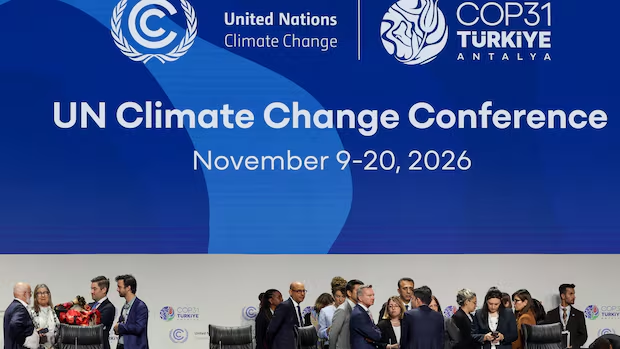
The United Nations COP31 climate negotiations in Antalya, Turkey, ended without an agreement on Sunday after delegates rejected the latest draft deal over concerns that it weakened key climate protections and favoured fossil fuel-producing countries.
European nations and several countries particularly vulnerable to climate disasters and rising sea levels opposed the proposed text, arguing that it failed to provide adequate safeguards against global warming, which is largely driven by the burning of fossil fuels such as oil, gas and coal.
COP31 President and Turkish Environment Minister, Murat Kurum, acknowledged the failure to secure consensus, confirming that the proposed decisions would not be adopted.
“I understand that there is no agreement on this text. For that reason, these decisions have not been adopted,” Kurum told delegates at the conference’s closing session.
He said the Turkish presidency had worked “day and night” to secure a stronger outcome, despite the negotiations extending two days beyond their scheduled conclusion.
Kurum also confirmed that no fresh document would be presented following the rejection of the fourth draft, which made no explicit mention of fossil fuels.
The collapse means countries will continue to rely on existing international climate frameworks, including the Paris Agreement and commitments reached at previous COP summits, in guiding their climate action.
For much of the first 25 years of United Nations climate negotiations, final agreements avoided explicitly mentioning fossil fuels. That changed three years ago at a landmark summit in the United Arab Emirates, where countries agreed to call for a transition away from fossil fuels.
The latest proposal, jointly advanced by Turkey and Australia, referenced the Dubai agreement. However, that acknowledgement failed to satisfy several countries and environmental groups, which had called for stronger language and clearer commitments on the role of fossil fuels in tackling climate change.
The failure to reach consensus leaves the latest round of negotiations without a new overarching agreement, underscoring the divisions among countries over how quickly and firmly the world should address fossil fuel use.