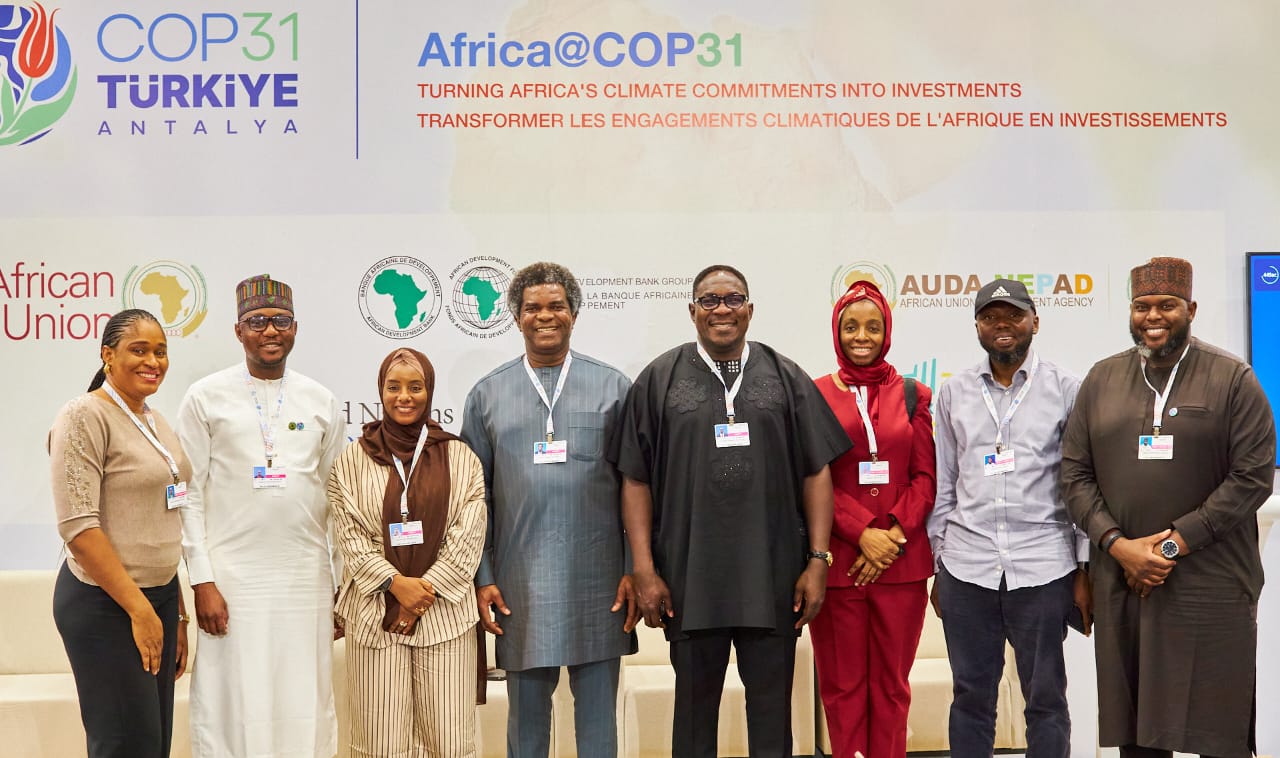
The Nigerian Upstream Petroleum Regulatory Commission (NUPRC) has proposed a strategy that integrates methane emissions reduction with energy security, insisting that African countries can achieve climate objectives while expanding access to reliable and affordable energy.
The Commission’s Chief Executive, Mrs. Oritsemeyiwa Eyesan, made the position known while delivering the keynote address at a side event organised by the African Energy Commission (AFREC) at the Africa Pavilion during the COP31 climate conference in Türkiye.
The event was themed “Mitigating Methane Emissions in Africa: Turning Climate Commitments into Economic Opportunities.”
Eyesan, who was represented by the Executive Commissioner, Health, Safety, Environment and Community, Captain John Tonlagha, said Africa should not be forced to choose between climate responsibility and energy security.
She argued that methane emissions from venting, leaks and gas flaring represented wasted economic resources that could instead be harnessed to generate electricity, power industries and create revenue.
According to her, capturing wasted gas is particularly important for a continent where hundreds of millions of people still lack access to electricity.
The NUPRC chief executive noted that Nigeria’s regulatory framework was already creating commercial opportunities in leak detection and repair, continuous emissions monitoring, satellite and aerial surveillance, as well as flare-gas capture.
She cited estimates by the Clean Air Task Force (CATF) indicating that Nigeria’s methane mitigation measures could reduce emissions by approximately 533 kilotonnes annually, with revenue from recovered gas helping to offset much of the implementation costs.
Eyesan also highlighted the Nigerian Gas Flare Commercialisation Programme, which she said could support projects utilising up to approximately 250 million standard cubic feet of gas daily.
Nigeria pushes continental regulatory cooperation
The NUPRC chief executive further disclosed that Nigeria was championing the establishment of the African Petroleum Regulators Forum (AFRIPERF) to promote harmonised regulatory frameworks and measurement standards across African countries.
She said regional collaboration would be essential to achieving effective methane reduction, strengthening regulatory oversight and unlocking the economic opportunities associated with recovered gas.
NUPRC demands accurate methane emissions data
Also speaking during the panel session, the Commission’s Senior Manager, Sustainability-CCUS and ESG, Mr. Muhammad Ibrahim Illo, said Africa’s immediate priority should be obtaining accurate and verifiable methane emissions data rather than relying on estimates.
Illo called for enforceable methane standards, sustained capacity-building programmes and improved access to finance and technology, particularly for smaller operators.
He disclosed that the NUPRC had issued a directive circular, signed on April 11, 2026, requiring operators to transition from estimation-based to measurement-based methane emissions reporting.
According to him, accurate measurement would strengthen regulatory compliance, improve transparency and provide a more reliable basis for tracking emissions reduction across the industry.
Regional collaboration key to methane reduction
On the importance of cross-border cooperation, Illo identified common Measurement, Monitoring, Reporting and Verification (MMRV) guidelines, shared testing and training centres, joint procurement arrangements and peer-learning initiatives as critical areas for regional collaboration.
He also highlighted cross-border gas infrastructure as an important component of efforts to maximise the commercial value of recovered gas while supporting Africa’s energy needs.
The NUPRC’s interventions at the COP31 side event underscored Nigeria’s position that methane reduction should be pursued not only as a climate obligation but also as an opportunity to recover wasted energy resources, attract investment and strengthen energy security across the continent.