- Advice To Withhold Food, Medical Support A ‘Masterclass In Humanitarian Leadership’-Presidency Mocks Obi
- It Will Punish Ordinary Nigerians Rather Than Address Governance Failures- Renewed Hope Group
- Obi Recognises Diaspora Sacrifices In Supporting Families Back Home-Media Office
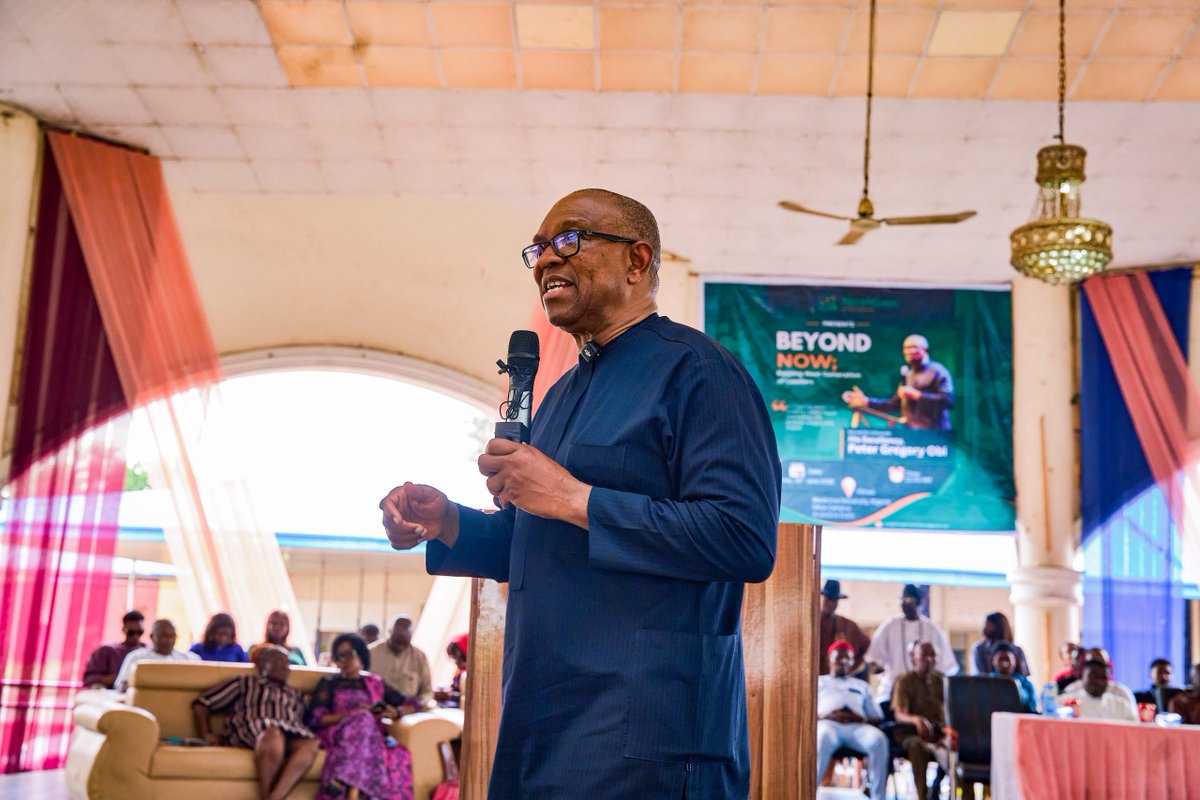
Peter Obi, presidential candidate of the Nigeria Democratic Congress (NDC), has come under criticism following his call on Nigerians living abroad to reject requests for financial assistance from relatives at home, triggering a fresh debate over diaspora remittances, economic hardship and political accountability ahead of the 2027 general elections.
Obi made the remarks on Sunday, October 18, 2026, during a town hall meeting with Nigerian supporters in Manchester, United Kingdom, where he argued that continued financial assistance from abroad was cushioning the effects of poor governance without addressing the underlying causes of poverty and hardship.
“You have people at home in Nigeria today who are begging you for money. Tell them no!” the former Anambra State governor declared, urging Nigerians in the diaspora to encourage their relatives to support productive and accountable leaders at the ballot box.
The statement has drawn criticism from opposition figures and social media commentators, who argue that withholding financial assistance could worsen the plight of vulnerable Nigerians who depend on relatives abroad for food, healthcare, education and other basic needs.
Weighing in on the debate, Dada Olusegun, a media aide to President Bola Tinubu mocked Obi over his advice to Nigerians living abroad to stop giving money to relatives at home.
Olusegun, in a post reacting to Obi’s remarks sarcastically described the former Anambra State governor’s position as a “masterclass in humanitarian leadership”.
The presidential aide criticised the advice, arguing that withholding financial assistance could affect family members who depend on remittances to meet essential needs, including food and medical expenses.
“We must commend the sheer, unmatched depth of Peter Obi’s political strategy,” Olusegun wrote.
“Weaponizing basic family remittances and advising the diaspora to withhold food and medical support from their own relatives is a masterclass in humanitarian leadership.”
He added sarcastically: “Truly flawless logic here,” accompanied by a laughing emoji.
On his part, Prince Ade Omole, a Renewed Hope advocate and diaspora leader, describing the remarks as “clueless, callous and contradicted by the facts”.
Omole, in an official statement issued by Hon. Tosin Olayinka, Programme Director of Renewed Hope Global, condemned Obi’s comments at a town hall meeting with Nigerian supporters in the United Kingdom on Sunday, October 18, 2026, arguing that the former Anambra State governor had misrepresented the realities of family support and the economic importance of diaspora remittances.
Obi had reportedly urged Nigerians abroad to reject requests for money from relatives at home and encourage them to support his political ambition, a position that has triggered debate over the relationship between family obligations, economic hardship and political accountability.
Reacting, Omole accused Obi of failing to appreciate the sacrifices Nigerians in the diaspora make to support their families, insisting that money sent home was often used to pay school fees, settle hospital bills, cover rent and provide other essential needs.
“Mr Obi has looked at one of the most ordinary acts of love Nigerians perform and called it begging. Nobody in London, Atlanta or Toronto sends money home because a politician failed them. They send it because a mother, a brother or a child is waiting. Telling them to say ‘no’ is not politics. It is contempt,” Omole said.
He argued that financial support from Nigerians abroad was rooted in longstanding cultural values of family responsibility and mutual assistance, rather than political considerations.
According to him, describing relatives who seek assistance as beggars insults both those requesting help and those making sacrifices to provide it.
Omole maintained that no presidential candidate should dictate how Nigerians spend their earnings or use family support as leverage for political mobilisation.
The Renewed Hope advocate also challenged Obi’s position on economic grounds, citing World Bank data that put Nigeria’s diaspora remittances at a record $20.93 billion in 2024.
He argued that the inflows supported household consumption while contributing foreign exchange to the economy, making them important to families and the wider financial system.
Omole also cited Central Bank of Nigeria figures indicating that remittances through licensed international money transfer operators increased by more than 61 per cent in the first 10 months of 2024 to $4.22 billion.
He contended that discouraging Nigerians abroad from supporting their relatives could deepen hardship for vulnerable households, particularly those dependent on remittances to meet basic needs.
“A widow in Onitsha does not cause bad governance by asking her son in Canada for help, and the son does not cure bad governance by refusing,” he said, arguing that withholding assistance would punish ordinary Nigerians rather than address governance failures.
Omole Defends Tinubu’s Economic Reforms
Omole dismissed the suggestion that Nigeria was beyond redemption, pointing to what he described as improvements in macroeconomic indicators, international investor confidence and public finance under Tinubu.
He cited commendations reportedly made by the World Bank and International Monetary Fund, as well as credit-rating upgrades by Fitch, Moody’s and S&P, as evidence that the administration’s reforms were attracting international recognition.
He also referenced the reported decline in headline inflation to 14.63 per cent in September 2026, the Central Bank of Nigeria’s September decision to reduce the monetary policy rate from 26.5 per cent to 23 per cent, and rising external reserves.
According to Omole, these developments indicate that the government’s economic policies are beginning to yield results, although he acknowledged that challenges relating to prices and employment remain.
“The President never told Nigerians the road would be easy. He told them it would be worth it. Three years on, inflation is falling, the naira has steadied, and the rating agencies are upgrading Nigeria. There is more to do on prices and jobs, and we will not pretend otherwise. But you do not fix a house by telling its owners to give up on it,” he said.
He also highlighted the administration’s tax reforms, stating that the new tax laws, which took effect in January 2026, raised the annual tax-free income threshold to ₦800,000 and exempted minimum-wage earners from personal income tax.
Diaspora Mobilisation Ahead Of 2027
Omole also challenged the suggestion that Nigerians abroad needed political direction on how to deploy their financial resources or exercise their political preferences.
He cited the Renewed Hope Global Tour, which he said took the administration’s message across four continents and eight cities, including London, New York, Dubai, Zurich and Toronto.
He added that diaspora groups had pledged to mobilise support for Tinubu’s re-election bid, while a Strategic Global Diaspora Conference brought together more than 600 participants from different parts of the world to organise support for the administration’s Renewed Hope Agenda.
Similarly, other opposition voices questioned the logic of linking financial assistance to electoral choices, arguing that family members should not be made to bear the consequences of political disagreements.
The Labour Party, and New Nigeria Peoples Party have also joined in the criticism of Obi, arguing that the move could worsen hardship for vulnerable families without guaranteeing political change ahead of the 2027 general elections.
Supporters of the NDC candidate, however, have argued that the controversy should be viewed within the broader debate about governance, economic hardship and the need for Nigerians to demand accountability from political leaders.
In a statement issued on Monday, the office’s spokesperson, Idris Zekeri Jnr, described the interpretation of Obi’s remarks as misleading, alleging that portions of his comments had been removed from their broader context.
According to the media office, Obi recognises the sacrifices Nigerians abroad make to pay school fees, cover medical bills, provide food and support relatives experiencing financial difficulties.
It maintained that his central argument was that a country blessed with abundant human and natural resources should not leave millions of citizens dependent on relatives overseas to meet their basic needs.
The office said Obi was advocating a Nigeria where citizens could access decent employment, affordable healthcare and quality education without constantly appealing to family members abroad for assistance.
The clarification has added another dimension to the debate, with the disagreement now centring on whether Obi’s message was an attempt to encourage political accountability or a call that could be interpreted as discouraging vital family support.