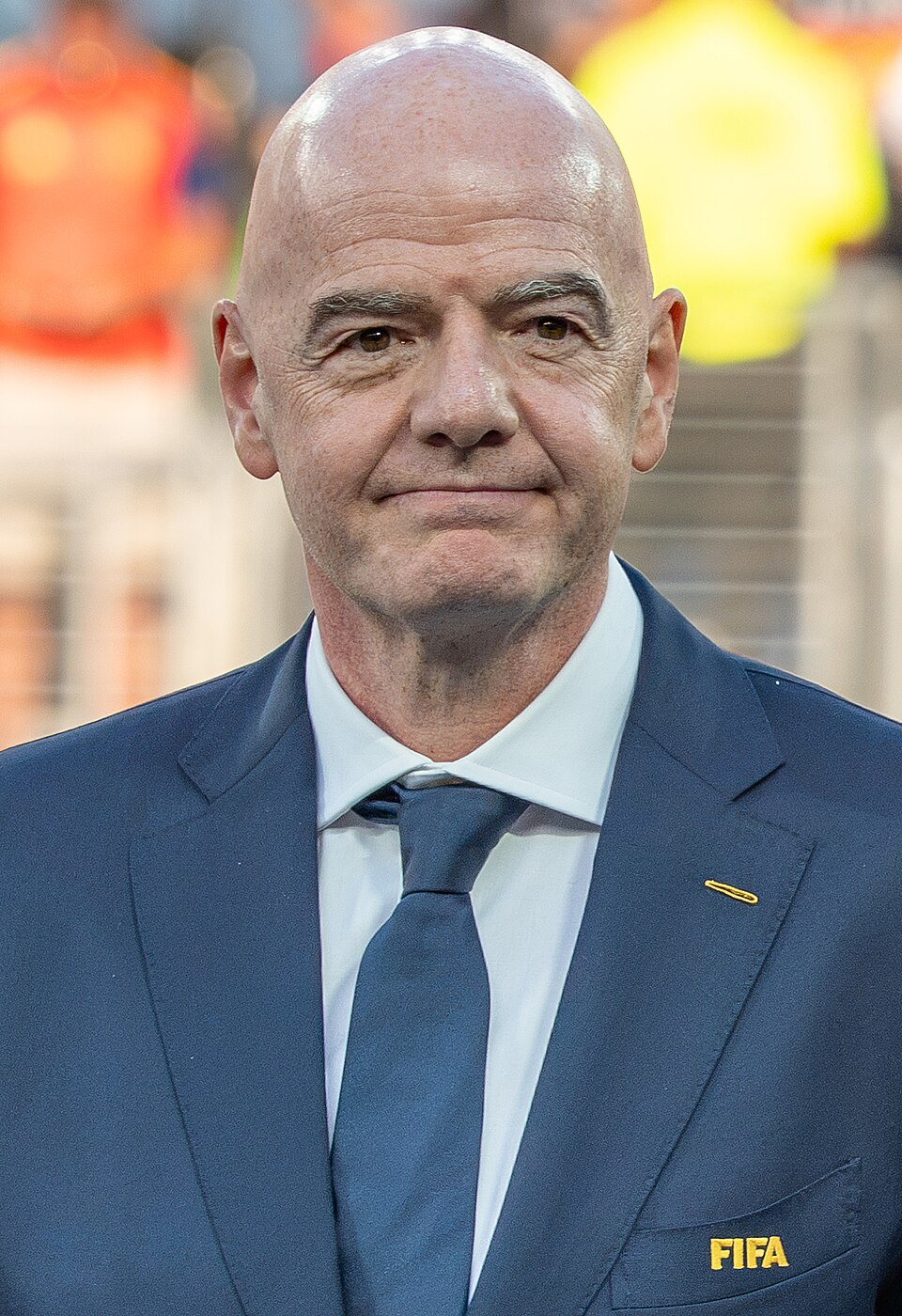
FIFA President Gianni Infantino has apologised to the organisation’s Council over the controversial FIFA Forward Enterprise (FFE) proposal, but has come under renewed pressure to release key documents and explain how the plan was developed.
Debbie Hewitt, chair of the English Football Association and a FIFA vice-president, said Infantino’s apology had not resolved the concerns surrounding the proposal, warning that his failure to answer outstanding questions would raise serious doubts about his leadership.
The FIFA Council met in Zurich on Thursday for the first time since details of the secret FFE proposal emerged.
The plan, which Infantino abandoned within days, would have transferred part of FIFA’s commercial rights to a private investment firm, raising concerns about transparency and the handling of the governing body’s financial interests.
During a three-and-a-half-hour meeting, Council members also questioned Infantino over the suspended red-card ban involving United States striker Folarin Balogun, the FIFA Peace Prize and funding for national football associations.
Hours after the meeting, FIFA released a video statement in which Infantino acknowledged mistakes in the handling of the proposal but maintained that it had never been a concluded deal.
“First of all, I apologised for the mistakes that we made in relation to the communication and consultation process related to the FIFA Forward Enterprise project, which led to many consequences,” he said.
Infantino argued that the proposal was intended to increase FIFA’s investment in its member associations rather than replace funding from existing resources.
He described the Council meeting as constructive, acknowledging that members had expressed differing opinions and viewpoints.
The FIFA president also promised to respond to questions in writing “in due course”.
However, his apology did little to ease the concerns of some Council members, particularly over the continued withholding of documents relating to the proposed arrangement.
Hewitt described the meeting as the most robust, frank and open Council session she had experienced, but said members had failed to obtain answers to specific questions they had raised.
“One of the disappointing things is that we didn’t get answers to anything that we had specifically requested — for example, getting the papers from FFE,” she said.
According to Hewitt, when she asked why the documents had not been made available, members were instructed to submit their questions in writing.
She insisted that Infantino must address the concerns directly, arguing that the unresolved issues would shape her assessment of his continued leadership.
“I think the man has to answer those questions and if he doesn’t answer those questions now, he’s not fit to be FIFA president — and that was what was shared in the meeting,” she said.
Hewitt said she had repeatedly requested the FFE documents but had yet to receive them, despite raising the matter again during Thursday’s meeting.
She identified the rationale behind the proposal, the Balogun case and the FIFA Peace Prize as issues requiring further clarification.
According to her, the answers would determine whether she believed Infantino remained the appropriate candidate for the presidency and whether those involved in the FFE process could be trusted.
“Until we see what actually happened, it’s very difficult to say behaviour needs or not to change,” she added.
While acknowledging that Infantino had shown “some contrition” during the meeting, Hewitt said the apology appeared to focus largely on his failure to consult the Council before advancing the proposal.
“What he really apologised for was not bringing it to the Council. If you regret it that deeply, share it with us,” she said.
The controversy has also deepened tensions between Infantino and UEFA, European football’s governing body, which has repeatedly criticised him and called for him to step down.
UEFA has prepared criminal legal proceedings against Infantino and filed claims in three United States courts seeking the release of documents relating to the FFE proposal.
The documents are expected to shed light on how the proposal was conceived, the parties involved and the circumstances surrounding its abrupt withdrawal.
Hewitt said making the papers available to the Council would be a crucial step towards determining what happened and whether further legal action was warranted.
“Those papers coming to Council are a crucial next part of us feeling comfortable as to what, if any, criminal proceedings need to take place,” she said.
Despite Infantino’s apology, Hewitt indicated that her position had not changed.
Asked whether UEFA’s stance towards the FIFA president had shifted following the meeting, she said she had received no new information that would alter her assessment.
“From my position, nothing has shifted. I’ve no new information that makes me feel any differently, other than we do have a president who is apologetic,” she said.
The dispute leaves Infantino facing continued demands for transparency, with the release of the FFE documents and his responses to the outstanding questions emerging as key issues in the controversy.