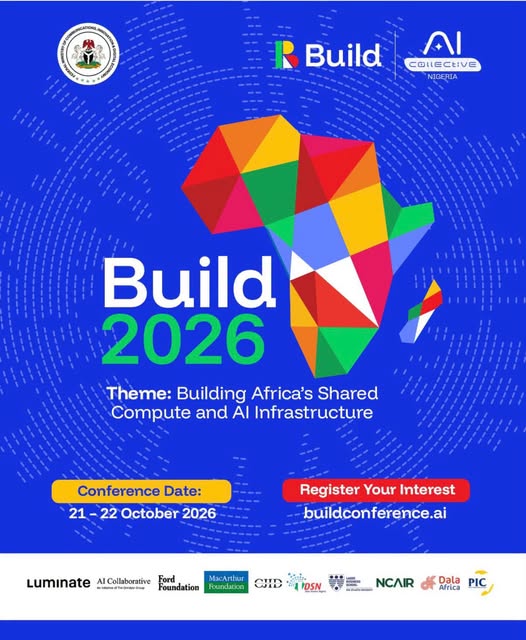
Policymakers, technology innovators, investors, researchers and industry leaders are expected to converge on Abuja on October 21 and 22 for Build 2026, a conference aimed at shaping Africa’s future in artificial intelligence (AI), digital governance and technological ownership.
The two-day event will focus on strategies to strengthen Africa’s position in the global AI economy, with discussions centred on how the continent can develop its digital infrastructure, exercise greater control over its technology systems and harness artificial intelligence for economic growth.
Organisers said the conference would bring together key stakeholders to move beyond discussions towards concrete commitments on the development, governance and ownership of AI technologies across Africa.
The conference will explore six thematic areas: infrastructure, economics, digital sovereignty, tech justice, governance and ethics, and innovation catalysis.
The tracks are expected to provide a platform for participants to examine the opportunities and challenges associated with AI adoption, including the infrastructure required to support innovation, the economic implications of emerging technologies and the need for governance frameworks that reflect Africa’s priorities.
Digital sovereignty and technology ownership are also expected to feature prominently, amid growing global debates over who controls the infrastructure, data and systems powering artificial intelligence.
According to the organisers, Build 2026 is designed to strengthen Africa’s participation in the global AI economy by encouraging collaboration among policymakers, investors, researchers and technology builders.
The event will hold in Abuja, Nigeria, on October 21 and 22, 2026.
Applications to attend are being received through the conference website, buildconference.ai, with the deadline set for Monday, October 12.
The organisers said spaces were limited and all applications would undergo a review process before approval.
The conference comes amid increasing global interest in artificial intelligence and the need for African countries to develop the infrastructure, policies and local innovation ecosystems required to participate meaningfully in the rapidly evolving technology sector.