The Federal Government has thrown its full weight behind the establishment of the Lagos International Financial Centre (LIFC), setting the stage for a first-quarter 2027 soft launch of the ambitious project designed to transform Lagos into a global gateway for capital flowing into Nigeria and Africa.
The development followed the inaugural meeting of the LIFC National Steering Committee in Abuja on Wednesday, where the Federal Government, Lagos State Government and private sector, represented by EnterpriseNGR, formally moved the initiative from planning and design into implementation.
The committee’s inauguration marks a major escalation of government backing for the project, with key Federal institutions now tasked with tackling the legal, fiscal, regulatory, immigration, investment promotion and digital infrastructure requirements needed to establish the financial centre.
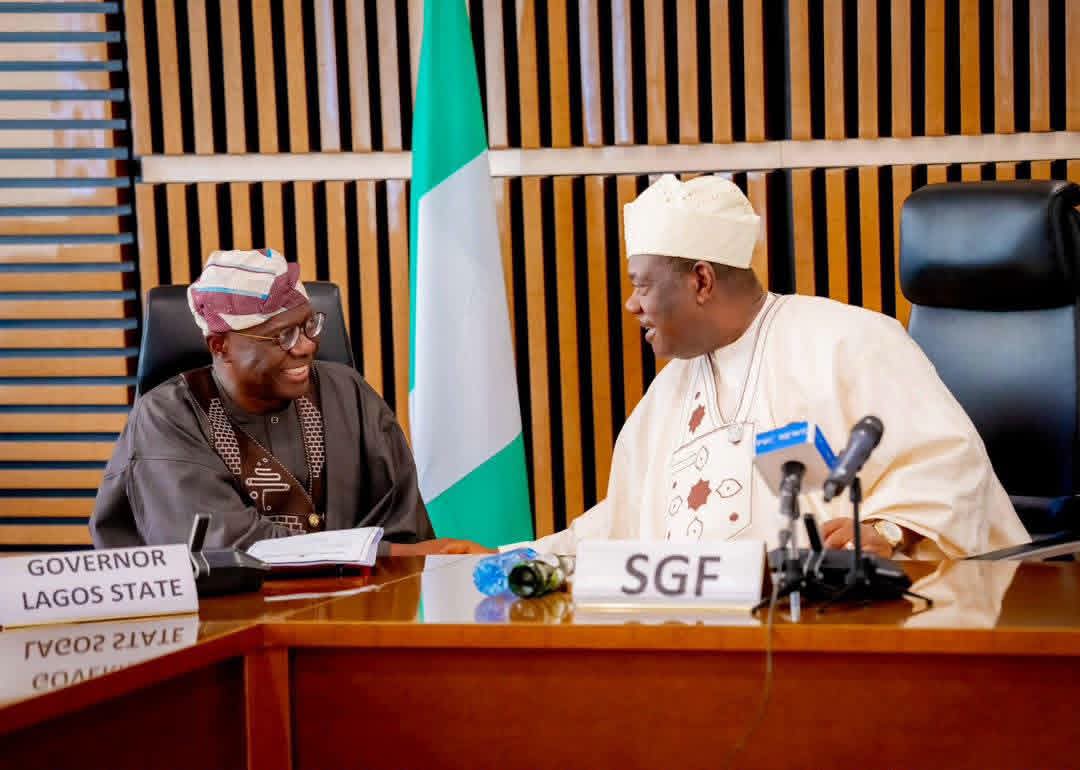
The Secretary to the Government of the Federation, Senator George Akume, who inaugurated the committee, said President Bola Ahmed Tinubu had directed his office to coordinate Federal Government support for the LIFC.
Akume said the project presented a strategic opportunity to harness Lagos’ commercial strength and Nigeria’s economic potential to build a financial centre capable of competing internationally.
He said the composition of the committee, which brings together Federal institutions, Lagos State and the private sector, reflected the scale of coordination required to address the legal, regulatory, institutional and infrastructure challenges involved.
The Federal Government’s involvement brings institutions responsible for finance, justice, foreign affairs, immigration, trade and investment, communications and taxation to the table, alongside the Central Bank of Nigeria and Securities and Exchange Commission.
The arrangement is expected to create a coordinated government framework capable of giving investors greater regulatory clarity, legal certainty and institutional confidence.
‘Strategic National Infrastructure’
For Lagos State Governor and Chairman of the LIFC Council, Babajide Sanwo-Olu, the initiative is far bigger than another investment project for Lagos.
Sanwo-Olu described the proposed centre as “strategic national infrastructure”, insisting that it must be viewed as a deliberate instrument of Nigeria’s long-term economic strategy rather than simply a Lagos project.
The governor said international financial centres are deliberately created to mobilise long-term capital, deepen financial markets, establish trusted jurisdictions and connect domestic economies to global investment.
He said Lagos’ ambition was therefore to go beyond simply attracting businesses to the state.
According to him, the objective is to establish Africa’s premier International Financial Centre, creating a trusted gateway through which global capital can access investment opportunities in Nigeria and across the continent.
But Sanwo-Olu stressed that credibility would be the foundation of the project.
He said the LIFC must be anchored on institutional trust, regulatory quality, legal certainty and international connectivity, while ruling out the possibility of the centre becoming a tax haven or a platform for regulatory arbitrage and illicit financial activities.
Instead, he said, its competitiveness would depend on the predictability, transparency and institutional quality expected by international investors.
Lagos is being positioned as the natural anchor for the initiative because of its dominant concentration of Nigeria’s banking, capital markets, insurance, fintech, investment and professional services activities.
The state government will continue to drive critical components, including planning, infrastructure and the Lagos-specific legislative and institutional framework required to support the centre.
Sanwo-Olu, however, stressed that the benefits must extend beyond Lagos and create a lasting national institution capable of supporting successive administrations.
Race For Global Capital
The push comes as Nigeria seeks to achieve the Federal Government’s ambitious target of building a US$1 trillion economy by 2030.
The promoters believe achieving that target will require deeper pools of capital, stronger financial intermediation, increased investor confidence and institutions capable of connecting Nigerian businesses and opportunities with global finance.
The LIFC is being designed as one of the platforms to help achieve that objective.
EnterpriseNGR, which represents the private sector in the project, has been involved from its earliest stages, bringing together perspectives from banking, insurance, capital markets, asset management and professional services.
Its chairman and Co-Chairman of the LIFC Council, Mr Aigboje Aig-Imoukhuede, described the Federal-Lagos-private sector partnership as an example of what Nigeria could achieve when institutions work towards a common economic objective.
“I believe this will become a case study that will be written about in history as an example of how Nigeria can truly work. Nigeria is powerful, and Nigeria needs capital,” Aig-Imoukhuede said.
He warned that attracting global capital requires more than announcing investment opportunities, stressing that investors take their money to jurisdictions where they feel secure and confident about the prospects of growth.
“Capital is perhaps the most discerning visitor that I know,” he said. “Capital goes where it feels safe. It goes where it believes it can grow. It goes where it feels comfortable.”
The project has already undergone substantial preparatory work, including a strategic blueprint, legal and regulatory gap assessments, a business plan, an institutional operating model and implementation economics.
Specialist workstreams are also examining legal and regulatory reforms, institutional capacity and the international positioning of the centre.
KPMG is supporting the Project Office, while TheCityUK is providing international technical support funded by the UK Government.
Soft Launch In 2027
Aig-Imoukhuede said the project had now entered its final development phase, with stakeholders working towards a soft launch in the first quarter of 2027.
Attorney-General of the Federation and Minister of Justice, Lateef Fagbemi, SAN, pledged Federal support for the legal reforms required to provide investors with greater certainty, including identifying laws that may require amendment, enhancement or repeal.
Executive Chairman of the Nigeria Revenue Service, Dr Zacch Adedeji, urged stakeholders to move swiftly from planning to implementation.
Adedeji cautioned against simply copying foreign financial-centre models, insisting that Nigeria must develop a framework suited to its own constitutional, legal and economic realities.
Minister of Industry, Trade and Investment, Dr Jumoke Oduwole, described the LIFC as a catalytic initiative capable of accelerating Nigeria’s march towards a US$1 trillion economy.
The Ministry of Foreign Affairs also pledged to support the project through Nigeria’s diplomatic network, investment diplomacy, international advocacy and strategic partnerships.
The LIFC is ultimately being positioned as a mechanism for channelling international capital into Nigeria’s real economy, with the promoters envisaging investments in infrastructure, technology, agriculture, manufacturing and other productive sectors.
A successful centre, stakeholders said, could generate higher-value jobs, deepen Nigeria’s capital markets, expand professional services, increase government revenue and help Nigerian businesses gain stronger access to regional and international markets.
With the Federal Government now formally embedded in its implementation architecture, Lagos providing the host-jurisdiction leadership and EnterpriseNGR anchoring private-sector participation, the LIFC is entering the critical phase of turning an ambitious blueprint into a functioning institution.
The race is now on to make Lagos not merely Nigeria’s financial capital, but Africa’s premier international financial gateway for global capital seeking opportunities across the continent.