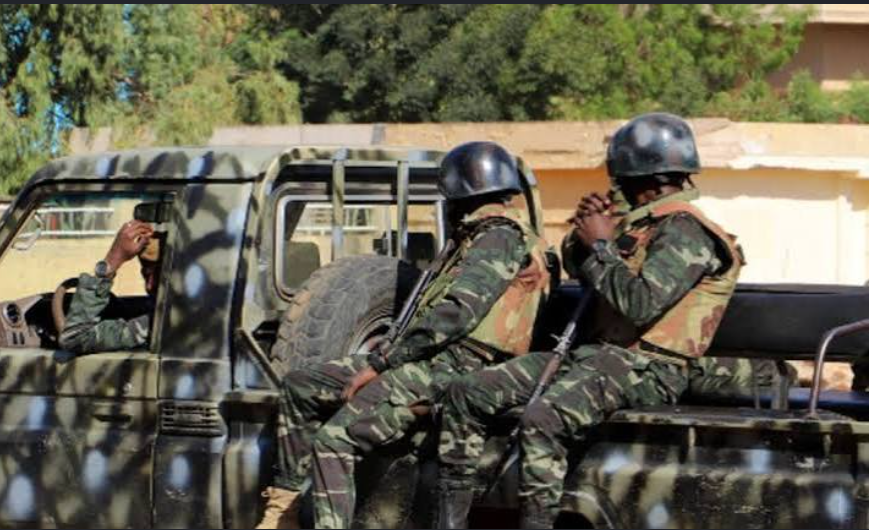
Life gradually returned to normal in Niger’s capital, Niamey, on Sunday after government forces suppressed a military mutiny that triggered intense fighting around strategic locations in the city.
The confrontation, which broke out in the early hours of Saturday, led to the arrest of dozens of soldiers, while several others were reportedly killed during an attempt to advance towards the presidential palace.
The mutiny marked the latest security challenge facing Niger’s military-led government, with the rebellious troops reportedly expressing frustration over the authorities’ inability to halt escalating attacks by armed militant groups operating across the country.
Residents said the incident raised fresh concerns about divisions within the military establishment, which has been central to governance since the 2023 coup that brought General Abdourahmane Tiani to power.
“As soon as there’s a mutiny, it means that things aren’t going well,” Niamey resident Hassane Assoumane said.
“It means that perhaps the soldiers have something to demand, and now it’s up to the current authorities to find a solution,” he added.
The latest unrest represents the third major security incident recorded in Niamey this year. However, the two previous episodes were linked to attacks by jihadist groups targeting a key military facility at the capital’s airport.
Since taking power three years ago, General Tiani has repeatedly promised to restore security and strengthen Niger’s fight against extremist groups.
However, his administration has struggled to contain attacks by fighters affiliated with Islamic State and Al-Qaeda, particularly in areas bordering Mali and Burkina Faso.
The military government has also reshaped Niger’s foreign alliances, cutting defence ties with former colonial power France while seeking closer cooperation with countries including Russia, Turkey and Iran.
Reports indicate that Russia’s Africa Corps, a paramilitary force linked to Moscow’s security operations in Africa, assisted Nigerien forces in repelling the mutiny.
Although authorities have restored calm in Niamey, the incident has intensified questions over the stability of Niger’s military leadership and its ability to manage both internal tensions and the country’s worsening security crisis.
For many Nigeriens, the failed uprising has highlighted the difficult balance facing the junta — maintaining control within the armed forces while confronting persistent militant threats across the nation.