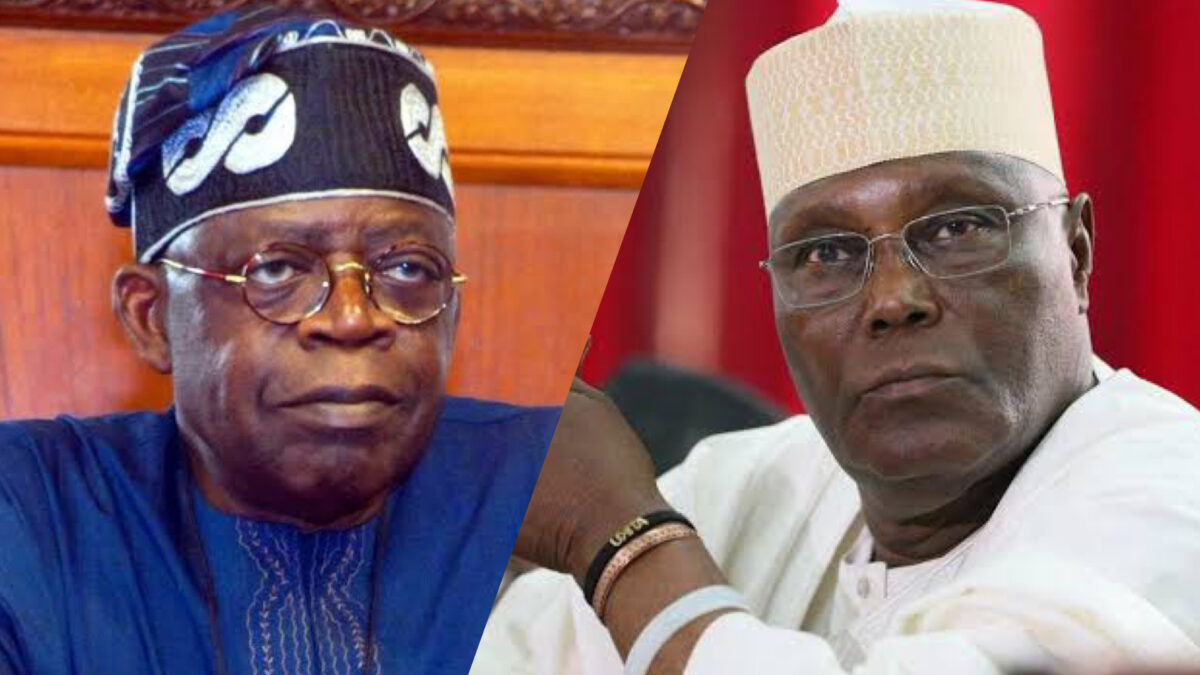
- His Several U-Turns Expose Serious Policy Confusion
- His Subsidy Plans Could Cost Nigeria N19.1 Trillion Annually
The Presidency has accused former Vice-President Atiku Abubakar of “playing politics” with petrol subsidy, alleging that his conflicting statements on the policy within one week have exposed a lack of clarity in his economic agenda.
Special Adviser to the President on Information and Strategy, Bayo Onanuga, made the accusation in a statement on Wednesday titled, “Atiku Confused On Petrol Subsidy; Third U-Turn In One Week Shows He Is Simply Playing Politics.”
Onanuga said Nigerians had been presented with three different versions of what an Atiku administration would do with petrol subsidy, describing the development as a serious policy contradiction.
According to him, Atiku’s spokesperson, Paul Ibe, initially announced that the former vice-president would restore petrol subsidy if elected and subsequently phase it out as a temporary measure to allow Nigerians and businesses to recover.
“Then came a clarification from another senior aide, Phrank Shaibu, who said Ibe’s statement was an ‘unauthorised and misleading characterisation’ of Atiku’s position,” Onanuga said.
He noted that Shaibu had instead argued that subsidy would remain until domestic refining expanded, supply stabilised, competition deepened and the market could provide affordable petrol without government support.
“But just hours later, Atiku himself intervened and effectively overruled that clarification. He insisted that his position ‘has not changed’ and that he would restore what he called a ‘targeted subsidy’ if elected president,” the presidential aide said.
Onanuga quoted Atiku as saying, “I will restore targeted subsidy and put purchasing power back in the hands of Nigerians.”
The presidential aide said the conflicting positions could not be dismissed as semantics, insisting that Nigerians deserved a clear and coherent economic policy.
“If Atiku’s position has not changed, why did one of his principal aides say the subsidy would be temporary and phased out? Why did another senior aide have to publicly disown that explanation and introduce a completely different framework based on market conditions? And why did Atiku then step in to reaffirm the original position?” he asked.
“Nigerians deserve clarity, not policy by trial and error.”
Presidency Attacks ‘Simplistic’ Subsidy Argument
Onanuga also challenged Atiku’s argument that restoring subsidy and encouraging competition would automatically bring down petrol prices and ease the cost-of-living crisis.
He argued that pump prices were influenced by several factors, including international crude oil prices, exchange rates, refining costs, transportation and distribution expenses.
“Competition can improve efficiency and margins, but it cannot magically insulate Nigeria from global crude oil prices or other input costs,” he said.
The presidential aide also rejected what he described as an oversimplification of the relationship between petrol prices and food inflation.
“There is also a troubling oversimplification in Atiku’s argument that ‘when fuel rises, transport rises. When transport rises, food rises. When food rises, families suffer,’” Onanuga said.
He acknowledged that energy and transportation costs affect food prices but argued that petrol prices were not the sole driver of food inflation.
“Agricultural productivity, insecurity, exchange rates, logistics, storage, flooding, input costs, money supply and supply constraints also matter,” he said.
Onanuga maintained that President Bola Ahmed Tinubu’s administration had been addressing these broader structural challenges rather than reducing the country’s economic difficulties to petrol prices.
‘What Exactly Is Targeted Subsidy?’
The presidential aide challenged Atiku to provide details of the proposed subsidy regime, including its cost, beneficiaries, funding mechanism and conditions for eventual termination.
“We therefore urge Atiku to stop shifting positions and explain precisely what he means by ‘targeted subsidy’: how much will it cost, who will benefit, how will beneficiaries be identified, how will it be funded, and what objective economic conditions will determine its eventual ermination?” Onanuga asked.
“Nigerians cannot afford another opaque and potentially costly subsidy regime dressed up in new language.”
He further accused the former vice-president of either lacking a fully developed petroleum policy or deliberately exploiting public frustration for political advantage.
“The former vice-president should be honest with Nigerians: either he has a coherent, costed, and workable petroleum policy, or he is simply playing politics with a policy that has significantly restored fiscal health to the three tiers of government and stabilised the macroeconomic environment,” Onanuga said.
Presidency Questions Atiku’s ‘Barrel’ Subsidy
The statement took an even sharper turn as Onanuga questioned Atiku’s apparent focus on petrol within the range of products derived from a barrel of crude oil.
“Atiku says his subsidy will follow the barrel of crude. Is he aware that refined petrol only constitutes 45 per cent of the by-products of a refined barrel of crude?” he asked.
According to Onanuga, other products derived from crude include aviation fuel, kerosene, diesel, petrochemical feedstocks, asphalt, hydrocarbon gas liquids, lubricants and waxes, as well as petroleum coke and sulphur.
He noted that diesel, which the Obasanjo-Atiku administration deregulated in 2004, accounts for roughly 25 per cent of the barrel, while jet fuel and kerosene account for about nine per cent.
“Kerosene and jet fuel were deregulated in 2009, and subsidies removed in 2016,” he added.
Onanuga further said about 10 to 15 per cent of a barrel produces base ingredients for synthetic rubber, nylon, polyester and plastics, while asphalt accounts for about two to four per cent and hydrocarbon gas liquids such as propane and butane about four per cent.
He therefore posed a series of questions to the former vice-president.
“Will Atiku subsidise all these by-products of the barrel as well, since kerosene is used by the underprivileged to cook, and many homes and factories use diesel to power generators and delivery trucks?” he asked.
“And will he allow the refineries he will supply discounted crude oil to profit from 55 per cent of the by-products, while focusing subsidy only on petrol, his obsession?”
Onanuga concluded by declaring that Atiku’s proposal reflected what he described as a fundamental misunderstanding of the petroleum market.
“The former Vice President is definitely suffering from a lack of basic understanding of his newfound policy prescription,” he said.
Also condemning Atiku’s plans, the Special Adviser to the President on Digital Media, Otega Ogra, revealed that the former vice president could plunge Nigeria into serious financial difficulties with his plan to restore fuel subsidies, which he estimates could cost the country about N19.1 trillion annually.
According to Ogra, if crude oil is priced at $80 per barrel, Nigeria would need to subsidise fuel by about $40 per barrel.
He estimated that this would amount to approximately N52.3 billion daily, N1.5 trillion monthly, and N19.1 trillion annually.
Ogra said the amount would be extremely high compared with the funds currently shared among the federal, state, and local governments.
He also alleged that restoring the subsidy could result in public funds being diverted into the hands of wealthy individuals.