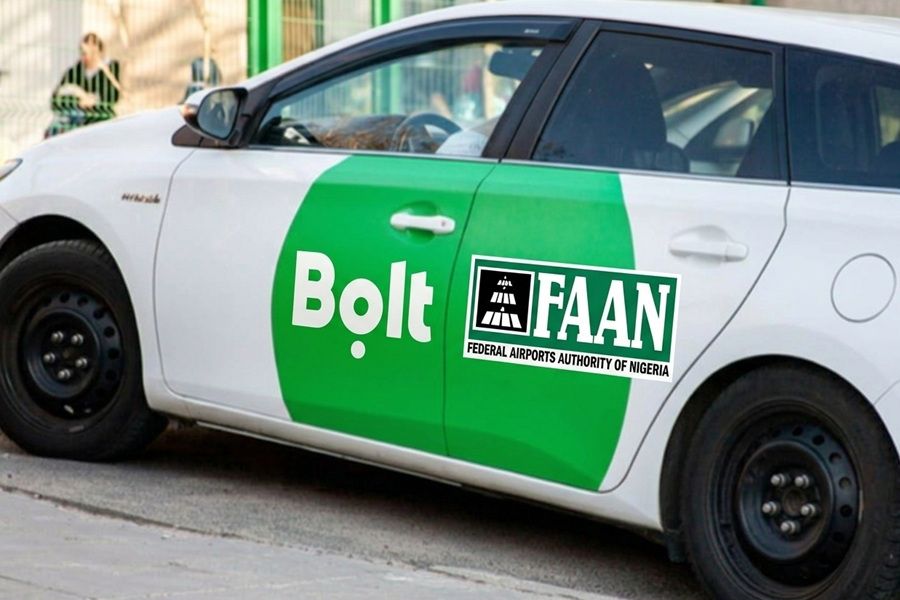
The Federal Airports Authority of Nigeria (FAAN) has cleared Bolt to immediately resume operations at airports under its management, following the resolution of an operational dispute that had disrupted e-hailing services and triggered widespread concerns among passengers.
The development followed what FAAN described as “constructive engagements” between the Authority and Bolt to establish an agreeable and sustainable framework for the ride-hailing company’s operations within the airport environment.
FAAN, in a statement issued by its Director of Public Affairs and Consumer Protection, Henry Agbebire, said the resolution would allow passengers to regain access to the convenience and freedom of choice offered by e-hailing services while ensuring that airport transportation remains safe, orderly and accountable.
The Authority apologised to passengers for the inconvenience caused by the temporary interruption of e-hailing services.
“We sincerely apologise for the difficulties this caused our passengers,” Agbebire said.
He explained that FAAN’s intervention was driven by regulatory, safety and security concerns rather than an attempt to control fares or create a monopoly in airport transportation.
According to him, the Authority had been grappling for nearly a decade with problems associated with commercial and e-hailing vehicles at airports, including passenger solicitation, touting, unregulated operations and random pick-ups.
“These challenges, which in some instances involve drivers operating across more than one platform, have made it necessary for the Authority to strengthen the management and visibility of commercial transportation within the airport,” he said.
At the centre of the controversy was FAAN’s Airport Car Hire Rank Management System, ACHRAMS, which the Authority said was introduced to impose greater structure and accountability on authorised airport car-hire operations.
FAAN stressed that ACHRAMS is not an e-hailing application and was never designed to compete with Bolt, Uber or other mobility platforms.
“ACHRAMS is not an e-hailing application and was never conceived as a competitor to Uber, Bolt or any other mobility platform,” Agbebire said.
He added that FAAN “supports healthy competition and does not seek to create or promote a monopoly in airport transportation.”
The Authority also moved to douse concerns over airport taxi fares, saying the rates discussed publicly were not newly imposed by FAAN or created by ACHRAMS.
According to FAAN, the airport taxi fares existed independently of the system, while ACHRAMS merely provided greater visibility and transparency around the prevailing rates.
FAAN acknowledged, however, that making the fares more visible brought them into sharper contrast with the cheaper prices passengers had become accustomed to through e-hailing platforms.
“FAAN acknowledges that the comparison with the lower fares passengers had become accustomed to through e-hailing platforms understandably heightened public concern,” the Authority said.
With Bolt now cleared to return, FAAN said the resolution demonstrated that airport security and regulation could coexist with passengers’ convenience and freedom to choose their preferred means of transportation.
The Authority disclosed that discussions with other e-hailing operators were still ongoing, expressing confidence that the outstanding engagements would be concluded in the coming days.
FAAN further assured passengers that they remained free to choose from authorised transportation options, while insisting that all operators must comply with safety, security, orderliness and accountability requirements within the airport environment.
The Authority said the passenger experience would remain central to its decisions, stressing that “safety, security, convenience and overall airport experience remain at the centre of FAAN’s decisions.”