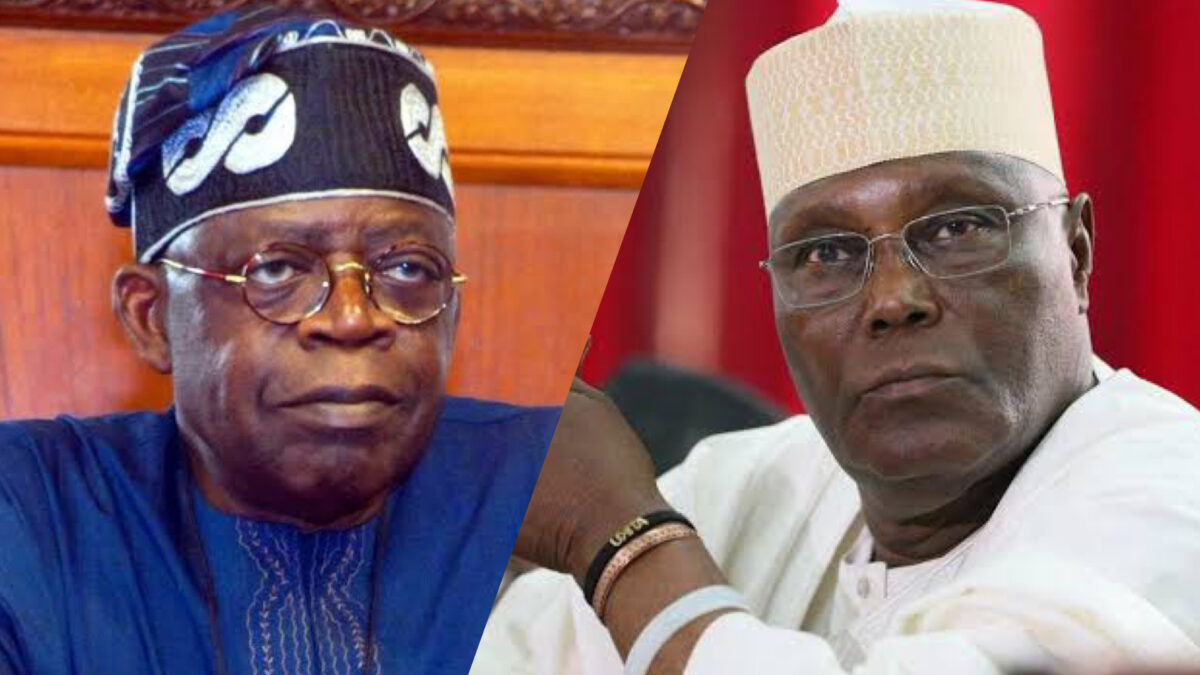
A United States-based lobbying and policy advisory firm has accused President Bola Tinubu of spending millions of dollars in an effort to prevent the release of American law-enforcement records connected to decades-old allegations involving narcotics trafficking.
Von Batten-Montague-York, a Washington-based firm retained by former Vice President and political rival Atiku Abubakar, made the allegation in a statement posted on its verified X account late Tuesday.
The firm claimed that Tinubu’s position that he was not attempting to obstruct disclosure of the records was inconsistent with steps taken by his lawyers in the continuing Freedom of Information Act litigation.
“Despite claiming innocence, Tinubu has spent millions of dollars to ensure that his drug trafficking records are never released,” the firm alleged.
It did not, however, provide in the statement a detailed breakdown or independently verifiable evidence establishing the amount it claimed had been spent.
Von Batten-Montague-York further alleged that Tinubu had intervened in the court proceedings and engaged with the Federal Bureau of Investigation and Drug Enforcement Administration as part of efforts to resist disclosure.
Those assertions remain allegations by the lobbying firm and should not be confused with a judicial finding that Tinubu committed a criminal offence or unlawfully attempted to conceal records.
The latest confrontation centres on a long-running FOIA lawsuit brought by American transparency activist Aaron Greenspan seeking records held by US agencies, including the FBI and DEA, concerning past investigations involving Tinubu.
The legal battle intensified this month after Tinubu’s lawyers formally joined a request by the US Department of Justice for additional time to respond to a motion in the case.
A filing by Tinubu’s counsel, Christopher Carmichael, asked that the President’s response remain on the same timetable as the US government defendants, which had requested a 10-day extension.
The move has become a major point of contention, with Von Batten-Montague-York portraying it as evidence that Tinubu is resisting disclosure.
But seeking additional time to respond in litigation does not, by itself, establish the lobbying firm’s broader allegation that millions of dollars were spent to suppress the records.
The court proceedings have since taken another turn.
US District Judge Beryl Howell granted the FBI permission to submit documents privately to the court for an in-camera review and set August 28, 2026, as the deadline for the FBI, DEA, Department of Justice and Tinubu to file their positions opposing disclosure.
The dispute concerns historical US records associated with a 1993 civil forfeiture proceeding involving bank accounts linked to Tinubu.
Court documents from the case show that $460,000 held in an account in Tinubu’s name was forfeited to the United States following a settlement in a civil action.
The proceeding was not a criminal conviction.
That distinction has previously been considered by Nigerian courts. During litigation arising from the 2023 presidential election, the Presidential Election Petition Court held that evidence presented over the forfeiture did not establish that Tinubu had been arraigned, convicted, sentenced or fined in a criminal proceeding in the United States.
Tinubu and his political allies have consistently rejected claims that the episode amounted to a criminal conviction.
The renewed controversy is particularly politically sensitive because Von Batten-Montague-York is not a disinterested observer in the dispute.
The Washington firm has been retained by Atiku, one of Tinubu’s leading political opponents, and has been campaigning for greater disclosure of American records concerning the President.
That relationship does not invalidate documents or court filings cited by the firm, but it provides important context to its increasingly forceful public accusations against the Nigerian President.
The firm argued that the involvement of major US law-enforcement agencies showed that the underlying records went beyond what it described as attempts to portray the 1993 matter simply as a civil case.
“The involvement of US law-enforcement agencies in the records dispute demonstrated that the matter involved sensitive investigative material,” it said.
The FBI’s request for private judicial review similarly indicates that at least some of the material is considered sensitive, but it does not establish the truth of the drug-trafficking allegations or amount to a criminal finding against Tinubu.
As the August 28 deadline approaches, attention will now focus on what arguments Tinubu, the Justice Department and US law-enforcement agencies present to the court, and whether Judge Howell ultimately orders additional records released to the public.
The unfolding FOIA battle is also certain to carry political consequences in Nigeria, where Tinubu’s opponents are expected to use the controversy as the country moves deeper into the 2027 election season.
For now, however, two issues remain distinct: Von Batten-Montague-York has made serious allegations about the President’s efforts to resist disclosure, while the established judicial record remains that Tinubu has not been convicted of drug trafficking in the United States.
What the unreleased federal records contain, and how much of them the American court will ultimately permit the public to see, could determine whether the controversy fades or becomes an even more explosive issue in Nigeria’s approaching presidential contest.