- Says Dialogue With Faith Groups, Civil Society Essential For Peace, Development
- Reaffirms Tinubu Government’s Commitment To Reforms, Democracy, Security
- Obi: CBCN Has Never Been An Opposition, But Nation’s Conscience
The Federal Government has dismissed claims that the administration of President Bola Tinubu is working towards a one-party state, insisting that it remains committed to democracy, political pluralism and the independence of the Independent National Electoral Commission (INEC).
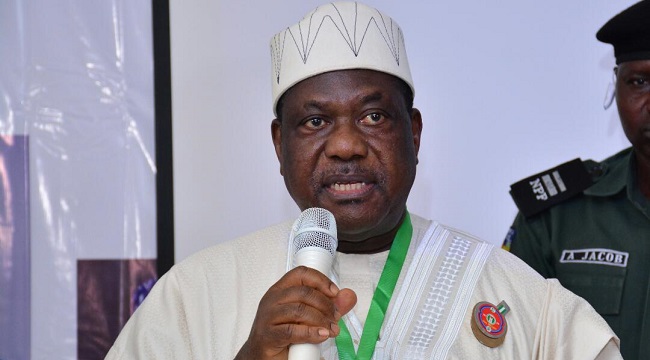
Secretary to the Government of the Federation (SGF), Senator George Akume, stated this while responding to public reactions following President Tinubu’s recent meeting with the leadership of the Catholic Bishops’ Conference of Nigeria (CBCN).
In a statement personally signed by him on Wednesday, Akume said the Tinubu administration would deepen consultations with the Catholic Bishops, other faith-based organisations and key stakeholders, stressing that many of Nigeria’s challenges require collective action rather than confrontation.
“Many of the challenges confronting our nation require partnership. Faith communities, traditional institutions, civil society, the private sector and citizens all have indispensable roles to play in promoting peace, strengthening social cohesion and advancing national development,” Akume said.
He described constructive engagement between government and religious institutions as essential, adding that the Office of the Secretary to the Government of the Federation would continue consultations with the Catholic Bishops and other stakeholders on issues affecting the country.
The SGF said the Federal Government recognises the Catholic Church as one of Nigeria’s foremost development partners, citing its contributions to education, healthcare, humanitarian services, peacebuilding and moral leadership.
According to him, discussions between President Tinubu and the bishops were frank and constructive, covering issues such as insecurity, economic hardship, education, electoral credibility, political pluralism and religious freedom.
He noted that both sides also acknowledged progress made by the administration, including the student loan programme and the rescue of abducted schoolchildren and teachers by security agencies.
Addressing concerns over Nigeria’s political landscape, Akume rejected suggestions that the ruling party was pursuing a one-party agenda.
“The Federal Government neither seeks nor supports a one-party state. We remain deeply respectful of the independence of INEC in the spirit of true democracy,” he declared.
He pointed to the registration of 21 political parties by INEC as evidence that Nigeria’s democratic space remains open and competitive.
On the economy, Akume admitted that Nigerians were facing hardship but described the situation as temporary, insisting that the administration’s reforms were necessary to correct structural weaknesses and place the economy on a sustainable growth path.
He said investments in major infrastructure projects, including the Lagos-Calabar Coastal Highway, the Sokoto-Badagry Super Highway, railway development and nationwide road rehabilitation, were laying the foundation for long-term economic growth.
The SGF added that the government was implementing food security initiatives through improved agricultural inputs, mechanisation and support from the National Agricultural Land Development Agency (NALDA), while reforms in the power sector and healthcare were also underway.
Defending the administration’s economic policies, Akume argued that there were already signs of improvement.
“There is growing evidence that the reforms are yielding results, with the foreign exchange market becoming more stable, inflationary pressures moderating, macroeconomic fundamentals strengthening and investor confidence returning,” he said.
He listed the Social Investment Programme, Credit Corps, the Nigerian Education Loan Fund (NELFUND), support for small businesses and Conditional Cash Transfers as key interventions designed to cushion the impact of economic reforms on vulnerable Nigerians.
On security, Akume acknowledged that terrorism, banditry and kidnapping remained major concerns but said the government was strengthening the country’s security architecture through the creation of four new Army divisions in Benue, Kwara, Taraba and Edo states, alongside reforms in intelligence, logistics, recruitment and personnel welfare.
He added that the establishment of the Office of Homeland Security further underscored the administration’s commitment to improving internal security.
The SGF maintained that the Federal Government would continue to welcome sincere criticism and advice from religious and national institutions.
“No responsible government should ignore the concerns of its people. While government and the Catholic Church may not always agree on every issue, we remain united by the common aspiration that every Nigerian should live in peace, dignity and hope,” Akume said.
He expressed confidence that stronger collaboration between the Federal Government and faith-based organisations would help build a more resilient Nigeria and accelerate national development.
Meanwhile, the presidential candidate of the Nigeria Democratic Congress (NDC), Peter Obi, has accused the administration of President Tinubu of becoming increasingly intolerant of criticism, warning that attacks on the Catholic Bishops’ Conference of Nigeria (CBCN) and John Onaiyekan undermine democratic values and the nation’s moral conscience.
In a statement titled “When a Government Declares War on the Truth,” Obi said Nigeria’s economic and security challenges continue to worsen, arguing that rather than address citizens’ concerns, government officials have resorted to attacking those who speak out.
He referenced recent remarks by former United States President Donald Trump, who described Nigeria as “a now disgraced country,” saying the country’s declining fortunes have become increasingly evident.
According to Obi, the Catholic Bishops’ Conference has never acted as a political opposition but has consistently served as the nation’s conscience by speaking on issues affecting Nigerians irrespective of the government in power.
> “The Catholic Church has never functioned as an opposition party in Nigeria. Across military regimes and successive democratic administrations, the Catholic Bishops’ Conference of Nigeria has maintained a principled voice on national issues,” Obi said.
He argued that other religious organisations, including the Christian Association of Nigeria (CAN), the Nigerian Supreme Council for Islamic Affairs (NSCIA), Jama’atu Nasril Islam (JNI) and the Supreme Council for Shari’ah in Nigeria, have equally raised concerns over insecurity, inflation, unemployment and rising poverty because they witness the hardship faced by ordinary Nigerians.
Drawing from his experience as governor of Anambra State, Obi said constructive criticism from traditional rulers and religious leaders helped improve governance, particularly in education and healthcare.
He described the attacks on Cardinal Onaiyekan as unfortunate, recalling that even when Pope John Paul II criticised the military government of the late Sani Abacha during his 1998 visit to Nigeria, there was no campaign to discredit him.
Obi also questioned what he described as a contradiction between President Tinubu’s public display of respect for the Catholic Church during the inauguration of Pope Leo XIV in Rome and the subsequent attacks on Catholic leaders back home.
He alleged that presidential aides had sought to portray the bishops’ criticisms as a religious issue, despite the fact that the concerns raised centred on insecurity, inflation, unemployment and economic hardship affecting Nigerians across religious and ethnic lines.
“The bishops merely expressed what millions of Nigerians experience daily: insecurity has worsened, poverty is deepening, inflation is crippling families, businesses are struggling and hope is fading,” Obi stated.
The former Anambra governor criticised the Federal Government’s response, saying that instead of addressing the issues raised by the bishops or outlining measures to ease the suffering of Nigerians, presidential aides and supporters launched what he described as “vicious attacks” against Cardinal Onaiyekan.
He maintained that leaders should welcome honest criticism and engage constructively with institutions that speak in the public interest, rather than silence dissenting voices.