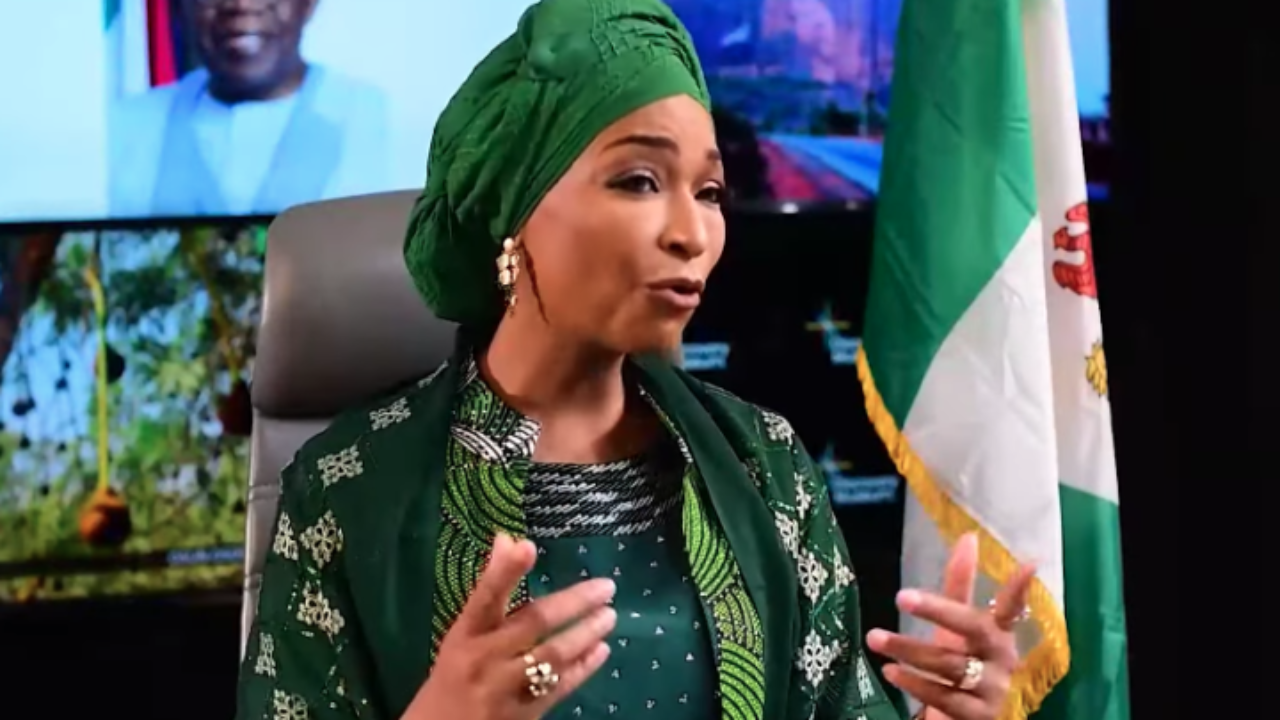
Nigeria’s Minister of Arts, Culture, Tourism and Creative Economy, Hannatu Musa Musawa, has challenged tourism operators to embrace digital transformation, sustainability and quality service delivery or risk being left behind in an increasingly competitive global industry.
Speaking at the opening of the ninth edition of the Nigeria Tourism Investors Forum and Exhibition (NTIFE) 2026 and the 29th Annual General Meeting of the Federation of Tourism Associations of Nigeria in Abuja, Musawa declared that Nigeria must urgently reposition its tourism sector as a major driver of economic diversification.
Addressing participants on the theme, “Tourism Transformation Through Collaboration, Policy Alignment and Investment,” the minister said global tourism is driven by fierce competition, insisting that Nigeria must innovate to remain relevant.
“To remain competitive, we must embrace innovation, digital transformation, sustainability and quality service delivery. We must develop tourism corridors. We must modernise visitor experiences. We must improve destination management. Above all, we must tell Nigeria’s story confidently and authentically,” Musawa said.
She described NTIFE as one of Nigeria’s foremost private-sector platforms for tourism investment, policy engagement and business development, commending FTAN for sustaining the annual forum.
According to her, the event comes at a critical time as the Federal Government intensifies efforts to position tourism as a key pillar of economic growth under President Bola Tinubu’s Renewed Hope Agenda.
“Transformation requires deliberate collaboration. Transformation requires sound policies. Transformation requires investment. And transformation requires leadership,” she said.
Musawa disclosed that her ministry is pursuing reforms aimed at strengthening the policy and regulatory environment, deepening collaboration with state governments, expanding international partnerships and promoting domestic tourism.
She urged stakeholders to move beyond discussions and translate ideas into concrete investments and partnerships.
“I encourage every participant to move beyond dialogue toward practical commitments, bankable investments and enduring partnerships that will redefine Nigeria’s tourism landscape for generations to come,” she added.
However, the President of FTAN, Aliyu Ajayi Badaki, painted a grim picture of the sector, lamenting what he described as years of fragmentation, poor coordination and weak collaboration among industry players.
Badaki argued that Nigeria’s tourism industry cannot realise its enormous potential unless operators and government agencies abandon what he called a disjointed approach to sector development.
“Our mandate is built on one simple but powerful principle: to unite every segment of the tourism ecosystem under one common purpose. For too long, the public and private sectors have operated as parallel institutions pursuing the same objectives but often without adequate coordination,” he said.
He noted that operators within the private sector have often competed against one another instead of collaborating to build a stronger industry.
According to him, FTAN’s Tourism Transformation Movement (TTM) was created to bridge these divides through stronger partnerships, policy engagement and a united private-sector voice.
“We believe that unity is no longer optional; it is the foundation upon which a globally competitive tourism industry must be built,” Badaki stressed.
The FTAN president also renewed the federation’s call on President Bola Tinubu to return the existing National Institute of Hospitality and Tourism Act 2022 and its 2025 Regulations to the National Assembly for amendment.
He argued that the legislation contains provisions that are not in the best interest of the tourism industry and should be reviewed, citing the President’s recent decision to return two other bills to the National Assembly over contentious provisions.
Industry stakeholders at the forum agreed that stronger policy coordination, sustained investment, digital innovation and closer collaboration between government and the private sector would be critical to unlocking Nigeria’s vast tourism potential and positioning the country as a leading destination in Africa.