- Atiku’s US Lobby Group Questions Letter’s Timing, Authenticity, Threatens White House Petition
- ADC To Tinubu: Trump’s Letter Will Not Help You
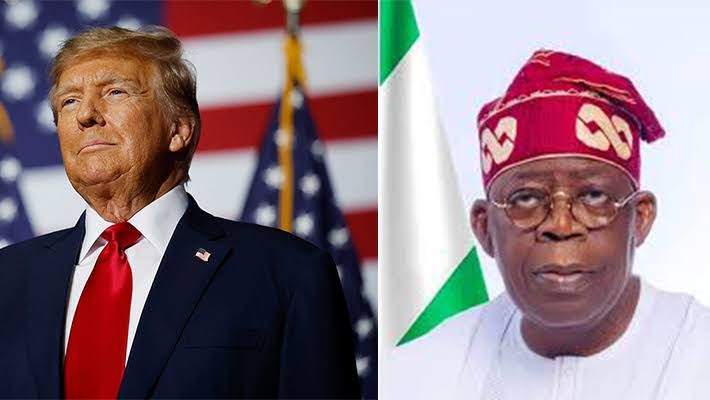
A letter of commendation reportedly sent by United States President Donald Trump to President Bola Ahmed Tinubu has sparked fresh political controversy, with opposition figures questioning its significance while the Presidency’s supporters hail it as a major endorsement.
TheMatrix Newspaper reports that in a letter dated July 6, 2026, and made public by the Presidency on Wednesday, Trump commended Tinubu’s determination to confront terrorism and violent attacks, particularly those targeting Christian communities, while pledging continued U.S. support in the campaign against extremist groups.
“Thank you for your thoughtful letter. Your kind words mean a great deal to me, and I appreciate your decisive leadership on behalf of the Nigerian people,” Trump wrote.
The U.S. President added: “I applaud your resolve to tackle the issues plaguing your nation, especially the violence affecting Christian communities, and it is a true honour to stand with you in the fight against terrorists and to make the Federal Republic of Nigeria stronger and more prosperous.”
The letter has howeved quickly becomes the latest flashpoint in the country’s heated political landscape ahead of the 2027 elections.
Reacting to the letter, a United States-based lobbying group working for former Vice President Atiku Abubakar has challenged the authenticity and timing of the letter alleging that the document may be aimed at influencing public perception amid renewed scrutiny of longstanding allegations against the Nigerian leader.
In a statement posted on social media, Von Batten-Montague-York, the lobbying firm representing Atiku, questioned why the Tinubu administration only made public the letter—dated July 6, 2026—16 days after it was allegedly written.
The group argued that Nigerians deserved an explanation for the delay, suggesting that the release may have been intended to portray Trump as personally endorsing Tinubu at a time when, according to the lobbyists, longstanding drug trafficking allegations involving the President are being discussed by some members of the White House and the US Congress.
The lobbying firm also cast doubt on the manner in which the letter was presented, noting that only excerpts had been released publicly without an image of the signed document.
“We are half expecting the White House to tell us that the letter is a fabrication and that no such letter was sent,” the group said, while adding that even if the correspondence was genuine, it appeared to be a routine diplomatic response prepared by White House staff rather than a personal endorsement from President Trump.
Von Batten-Montague further disclosed that it intends to forward the published excerpts of the purported letter to officials at the White House for clarification.
The group claimed it believes US officials would not welcome any attempt to use a diplomatic exchange to imply that President Trump condones the allegations it referenced against Tinubu.
In a fresh post, Von Batten-Montague compared what it described as an authentic letter sent by Trump to Argentine President Javier Milei with the version attributed to Tinubu and circulated by an account linked to the Nigerian Presidency, @PBATMediaCentre.
The group argued that the differences between the two were “beyond clear,” while stopping short of directly accusing Tinubu of forging the correspondence.
It said it was not claiming that no diplomatic response had been sent to the Nigerian President or that Tinubu personally fabricated the letter.
However, it described it as highly unusual for a government to publish the full text of a purported diplomatic letter—including the date and signature block—without releasing a scanned image of the original document.
According to the lobbying firm, the original document should be made public to dispel doubts surrounding its authenticity.
The group further disclosed that it intends to forward the published excerpts of the purported letter to officials at the White House, expressing confidence that US authorities would not welcome any attempt to use a diplomatic exchange to suggest that President Trump condones the allegations it referenced against Tinubu.
It concluded by urging Nigerians to remain skeptical until the original document is released.
Similarly, the African Democratic Congress (ADC) has dismissed the political significance of the purported letter, insisting that no diplomatic correspondence can shield the Nigerian leader from the judgment of voters in the 2027 general election.
In a statement issued on Wednesday by its National Publicity Secretary, Mallam Bolaji Abdullahi, the opposition party said the Presidency’s celebration of Trump’s letter reflected what it described as “desperation for any form of validation” rather than evidence of good governance.
According to the ADC, diplomatic letters exchanged between world leaders are routine and should not be presented as a referendum on the Tinubu administration’s performance.
The party argued that while it respects the office of the US President, correspondence between heads of state is a normal feature of international relations and does not amount to an endorsement of any government’s record.
The ADC maintained that the true test of leadership lies in the daily experiences of citizens, not in commendations from foreign leaders.
It said Nigerians continue to grapple with worsening insecurity, noting that hundreds of women and children remain in captivity in parts of Borno and Kaiama in Kwara State, while communities in Benue and other parts of the country still live under the constant threat of violent attacks.
The opposition party also pointed to the United States government’s travel advisory on Nigeria, arguing that it contradicts any attempt to portray Trump’s communication as an endorsement of Tinubu’s administration.
According to the ADC, even after the Presidency publicised the letter, the US Department of State retained Level 3 and Level 4 travel advisories for parts of Nigeria, warning American citizens against travelling to affected areas because of terrorism, kidnapping, crime and civil unrest.
“We therefore wonder how correspondence from a government that designates several Nigerian states as ‘Do Not Travel’ areas can be regarded as an endorsement,” the statement said.
The party stressed that Trump’s letter should be viewed as nothing more than routine communication between two presidents and does not absolve the Tinubu administration of its responsibility to address Nigeria’s economic and security challenges.
It urged the Presidency to focus less on celebrating diplomatic courtesies from abroad and more on delivering tangible improvements in the lives of Nigerians.
“The true measure of any government is not what is written about it abroad, but what its citizens experience every day,” the ADC said.
The party concluded that President Tinubu would ultimately be judged not by letters received from foreign capitals but by whether his administration succeeded in improving the lives of the Nigerian people.