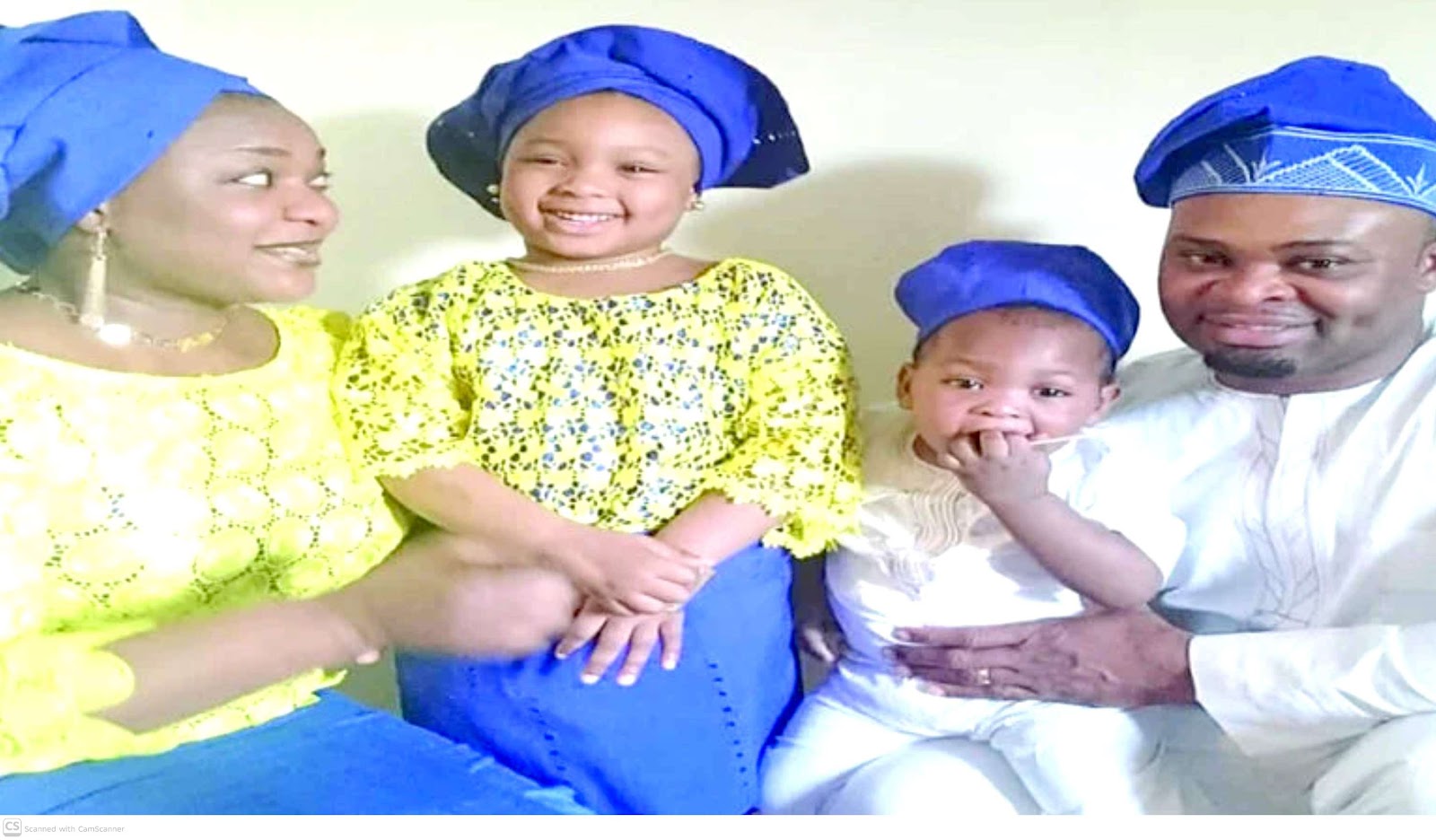
What was meant to be a final farewell filled with hymns and prayers ended in raised voices, bitter accusations and viral videos.
Last week, mourners gathered to bury popular gospel singer Bunmi Akinnaanu, widely known as Omije Ojume. But instead of quiet closure, her burial became the latest chapter in a long-running family conflict that has now spilled onto social media, dividing opinion and reopening old wounds.
At the centre of the storm is Rotimi Adeoye, the late singer’s estranged husband, who has broken his silence through a series of voice notes, videos and interviews circulating online. In them, he paints a picture of a man cut off from his children and locked out of his former family’s life for years.
His accounts surfaced shortly after chaotic scenes reportedly erupted at the graveside, where relatives and associates exchanged allegations of abandonment, betrayal and manipulation.
A Marriage That Began With Hope
Omije and Adeoye married in 2006, first at the Surulere Magistrate Court and later in a church ceremony in Mushin. Friends recall a hopeful couple chasing better opportunities abroad and building a young family.
But by 2010, the relationship had reportedly fractured. Migration challenges, financial pressures and growing disagreements strained the union. Years later, the marriage was formally dissolved.
Adeoye, now believed to be based overseas and remarried, claims the separation marked the beginning of his isolation from his children.
In recorded conversations aired on Yeye Kudi Courtroom TV, he alleged that Akinaanu returned to Nigeria with their daughter without his consent, shortly before critical residency documents were due.
“She blocked every access I had to reach you,” he said in one recording, claiming that even attempts through schools were frustrated.
He insisted he continued to send money, sometimes in large sums, and paid school fees, but was shut out for more than eight years.
“I bathed that child. We were together until she was seven,” he said emotionally.
A Mother’s Struggle
After returning to Nigeria, Akinaanu raised her two children largely on her own while rebuilding her music career. Friends say she poured herself into ministry, performance and parenting, determined to provide stability.
Her health began to decline in later years, and by 2025, public fundraising campaigns were organised to support her medical treatment. She died in late 2025 after a prolonged illness.
To many supporters, she became a symbol of resilience — a woman who endured hardship quietly while nurturing her children.
A Daughter’s Pain Goes Viral
The family’s private struggles became public after Jomiloju, the couple’s daughter, delivered an emotional tribute during the service of songs.
Fighting back tears, the teenager praised her mother as “the best woman in the world” and accused her father of abandoning the family.
“Ever since my father left me, he did not care,” she said. “Imagine now he’s calling when he knows that someone has left.”
The clip spread rapidly online, drawing sympathy for the grieving daughter and reigniting debate about Adeoye’s role in his children’s lives.
For Adeoye, it was painful proof, he says, of years of alienation.
He claimed the children had been “brainwashed” against him and vowed to pursue legal avenues to reconnect with them.
Burial Plans and Broken Trust
Tensions extended beyond family members to include the late singer’s gospel music colleagues.
In a video statement, Niyi Peter, speaking for the artistes, said Akinaanu had expressed a wish for a public burial before her death. According to him, preparations began with initial family consent.
Another singer, Alayo Melody, was said to have sponsored major expenses, including the coffin, venue and branded T-shirts.
But Peter alleged that the family later withdrew support, involved the police and barred the artistes from full participation.
A woman who reportedly cared for Akinaanu during her hospital stay was also said to have been arrested and pressured to surrender her phone.
The family, however, rejected these claims, insisting they were uncomfortable with what they saw as hurried online announcements and chose to organise the burial themselves using pooled resources.
A Graveside Showdown
All the unresolved tensions finally collided at the burial.
What began with worship songs and prayers reportedly dissolved into confrontations, as grievances that had simmered for years were aired openly before mourners and cameras.
Relatives from both sides accused each other of manipulation and insincerity. Attempts at reconciliation before the ceremony, confirm family sources, had failed.
Within hours, clips of the confrontation were circulating widely, turning a moment of mourning into a national talking point.
A Family Still Divided
Since the burial, both sides have continued to defend their actions online, releasing statements, interviews and recordings.
Adeoye maintains that he never abandoned his children and remains willing to fight legally for access and reconciliation. Akinaanu’s family insists he failed in his responsibilities and resurfaced only after her death.
Caught in the middle are two young people grieving their mother while navigating a deeply fractured family.
For many observers, the saga reflects a broader reality: how unresolved marital, custody and migration disputes can quietly fester for years before exploding in public — often at the most painful moments.
As social media continues to amplify every claim and counterclaim, the question remains whether healing is still possible for a family whose grief has become a public spectacle.
For now, Omije Ojume’s legacy as a gospel singer is intertwined with a story of love, loss and lingering conflict — one that refuses to fade quietly into memory.