- Aniebonam: Yusuf Has Not Resigned from NNPP
- Kano Speaker, 21 Lawmakers Said to Follow Governor Out of Party
- Governor Sacks Political Adviser Over “Poor Performance”
- Kwankwaso Labels January 23 ‘World Betrayal Day’
By the time the New Nigeria Peoples Party (NNPP) flag was quietly taken down at the Kano Government House, the political damage had already been done.
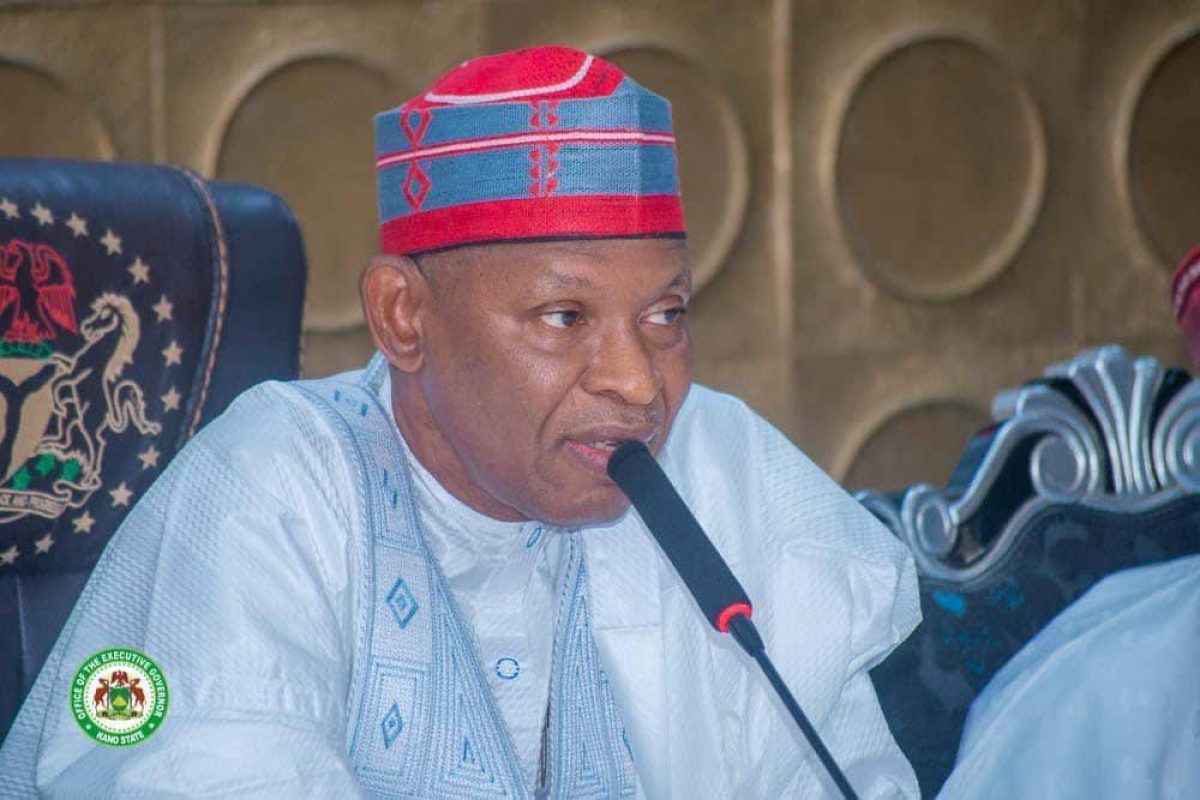
What unfolded in Kano in late January was not a routine defection but a full blown rupture that exposed deep fault lines between party structures and political movements, loyalty and legality, past alliances and future ambitions. At its centre stood Governor Abba Kabir Yusuf, barely two years into his tenure, walking away from the platform that brought him to power.
On Friday, January 23, 2026, Yusuf formally announced his resignation from the NNPP, citing a deepening internal crisis and what aides described as the need to protect the broader interest of Kano people.
His spokesperson, Sunusi Tofa, said the governor did not walk alone. With him, 21 members of the Kano State House of Assembly, eight members of the House of Representatives, and all 44 local government chairmen elected on the party’s platform were said to have resigned.
Almost immediately, political watchers began reading between the lines. Reports of a private meeting between Yusuf and President Bola Tinubu fuelled speculation that Kano’s governor was headed for the ruling All Progressives Congress (APC), a move that would dramatically reshape the state’s political map ahead of 2027.
But within hours, the NNPP itself pushed back hard.
Dr Boniface Aniebonam, founder of the NNPP, dismissed Yusuf’s resignation as procedurally invalid, insisting the governor had not resigned from the party but from the Kwankwasiyya Movement led by Senator Rabiu Musa Kwankwaso.
According to Aniebonam, Yusuf’s resignation letter was not addressed to the party’s recognised structures but to a Diso Chiranchi Ward official whom he described as a Kwankwasiyya functionary.
“The NNPP does not recognise the Kwankwasiyya Movement ward chairman as chairman of the party,” Aniebonam said, arguing that the letter’s destination alone rendered it null and void.
He went further, claiming that the party had earlier lifted Yusuf’s suspension and even directed him to take over leadership of the NNPP in Kano. In Aniebonam’s telling, there was no resignation, only a misunderstanding rooted in a long running schism between a registered political party and what he described as a pressure group whose relevance ended after the 2023 elections.
Citing rulings from the Abia State High Court and the Federal Capital Territory High Court, Aniebonam said the Independent National Electoral Commission (INEC) had been directed to recognise the Aniebonam led NNPP and to refrain from dealings with the Kwankwasiyya Movement.
“Governor Yusuf and the Kano legislators were elected with the NNPP basket of fruits logo, not the Kwankwasiyya insignia,” he said.
While lawyers argued over court orders and party supremacy, the political aftershocks were already tearing through the Kano Government House.
One after another, political appointees perceived to be loyal to Senator Kwankwaso began to step aside. The most visible was the governor’s Special Adviser on Political Matters, Sunusi Kwankwaso, who announced his resignation in a viral video.
“I don’t want to be part of betrayal,” he said, alleging that attempts to submit his resignation letter were blocked. He reaffirmed his loyalty to Kwankwaso and the Kwankwasiyya movement, ruling out any move to the APC.
“I will not betray Rabiu Musa Kwankwaso. I will not join the APC,” he declared.
By Saturday, the governor moved to regain control. Sunusi Kwankwaso was formally relieved of his duties, with the government citing poor performance and conduct inimical to effective governance.
In a statement, Yusuf said the decision followed a comprehensive review of the office and was necessary to restore unity, focus, and discipline within his administration.
“This administration will not condone any action capable of undermining unity, stability, and effective governance,” the governor said, announcing the appointment of Mustapha Bakwana as the new Political Adviser.
Symbolism followed substance. NNPP flags disappeared from the Government House, reinforcing the sense that a political chapter had closed.
Inside the Kano State House of Assembly, the numbers told their own story.
The Assembly confirmed that 22 lawmakers had resigned their NNPP membership alongside the governor. The list included Speaker Jibril Ismail Falgore, Deputy Speaker Muhammad Bello Butu Butu, Majority Leader Lawan Hussain, Deputy Majority Leader Garba Shehu Fammar, and Chief Whip Muddasir Ibrahim Zawachiki, alongside lawmakers from constituencies stretching across the state, from Fagge to Rano, Gwale to Wudil.
The Assembly said it had verified and authenticated the resignations to clarify the political standing of its members amid growing public confusion.
Beyond the legislature, the realignments spread through the executive. The Commissioner for Environment and Climate Change, Dr Dahiru Muhammad Hashim, became one of the senior officials to publicly resign from the NNPP, adding to a growing list of defections.
The NNPP’s national leadership responded with sharp words and historical warnings. In a statement signed by its National Publicity Secretary, Ladipo Johnson, the party accused Yusuf of betraying a sacred trust and rejected claims that the party was mired in an irredeemable crisis.
The party noted that Yusuf had actively participated in NNPP congresses and its national convention in December 2025, held under INEC supervision. Drawing parallels with the defection of former governor Abubakar Rimi in the 1980s, the party warned that political betrayals in Kano had rarely ended without consequences.
For now, Kano stands at a familiar crossroads.
Once again, the state finds itself caught between loyalty to movements and allegiance to party structures, between court judgments and street level followership.
Whether Governor Yusuf’s gamble reshapes Kano’s future or replays its turbulent past remains an open question, but the aftershocks have already redrawn the political terrain.
In Kano, history has a long memory, and politics rarely forgets.