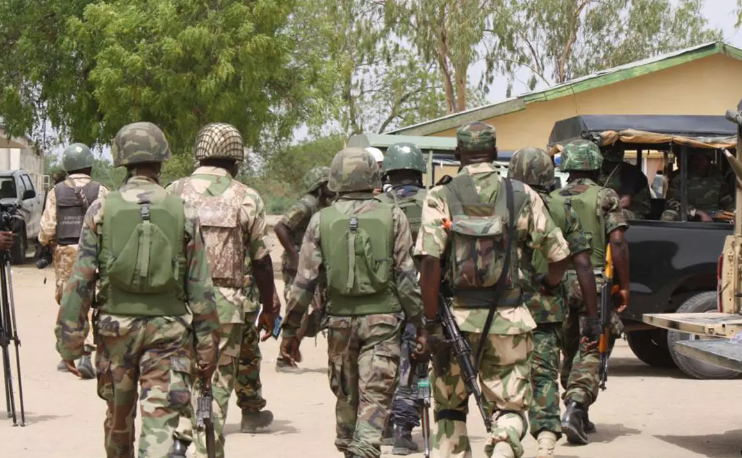
Historical grievances and systemic marginalisation have been attributed to be major reasons for the low turnout of Igbo youths in the ongoing army recruitment exercise.
Leader of Army Force Headquarters Recruitment Sensitisation Team, Anambra, Brig.-Gen. Chima Ekeator disclosed that only 200 persons from the South-East were registered and he appealed to Igbo youths to take part in the exercise to fill the region’s quota.
He said :”this programme is necessary because, according to records, only 200 persons have registered from the South-East, while in other states, not less than 4000 persons have registered”
In his reaction to this ugly development, Igbo leaders pointed out that the lingering effects of the Biafra war and perceived injustices meted out to the region have seemingly created a sense of distrust among Igbo youths towards federal institutions, including the military.
Speaking in the same vein, the founder and Chairman of the Board of Trustees of the All Progressives Grand Alliance, APGA, Chief Chekwas Okorie, pointed out that the lack of interest by Igbo youths was not only in the Army but also in the Police and other federal institutions.
Hear him:“It’s sad that the lack of interest is being noticed now, it has been there since the end of the Nigerian-Biafran war”
Speaking further Okorie disclosed that after the civil war, Igbo young men and women who applied for job opportunities like other Nigerians were deliberately denied recruitment and in many cases , recruiting officers would demand impossible bribes from the Igbo applicants.
Consequently , according ti him, many youths lose interest, believing that government jobs like the police and the military were not meant for them. “Gradually, Ndigbo began to look for other means of gainful employment other than federal institutions. So, I am not surprised.”
Proposing way to reverse the tide, Okorie said: “What the government should do if they are really interested in Igbo people taking up their quota, is to assure them that they will be given the same level playing ground like other people. They will have to make more effort in convincing our youths”
Lending his voice to this loss of interest of Igbo youths to recruitment in Army,a n Igbo socio-cultural organisation, Aka Ikenga, Chief Goddy Uwazurike, said the youth do not see the armed forces as a credible body for which they can enlist and be ready to die for.
He said: “Right now, in Igbo land, the youth fear the armed forces and the police more than they fear the criminal gangs. The armed forces must do more to assure the youth that the armed forces and the police are in Igbo land for the good of the people.
“The military must be seen as such to be a source of pride for the nations. The same youth eagerly join the armed forces of other countries such as the USA, UK and even Ukraine. Military enlistment must be seen as a professional engagement rather than a last-minute one. In other words, the military must be the pride of the nation”.
However,the Coalition of South East Youth Leaders, COSEYL, Comrade Goodluck Ibem has a different perspective on this. He said a prevailing belief among young people in the region is that enlistees from the region are disproportionately deployed to volatile areas in the North East, particularly regions affected by Boko Haram insurgency.
Comrade Goodluck Ibem, President General of COSEYL, stated that this perception has instilled fear and discouragement, as many believe these deployments greatly heighten the risk of casualties among soldiers from the South East.
He said: “A common sentiment among South East youths is that recruits from their region are more likely to be deployed to high-risk zones, particularly the North East, where Boko Haram and other insurgent groups remain active. This belief — whether fully accurate or not — has been reinforced by stories of young Igbo soldiers losing their lives in these areas. Many see this as an unfair and deliberate pattern, making military service seem like a death sentence rather than an honourable career.
“Many families that lived through the war passed down their distrust for the Nigerian military and federal institutions. This generational trauma has fostered a reluctance among many to serve in a force they feel has historically marginalised their people.
“Ironically, the rising insecurity within the South East has also become a deterrent. With the activities of unknown gunmen, violent enforcement of sit-at-home orders, and general tension around military presence, some young people fear being targeted by their communities for joining the army as being a soldier in the region is sometimes seen as betraying local causes or siding with an oppressive system.”