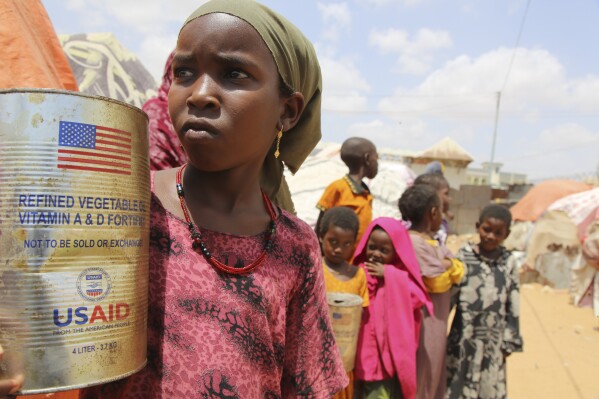
Humanitarian groups across Somalia and beyond were plunged into uncertainty on Tuesday, after sweeping U.S. foreign aid cuts left millions at risk only for the policy to partially reverse a day later.
Officials confirmed Wednesday that the Trump administration had walked back some of the emergency food assistance cuts initially slated for over a dozen countries.
However, funding reductions remain in place for crisis-hit nations like Afghanistan and Yemen, both battling widespread poverty and prolonged conflict.
The original cuts were part of a larger foreign aid reduction campaign driven by the Department of Government Efficiency, led by billionaire Elon Musk.
The initiative had sparked alarm across the humanitarian sector, prompting urgent appeals from affected agencies and public outcry following an Associated Press exposé over the weekend.
According to two U.N. officials, the World Food Program (WFP) was informed on Tuesday that some of the planned contract terminations were being reversed.
A spokesperson from USAID confirmed that Jeremy Lewin, a Musk associate overseeing the agency’s restructuring, had issued the directive.
The WFP had earlier revealed that funding for emergency food aid in 14 countries was on the chopping block.
As of Wednesday, it remains unclear how many of those countries will see aid restored — or which populations will still face the fallout.
“Those most affected will be mothers, nursing women, and children,” said Mohamed Elmi Afrah, a veteran aid worker and political analyst based in Mogadishu. “These groups rely on aid not as a supplement, but as a lifeline.”
Mustafa Diriye, a logistics manager with WFP contractor Lusidle Petroleum and Logistics LTD, expressed shock at the announcement.
“This was entirely unexpected. The impact was immediate and devastating,” he said.
On Tuesday, the WFP Somalia office issued a stark warning via social media:
“U.S. funding covers 90% of our emergency hunger operations. If these cuts are not reversed, 620,000 Somalis will be pushed to the brink of starvation by next month.”
The crisis is set against the backdrop of Somalia’s long-standing struggles years of conflict, climate-induced disasters like drought and flooding, and widespread economic collapse.
More than 6 million people are currently grappling with acute food insecurity, according to U.N. figures.
Until now, the U.S. has been the single largest donor to the WFP, providing $4.5 billion out of the agency’s total $9.8 billion budget last year.
Traditionally, foreign aid has been seen as a tool to reduce global conflict, combat poverty, and limit extremist influence.
However, the Trump administration has criticized USAID, accusing it of pushing liberal policies abroad and misusing U.S. taxpayer money. Federal officials have not responded to requests for comment on the aid reversals.
At a press briefing Tuesday, State Department spokesperson Tammy Bruce confirmed that “some cuts were made in error” and said funding had been reinstated in several cases though she declined to offer specifics.
As humanitarian groups scramble for clarity, millions across Somalia, Yemen, and other fragile nations are left wondering how long their food lifelines will last or if they will return at all.