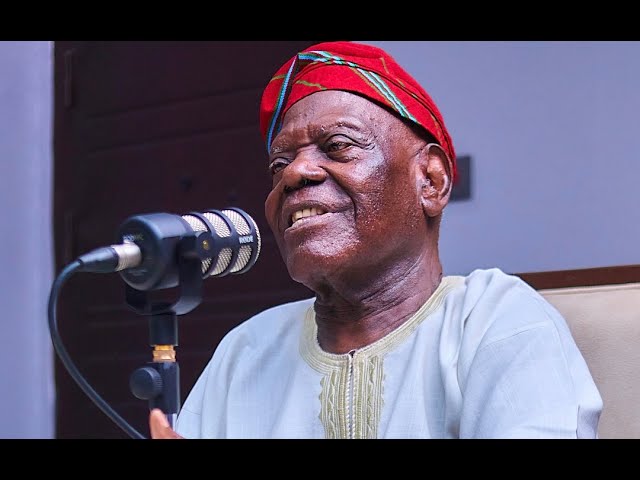
Former All Progressives Congress (APC) interim Chairman, Bisi Akande, has alleged that the Nigerian government was responsible for the assassination of former Attorney General of the Federation, Bola Ige.
Speaking on Edmund Obilo’s podcast, State Affairs, Akande revealed that Ige’s decision to resign from Olusegun Obasanjo’s administration might have sealed his fate.
He recalled that a mutual friend, Oluwole Rotimi, had warned him that Ige would likely be killed if he went through with his resignation.
Akande recounted a conversation with Ige on the eve of his planned resignation “One evening, he called me and said he was going to resign from this government tomorrow. It was sudden, and I said, ‘Please sir, I will come back to you.’”
Concerned, Akande contacted Oluwole Rotimi, who strongly advised against the resignation, warning that it could cost Ige his life.
“He asked me to advise him not to resign because if he does, he is likely going to die—he said that to me on the phone.”
Ige had reportedly consulted Wole Soyinka and Bola Tinubu, both of whom encouraged him to step down.
However, Akande pleaded with him to reconsider, suggesting he first confront Obasanjo about his grievances.
When asked who was responsible for Ige’s assassination, Akande did not mince words “I don’t know. He was killed in Oyo State while I was ruling in Osun State. The government killed him. It was a state murder.”
He pointed to the legal battles surrounding the case, noting that Lam Adesina, the then Oyo State governor, pursued the matter in court, only for his successor, Rashidi Ladoja, to withdraw the case.
Akande further suggested that Obasanjo was indifferent to Ige’s murder, prioritizing his own political stability over finding justice for his slain attorney general. “Obasanjo wasn’t keen about Ige’s death; he was more interested in the stability of himself.”
Bola Ige was assassinated on December 23, 2001, a crime that remains unsolved more than two decades later.
Akande’s revelations add to the long-standing controversies surrounding the case, raising new questions about the role of the Nigerian government in the political assassination.