- To Prioritise Inclusive Economic Growth, Industrialisation, Employment, Others
While Nigeria continues its quest to become a member of the G20, South Africa has taken over the leadership of the G20 during a handover ceremony at the Rio de Janeiro summit in Brazil.
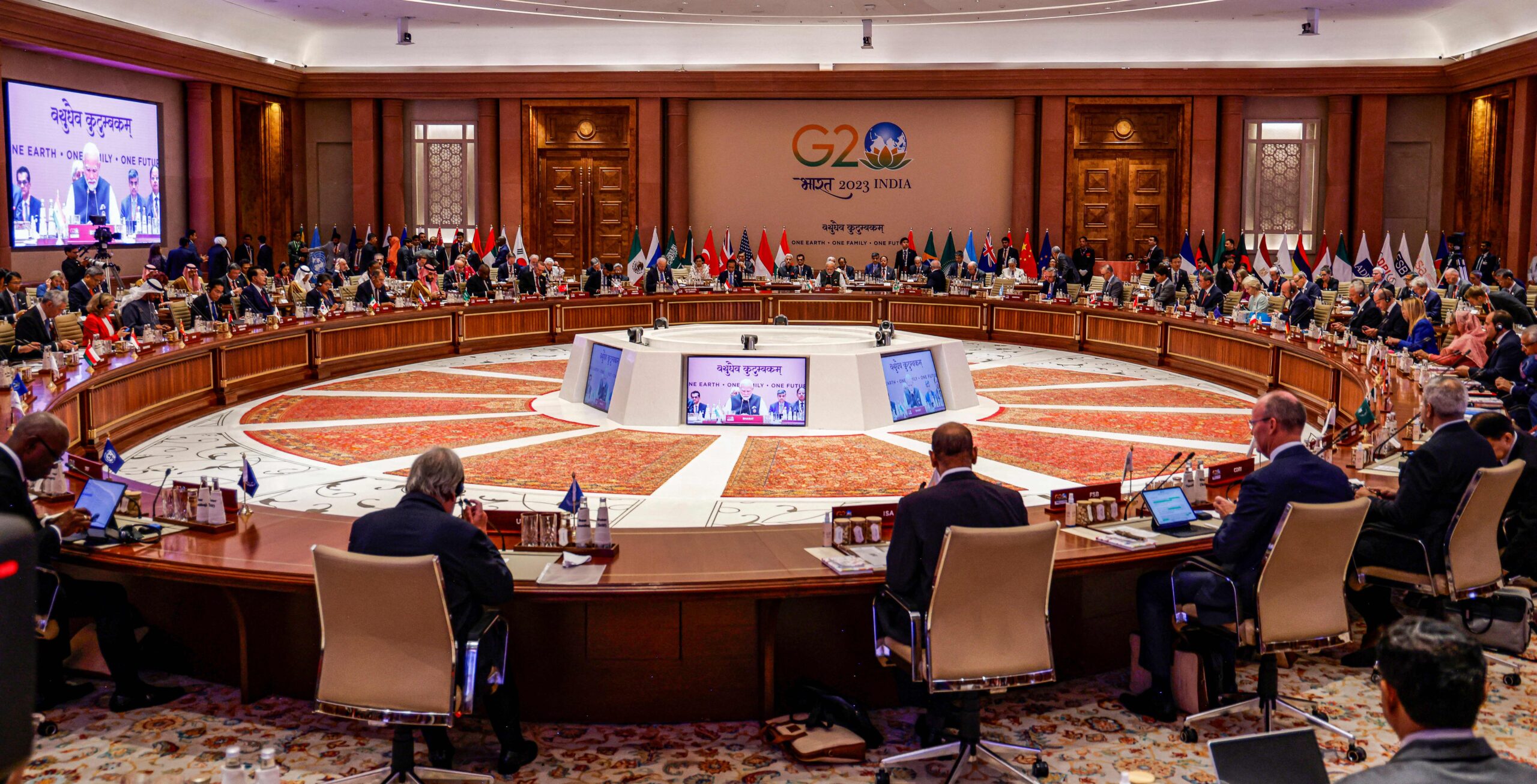
The G20, a coalition of the world’s largest economies, was conceived as a bloc that would bring the most important industrialized and developing economies together to discuss international economic and financial stability.
South Africa is the only African country in the G20.
South Africa, with about 62.4 million population, and a Gross Domestic Product of $373.23bn, according to data by the International Monetary Fund (IMF), is a member of BRICS+ and the G20, while Nigeria with 227 million people and $252.74bn GDP is not a member of both blocs.
Nigeria, Africa’s most populous country has previously expressed interest in joining the bloc and according to sources, it is one of the major talking points of President Tinubu’s attendance of the 19th G20 Leaders’ Summit in Brazil.
Brazilian President Luiz Lula da Silva handed over the reins of leadership to Cyril Ramaphosa, the South African president, on Tuesday while the African country will be the host of the 2025 edition.
“We will use this moment to bring the development priorities of the African continent and the Global South more firmly onto the agenda of the G20,” Ramaphosa told his counterparts at the summit.
The South African president said his administration would prioritise inclusive economic growth, industrialisation, employment, and inequality.
“The second priority is food security,” Ramaphosa added. “The third priority is artificial intelligence and innovation for sustainable development.”
“As South Africa, we undertake to advance the work of the G20 towards achieving greater global economic growth and sustainable development. We will work to ensure that no one is left behind.”
Ramaphosa said he is looking forward to welcoming global leaders to South Africa next year.
Since 2008, the G20’s annual summit has evolved into a major forum for discussing economics as well as other pressing global issues.
Bilateral meetings on the summit’s sidelines have occasionally led to major international agreements.
The forum comprises 19 countries, the European Union (EU) and, as of 2023, the African Union (AU).
Member countries include Argentina, Australia, Brazil, Canada, China, France, Germany, India, Indonesia, Italy, Japan, Mexico, Russia, Saudi Arabia, South Africa, South Korea, Turkey, the United Kingdom (UK), and the United States.
Spain is invited as a permanent guest.