- Food Supply Threatened As Flood Takes Over Gombe-Yola Highway, Farmers, Herders Stranded
- FG To Build Five Buffer Dams, Expand River Niger, Benue Tributaries
- Move To Higher Grounds, FG Warns Nigerians
With Nigeria yet to recover from the devastating consequences of the flooding incidents that rocked Maiduguri, the Borno State capital recently where no fewer than 30 people died and hundreds of thousands displaced, another monumental disaster is looming.
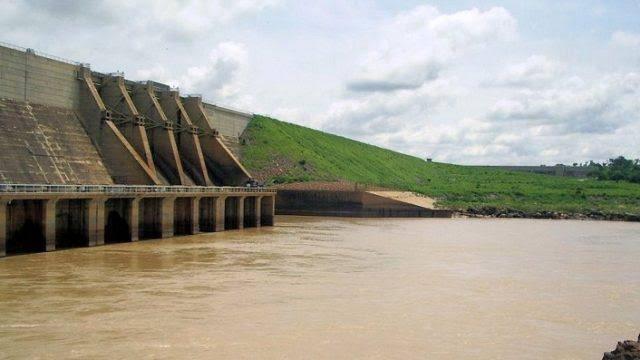
This follows the release of water into the Lagdo Dam in Cameroon late on Wednesday September 18, 2024.
The release of water from the Lagdo Dam comes days after water from overflowing Alau Dam killed over 30 persons and swept away thousands of homes in Maiduguri.
Already, a significant flood has completely severed the Gombe-Yola highway, impacting travel between the Northeast states of Adamawa and Taraba.
READ ALSO: Borno Govt Releases Full List Of Flood Benefactors
The incident reportedly occurred on Thursday afternoon, September 19, 2024, near Lafiya Lamorde, a border town adjacent to Gombe State.
Commuters were left stranded as they gathered near the site where a major bridge is under construction between Savannah Sugar Company and Lafiya Lamorde. The floodwaters have washed away critical infrastructure at the construction site, rendering the road impassable for vehicles from either direction.
This washed out section of the road is already causing serious social and economic setbacks to the people.
More worrisome, hunger is looming as food supply chain is threatened, especially as harvesting season is around the corner.
Taraba and Adamawa States are home to some of Nigeria’s known cattle rearers and farmers producing many major food crops transported to different parts of the country and beyond.
Earlier, to address the issue of flooding, the Federal Government, through the Nigeria Hydrological Services Agency (NIHSA), has proposed to build five buffer dams to contain incessant floodings which often arise from the release of water from the Lagdo Dam in Cameroon.
NIHSA Director-General, Umar Mohammed, made this known when he featured on Channels Television’s The Morning Brief breakfast programme on Thursday.
READ ALSO: Intense Storms Reach Italy As Central Europe Battles Severe Flooding
Mohammed, who was represented on the programme by the Agency’s Director of Operations and Hydrology, Femi Bejide, said a report has been submitted to the Presidency, on the way forward noting that some of dams in Nigeria have to be de-silted.
“What has to be done also is that there’s a report that has been submitted to the Presidency. We have to have buffer dams and five have been proposed and the Federal Government is looking at that already,” he said.
“But in the interim, some of our dams have to be de-silted, the tributaries of River Niger and Benue have to be expanded.
“I learnt that there is a little issue with the design and they are trying to amend the design. I believe that in the next two to three years that would have been put in place.”
Also, the Agency warned Nigerians resident in floodplains to relocate immediately to safe spaces in anticipation of attendant floods that annually come with the release of water from the Lagdo Dam.
Bejide said his Agency met with the authorities in Cameroon and agreed that water from the Lagdo Dam be released “intermittently” for the River Benue and River Niger in Nigeria to be able to contain the volume of water to avoid flooding in 11 states at risk.
“The situation is that water from Cameroon’s Lagdo Dam has been released already since yesterday (Wednesday) and there is an agreement that the water should be released in phases,” said Mohammed, who was represented on the programme by the Agency’s Director of Operations and Hydrology, Femi Bejide.
NIHSA listed flood-prone states to include Adamawa, Taraba, Benue, Nasarawa, Kogi, Edo, Delta, Anambra, Bayelsa, Cross Rivers, and Rivers.
He said all Nigerians have a role to play in preventing flooding as the previous release of water from the Lagdo Dam has caused constant flooding in Nigeria.
READ ALSO: Borno Govt Releases Full List Of Flood Benefactors
“Everybody has their part to play; as the Federal Government is doing its part, our agency is doing its part, NEMA is prepared, individuals should also have to do their part. They have to move from the floodplain.
“Houses also, have their drainages, they have to clean and clear their drainages. Water will find its way so the waterways should be cleared, and the drainages should be cleared to allow water to move. That is the responsibility of everybody.
“Look at your house, if your house is at the flood plane, please move please move from the flood plane, it is an appeal,” the NIHSA boss stated.