The UN health agency declared the spread of the new, more dangerous mpox strain, dubbed Clade 1b, in Africa a public health emergency of international concern—the highest alarm the UN agency can sound.
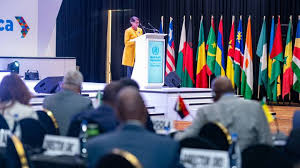
The seventy-fourth session of the WHO Regional Committee for Africa takes place in Brazzaville, Republic of Congo, from August 26 to 30, 2024.
The Regional Committee is the WHO decision-making body in the region, which convenes once a year to discuss and endorse policies, activities, and financial plans aimed at improving the health of the people of Africa.
The meeting in Brazzaville comes on the heels of a rapidly spreading Mpox virus.
Last week, the UN health agency declared the spread of the new, more dangerous mpox strain, dubbed Clade 1b, in Africa a public health emergency of international concern—the highest alarm the UN agency can sound.
Meanwhile, the Nigeria Centre for Disease Control and Prevention (NCDC) has confirmed 40 confirmed cases of Mpox out of the 830 suspected cases. The centre has therefore urged state governments to establish their own emergency preparedness, response teams, capabilities, and action plans in collaboration with local governments to respond effectively to Mpox, as most of the cases are at the sub-national level.
Mpox to ‘top agenda’
Experts expect that the WHO conference will raise concerns over the rapidly spreading mpox virus and strategies for an urgent increase in vaccine production and distribution.
The virus has been reported in five of Congo-Brazzaville’s 15 regions, with the forested areas of Sangha and Likouala in the north particularly affected.
Expected vaccines
Gilbert Mokoki, Congo-Brazzaville Minister of Health told intending attendees the epidemic was not alarming in Congo-Brazzaville but appealed to everyone to take preventative measures, like regularly washing hands.
Last week, the health agency of the African Union said some 200,000 vaccines would be deployed across Africa, thanks to agreements with the EU and the Danish drugmaker, Bavarian Nordic, whose vaccine was approved in 2019.
But African health ministers at the conference are expected to argue that Africa needs much more.
Congo-Brazzaville alone needed 3 million vaccine doses to end the outbreaks there, which have spilled into at least four nearby African countries.
Deadlier new strain
While mpox has been known for decades, a new, more deadly, and more transmissible strain—known as Clade 1b—has driven the recent surge in cases.
Clade 1b causes death in about 3.6 percent of cases, with children more at risk, according to the WHO.
Pope Francis on Sunday highlighted victims of the mpox virus in his weekly prayers and called on governments and the pharmaceutical industry to do more to get vaccines to the worst hit countries.
“I pray for all the infected people, in particular the population of Democratic Republic of Congo, so affected, I express my closeness to the local churches most touched by this disease,” the pope said during his Angelus prayers in St. Peter’s Square.
Little support for Africa
South African President Cyril Ramaphosa criticised the global response to the 2022 outbreak, calling it unfair as treatments and vaccines were made available to rich Western nations while Africa was given little support.
In a statement, he urged the international community to guarantee “equitable access” to mpox diagnostics and vaccines this time.
Ramaphosa’s comments evoked memories of Africa’s anger at largely being shut out of vaccines during the COVID-19 pandemic. Then, Africa received doses much later than richer countries, and it had to pay more in some cases.