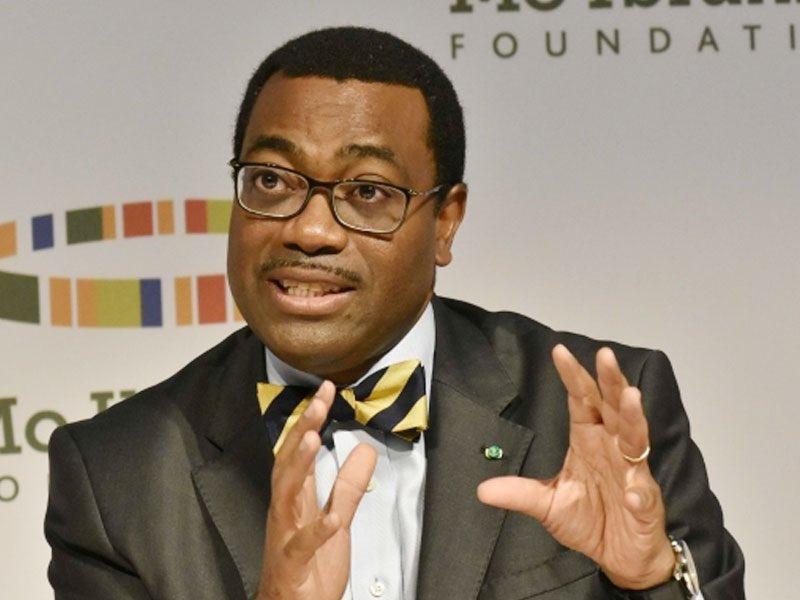
The federal government’s intention to import food has drawn criticism from Dr. Akinwunmi Adesina, President of the African Development Bank, AfDB.
Adesina, while criticizing the policy described it as “depressing.”
The Matrix reports that Nigeria’s Minister of Agriculture, Abubakar Kyari recently confirmed that the President Bola Ahmed Tinubu administration had suspended duties, tariffs and taxes for the importation of major food items like beans, wheat and husked brown rice.
Mr Kyari, had in a statement he shared on his X account, said the government has suspended “duties, tariffs, and taxes for the importation of certain food commodities through land and sea borders. These commodities include maize, husked brown rice, wheat, and cowpeas.”
In his statement, Mr Kyari said the imported food “will be subjected to a Recommended Retail Price (RRP).”
With this, the minister explained that the government hopes that the new food import policy will lead to a drastic reduction in the prices of basic food items, whose prices have increased astronomically since President Bola Tinubu removed subsidies on petrol and floated the naira to allow the value of the Nigerian currency to be determined by market forces.
Reacting to this, Adesina while speaking on the topic of “Food Security and Financial Sustainability in Africa,” at the Council of Anglican Provinces of Africa retreat in Abuja kicked against the policy.
This is even as he asserted that Nigeria cannot depend on food imports to keep prices stable and that doing so would undermine the nation’s agriculture strategy.
He clarified that food production should be prioritized in order to maintain price stability, ease pressure on the foreign exchange front, and generate employment.
READ ALSO: After Importing From US and Brazil, Dangote Refinery Will Source Crude Oil From African Nations
Hear him; “Nigeria’s recently announced policy to open its borders for massive food imports, just to tackle short-term food price hikes, is depressing.”
“Nigeria cannot rely on the importation of food to stabilize prices. Nigeria should be producing more food to stabilize food prices while creating jobs and reducing foreign exchange spending, which will further help stabilize the Naira,”
“Nigeria cannot import its way out of food insecurity. Nigeria must not be turned into a food import-dependent nation.”
Furthermore, Dr. Adesina noted that Africa constitutes nearly a third of the over 780 million people worldwide who are hungry, the African Development Bank president emphasized the critical role of agriculture in diversifying economies and transforming rural areas, where more than 70 percent of Africa’s population resides. “It is clear therefore that unless we transform agriculture, Africa cannot eliminate poverty,” he insisted.
Adesina noted that Africa holds 65% of the world’s remaining uncultivated arable land, which is crucial for feeding an estimated 9.5 billion people by 2050. Therefore, what Africa does with agriculture will determine the future of food in the world. “Essentially, food is money. The size of the food and agriculture market in Africa will reach $1 trillion by 2030,” he stated.
Meanwhile, President Bola Ahmed Tinubu has reaffirmed his administration’s commitment to addressing food security concerns in the country and driving down the cost of living for the citizens.
He said the government’s recent decision to temporarily suspend tariffs on imported grains and other essential food items, a policy announced earlier in the week by the Minister of Agriculture and Food Security, are short-term measures to address the rising food prices across the country.
READ ALSO: Dangote Group, Flutterwave join Milken Institute’s Africa Leaders Business Council
Speaking during the public presentation of Chief Olusegun Osoba’s book “My Life in the Public Eye” in Lagos, the President who was represented by Vice President Kashim Shettima noted that these measures are specifically aimed at tackling food shortages and improving affordability for consumers.
“We are taking steps to address food shortages by temporarily removing tariffs on imported grains and other food items,” President Tinubu stated.
He stressed that this action is part of a comprehensive strategy to enhance living conditions for all Nigerians.
While addressing short-term challenges, the President also reiterated the importance of long-term food self-sufficiency.
“We will continue to drive local production and ensure that we produce what we eat and use locally,” he added.