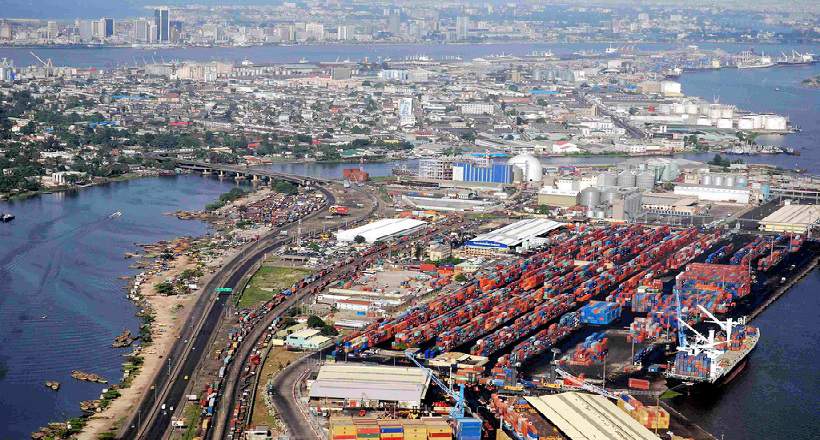
Following a change of guard at Nigeria’s Premier Port, the Apapa Port Command of the Nigeria Customs Service (NCS), the new Customs Area Controller (CAC) Comptroller Babatunde Olomu has listed six key operational areas his administration will focus on.
This, he said will assist the command in achieving the mission policy direction of the Lagos premier port, especially in terms of expanded role in the west Africa region
In no particular order, the new CAC listed Nigeria’s participation in the African Continental Free Trade Area (AfCFTA) as a major driver of his assignment.
Comptroller Olomu recalled that Nigeria holds a strategic trading position in the West and Central Africa region and explained the criticality of Apapa Port in the realization of all the sub regional economic mandates such as the AfCFTA.
READ ALSO: Comptroller Jaiyeoba Lauds Apapa Scanning Officers for Non-Compromise
“We are reviving Nigeria’s readiness for improved trade with fellow African countries and the world at large. As you may be aware, the management of the service is committed to evolving a more modern customs with Apapa Port being a nucleus to the implementation of the many trade facilitation reforms championed by the Comptroller-General of Customs, Bashir Adewale Adeniyi”, he said.
He explained that officers and men of the command also have a duty to pursue vigorously ongoing customs modernization and prescribed tools of trade and conventions by global trading partners including the World Customs Organization (WCO); as the second pillar of focus in his list of priorities.
READ ALSO: Apapa Customs Command Boost Economy With N672 Billion Revenue
“I want to urge our officers to brace up for the changes that will feature as fallouts of customs modernization, otherwise called e-customs, the AEO, and many other groundbreaking World Customs Organization (WCO) innovations like the recently introduced Advanced Ruling Policy (ARP).
“This will enable us to enjoy more gains of trading across borders in the global supply chain in line with the Revised Kyoto Convention (RKC), the WCO Supply Chain Management Guidelines, and the various national best practices.”
Third on the agenda is the promotion of stakeholders’ partnership and engagement, tailored after the CGC’s own agenda, stressing the importance of achieving an interactive stakeholders’ community in the overall goal of the Nigeria Customs Service (NCS).
“Being the customs command handling the largest volume of trade in Nigeria, Apapa Command under my leadership won’t be complacent and will be open to continuous engagement with everyone. My doors are open for advice on how best to achieve our mandate because we are all here to add value and do better.”
Olomu also prescribed a framework of an efficient work culture officers and men must adopt as an overriding principle that is expected to help achieve set goals and results. He explained that this will enhance stakeholders’, officers and men’s work outlook as a collective attitude to improved best practices.
“I shall set up a trade dispute resolution seat that will operate every day including weekends to ensure that we make this Command a true front liner in global best practices in terms of customs operation for other customs formations to emulate.”
Similarly, the new Apapa Customs boss listed the setting up of a functional trade dispute resolution desk which he said will handle trade disputes towards enthroning civilized and satisfactory interventions.
His words, ““I shall set up a trade dispute resolution seat that will operate every day including weekends to ensure that we make this Command a true front liner in global best practices in terms of customs operation for other customs formations to emulate.”
He urged officers and men of the command to redouble their diligence and commitment in all areas of responsibilities, noting that the NCS core tasks must be treated as a whole, noting that he is confident that team spirit will lead and prevail as failure is not an option.
“I see my task as CAC Apapa Command as a serious assignment from the Comptroller General of Customs, Bashir Adewale Adeniyi of which our only option is to deliver diligently not only in revenue collection, fight against smuggling, but in trade facilitation and sustainable stakeholder engagement.
“My assumption of this office is with a mind of confidence that we won’t betray the trust reposed in us by the FGN, the CGC and the entire management of the Nigeria Customs Service. This confidence is premised on the reality that I am taking over a very organized command, where I intend to build on the successes of my predecessor.”