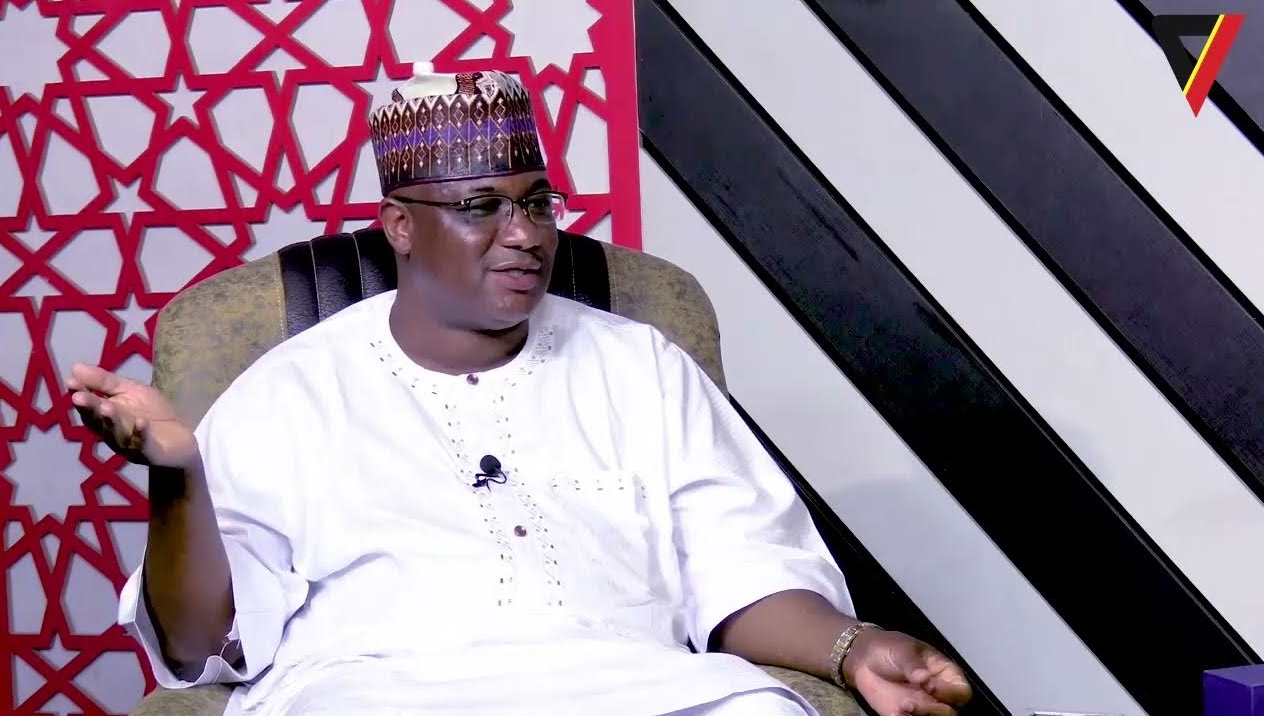
Murtala Sabo Sagagi, a member of Nigeria’s Monetary Policy Committee (MPC), has discussed the limitations of monetary policy in tackling the country’s rising inflation in the face of structural difficulties.
Sagagi said that the Nigerian economy’s underlying structural problems make it extremely difficult for the conventional monetary policy instruments to have the intended effects on inflation management.
This is in line with his remarks made during the MPC meeting, which the Central Bank of Nigeria (CBN) announced was conducted on February 26 and 27, 2024.
He listed a number of prior policy errors and systemic inadequacies that contributed to the current state of economic instability.
These include the excessive use of ways and means that undermined the monetary policy stance particularly in the years 2021 and 2022, large-scale sectoral funding by the CBN without adequate due diligence, and the ill-conceived Naira redesign policy executed towards the end of 2022, whose adverse effects lingered into the second half of 2023.
Sagagi also emphasised that without addressing key issues such as insecurity, food shortages, and a comprehensive roadmap for economic and social rejuvenation, any monetary policy adjustments would have a minimal impact on inflation rates. He highlighted the country’s struggle with food inflation, which is predominantly structural and not monetary, as a significant contributor to the overall inflationary pressures.
Read Also: MPC Gears Up For Maiden Meeting Under Cardoso, As Senate Confirms 12 Members
He said: “It is my view that monetary policy consideration (i.e. readjustments) will have limited impact on inflation rates unless they are complemented with efforts to address insecurity and food shortages.
“This is in addition to a holistic and disciplined roadmap for economic and social rejuvenation.”
The MPC member also shifted the focus from external factors like the Russia-Ukraine conflict to domestic policy inadequacies and internal structural rigidities as the primary causes of price instability in Nigeria.
He noted: “I would be more inclined to ascribe the current price instability to (a) domestic policy inadequacies and (b) internal structural rigidities rather than any external factors such as the prolonged Russia-Ukraine conflict and other global volatilities.
“This does not, however, imply that global dynamics are inconsequential.”
Emphasising Nigeria’s record-high inflation rates, Sagagi expressed scepticism towards traditional monetary policy adjustments, such as tweaking the Monetary Policy Rate (MPR), to achieve short-term stability.
He attributed the policy’s past inefficacy to several factors, including a disconnect between the banking sector and the real economy, limited access to formal loans for small and medium enterprises (SMEs), and the predominantly structural nature of food inflation.
Read Also: After Several Postponements, CBN To Hold First MPC Meeting Under Cardoso In February
Sagagi proposed a multifaceted approach to tackle inflation, stressing the importance of addressing food and energy components.
He stressed that: “Evidently, structural factors would continue to limit transmission of monetary policy in Nigeria. To achieve a balanced approach, it may be wise for the Bank to consider it worthy and strategic to initiate strategic partnerships to develop an effective framework for dealing with the major components of inflation in Nigeria, namely food and energy.”
To devise a comprehensive framework, he advocated for strategic partnerships between the bank, various ministries, departments, agencies (MDAs), and the private sector.
Other recommendations include finalising and implementing a medium-term strategy targeting inflation, kickstarting the National Agricultural Technology and Innovation Policy (NATIP) 2022-2027, achieving energy security by 2030, developing export-oriented industries, maintaining strict supervision over crypto operations and banks, managing concentration risks in lending to the real sector, improving logistics efficiency, enhancing transparency in public finance, and prioritising employment and enterprise development for the youth and women.
Sagagi also highlighted the need for a disciplined economic and social roadmap, emphasising the pivotal role of structural reforms in enabling effective monetary policy transmission.