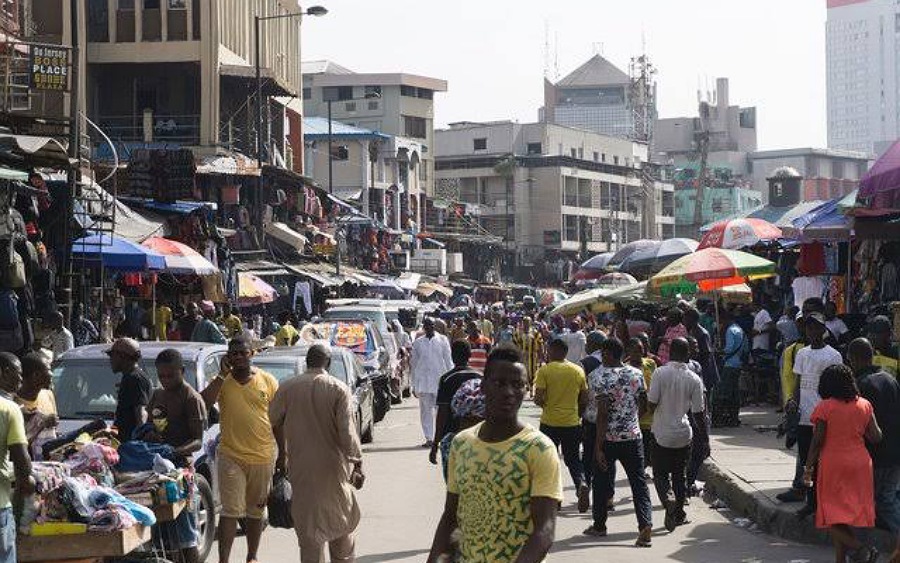
Temitope Fadeshemi, Permanent Secretary of Nigeria’s Federal Ministry of Agriculture and Food Security, has said that 88.4 million Nigerians live in extreme poverty at any one time.
While presiding over the delivery of agriculture inputs and supplies for empowerment to 250 smallholder farmers in Kaduna on Wednesday, Fadeshemi disseminated this information.
Fadeshemi was represented at the occasion by Bashir Abdulkadir, the director of the ministry’s Department of Extension Services.
He said, “The level of poverty in Nigeria is alarming. An estimated population of 88.4 million people in Nigeria is living in extreme poverty.
Read Also: FBN Holdings Reveals Forex Loss Of N350bn In 2023
“The number of men living on less than 1.90 U.S. dollars a day in the country reached around 44.7 million, while the count was at 43.7 million for women.
“Overall, 12.9% of the global population in extreme poverty was found in Nigeria as of 2022.
“This is why the Federal government of Nigeria through the Federal Ministry of Budget and National Planning in collaboration with FMAFS is making conscious efforts at reducing the spate of poverty across the country.”
Continuing his remarks, Fadeshemi emphasized the transformative impact of the National Poverty Reduction with Growth Strategy (NPRGS) initiative, describing it as a significant achievement in the Federal Government’s collective efforts to uplift smallholder farmers and promote sustainable agricultural methods.
Read Also: Capital Market: Senate Steps In To Boost Listings, Curb Tax Evasion
Fadeshemi said that the programme was not merely an investment in agriculture; but an investment in the future of the nation.
“I am delighted to remind you that NPRGS, in collaboration with the Federal Department of Agricultural Extension Service (FDAE), has diligently enumerated and validated approximately 250 farmers for participation in this transformative programme.
”These farmers are not just the backbone of our agricultural sector; they are the heartbeat that forms the heartbeat of our nation’s prosperity.
”The NPRGS reflects our government’s dedication to addressing poverty at its roots, emphasizing the pivotal role agriculture plays in economic growth and development.
”Through initiatives like today’s training and empowerment programme, we are sowing the seeds of positive change, ensuring that smallholder farmers have the knowledge, resources, and support needed to thrive in an ever-evolving agricultural landscape,” he added.