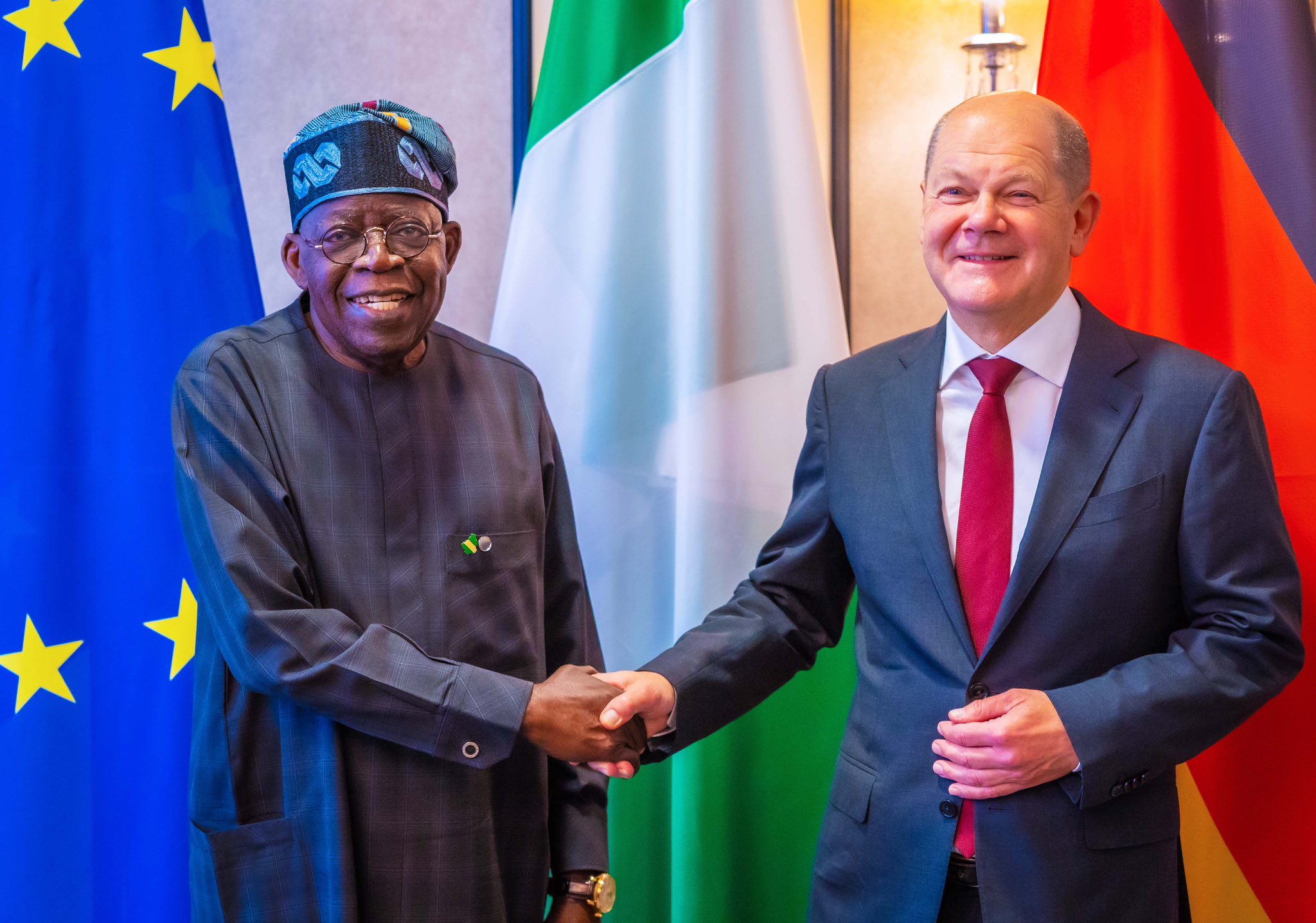
An agreement has been signed by the governments of Germany and Nigeria to strengthen collaboration with the goal of supporting Micro, Small, and Medium Scale Enterprises (MSMEs) in Nigeria.
The Minister of Industry, Trade, and Investment, Dr. Doris Uzoka-Anite, made this declaration in Abuja during a bilateral meeting that the ministry organized in cooperation with the German Ministry of Economic Development.
Recognizing the two countries’ present collaboration, Uzoka-Anite expressed optimism in developing a stronger bond that would foster a more robust and mutually beneficial relationship.
The Minister said,“as we already mentioned in the side meeting, you are interested in renewable energy, agriculture, and increasing access to finance for MSME.
Read Also: MSMEs, Manufacturing Sectors Get N200 billion Boost
“That will be a major booster for the industrial sector of the economy.
`The President is highly committed to and ensuring that the economy turns around job creation, poverty alleviation, inclusiveness, ensuring renewables.
“All of these is to increasing food, capital, investment in the country and boosting industrialisation,’’ she said.
The minister stated that to strengthen the Federal Government’s dedication, the president has recently established the Presidential Council on Industrial Revitalization, with the Minister of Finance and Coordinating Economy serving as its chairperson.
Read Also: Tinubu Targets Solar-Based 8-Hour Power Supply For MSMEs in 2024
Uzoka-Anite said: “In that we have about an 11-point agenda where we are looking at all the different sectors of the economy and looking at how to revive the economy via all of these different sectors.
“The MSMEs segment cuts across all of the sectors and we know that if we can improve the SMEs, we are immediately contributing about 45 per cent to Nigeria’s Gross Domestic Product (GDP).
“So, your coming to partner and support us in this development is a major booster to the presidential ambition to grow the economy to a one trillion economy.
“We see a GDP growth rate of almost seven per cent within a period of four to five years.”
In her response, German Minister Ms. Svenja Schulze noted that Nigeria has been a longstanding partner of Germany since as early as 1959, and this partnership has evolved to mutually benefit both countries.
Read Also: ASBON Says 10 Million MSMEs Shut In 2023
Schulze however highlighted that Nigeria is currently grappling with security challenges exacerbated by resource conflicts, climate change, and population growth.
“Our cooperation, I want to point out again, is in our common interest.
“Nigeria is Africa’s largest and most populous economy, Germany is an export nation, we are interested in growing markets, so some 90 German companies are already active here in Nigeria.
“One reason is that Nigeria has so many creative young people and that is what companies like to have and why they are here.
“We all know that the core of these conflicts cannot be resolved by military means alone.
Read Also: Shettima Reiterates FG’s Resolve To Protect MSMEs At All Cost
“The underlying causes must be addressed and this includes such as jobs, energy, food security and efforts to strengthen the rights of women”, she said.
On his part, the Minister of Finance and Coordinating Minister of the Economy, Mr Wale Edun, reiterated the commitment of the Federal Government to promote small businesses in the country.
He emphasized this saying,“This bilateral meeting, essentially put together by the Ministry of Industry Trade and Investment and her counterpart, the German Minister of Economic Development and Cooperation, is one among series of interactions.
“This time, it aims at discussions on cooperation and bilateral support with regard to MSMEs in particular and economic cooperation in general across sectors.
“The sectors include agriculture, energy, particularly solar power and entrepreneurship skills development particularly for small-scale businesses and women led businesses,’’ Edun said.