
News
TENURE OF PAST CBN GOVERNORS SINCE INCEPTION

Due to various enquiries from members of the public , especially students ,researchers , academia ,etc on the past governors of CBN, The MATRIX has embarked on an illuminating journey into the history of the Central Bank of Nigeria (CBN) Governors. These individuals have played pivotal roles in molding the country’s monetary policies and influencing the financial landscape.
The commencement of operations by the Central Bank of Nigeria (CBN) took place on July 1, 1959, by the CBN Act of 1958. The bank’s primary regulatory objectives, as outlined in the CBN Act, include maintaining the country’s external reserves, fostering monetary stability and a robust financial environment, and serving as a lender of last resort and financial adviser to the federal government.
Since its establishment in 1958, the CBN has seen 12 governors. In addition to its exclusive role as the issuer of the Nigerian currency, the naira, the CBN plays numerous vital roles in Nigeria’s monetary system. It is responsible for ensuring both price and monetary stability, as well as keeping other financial institutions in Nigeria vigilant, among various other duties.
It is on record that Nigeria has produced 12 CBN governors since 1958, one foreigner and 11 Nigerians,.
It is also notable that one of them is a woman but in acting capacity.
The table below shows the summary of past and present CBN governors in Nigeria from 1958 till date
- Roy Fenton: July 24, 1958 – July 24, 1963
- Aliyu Mai-Bornu: July 25, 1963 – June 22, 1967
- Clement Isong: August 15, 1967 – September 22, 1975
- Adamu Ciroma: August 24, 1975 – June 28, 1977
- Ola Vincent: June 28, 1977 – June 28, 1982
- Abdulkadir Ahmed: June 28, 1982 – September 30, 1993
- Paul Ogwuma: October 1, 1993 – May 29, 1999
- Oladele Sanusi: May 29, 1999 – May 29, 2004
- Chukwuma Soludo: May 29, 2004 – May 29, 2009
- Sanusi Lamido Sanusi: June 3, 2009 – February 20, 2014
- Sarah Alade (Acting): February 20, 2014 – June 3, 2014
- Godwin Emefiele: June 3, 2014 – June 9, 2023 (suspended)
- Folashodun Shonubi (Acting): June 9, 2023 – to date
- Olayemi Michael Cardoso: September 15, 2023 to date

Roy Pentelow Fenton-24/7/1958-24/7/1963
1 .Roy Pentelow Fenton served as the first Governor of the Central Bank of Nigeria (CBN). He was appointed by the colonial administration to oversee financial operations in the country. His tenure, from July 24, 1958, to July 24, 1963, coincided with Nigeria’s journey to independence.
He played a pivotal role in the establishment of the central bank during this crucial period.

Alhaji Aliyu Mai-Bornu -25/7/1963 – 22/6/1967.
2. The late Alhaji Aliyu Mai-Bornu was not only the second CBN governor but the first indigenous Governor of the Central Bank, succeeding Roy Pentelow Fenton. His term spanned from July 25, 1963, to June 22, 1967, and he assumed office under the government of Alhaji Tafawa Balewa.
Before his pivotal role in monetary affairs, Mallam Mai Bornu pursued a career as a qualified English teacher in Yola, present-day Adamawa State. His academic pursuits led him to Bristol University in the United Kingdom, where he earned a degree in Economics.
Recognized as a distinguished economist, Mai-Bornu focused on ensuring price stability and fostering economic growth throughout his tenure. Tragically, he passed away on February 23, 1970. In tribute to his contributions, Alhaji Aliyu Mai-Bornu is prominently featured on the 1000 naira note, introduced in October 2005 during the administration of former President Olusegun Obasanjo.

Clement Nyong I-song -15/8/1972 – 24/9/1975.
3. The late Dr. Clement Nyong Isong was the second indigenous CBN governor
An accomplished Economics scholar, he secured prestigious Ford Foundation and Rockefeller scholarships to pursue his studies in Economics at Iowa Wesleyan College, Iowa, USA. In 1954, the same year he attained his Economics degree, he continued his academic journey at the Howard Graduate School of Arts and Sciences, Massachusetts, USA, obtaining both Master’s and Doctorate Degrees in Economics.

Adamu Ciroma – 24/91975 -28/6 1977.
4. The late Mallam Adamu Ciroma served as the 4th Governor of the Central Bank of Nigeria, holding office from September 24, 1975, to June 28, 1977.
Following his term, he transitioned into active politics, becoming the secretary of the National Party of Nigeria (NPN). Later, during the civilian administration of Alhaji Shehu Shagari, he was appointed as the Minister for Industries and Agriculture, where he concentrated on implementing measures to combat inflation and drive economic growth.
In the aftermath of the second republic, Mallam Ciroma made a return to the political landscape during the administration of Olusegun Obasanjo. He was appointed as the Minister of Finance, a position he held from June 1999 to May 2003, contributing to financial management and policy during a critical period.
Mallam Adamu Ciroma passed away on July 5, 2018, leaving behind a legacy marked by his service to both the Central Bank and the Nigerian government.
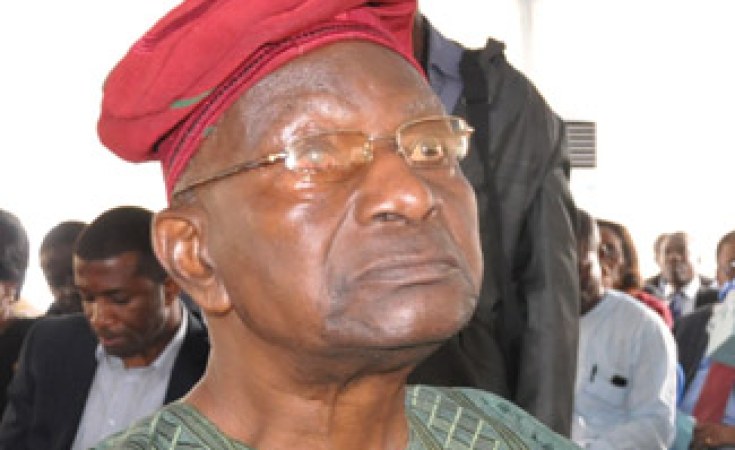
Olatunde Olabode Vincent 28/6/1977 – 28/6/1982
5. Ola Vincent, an economist, served as the 5th CBN governor from June 28, 1977, to June 28, 1982.
Before assuming the role of CBN governor, Mr. O.O. Vincent held the position of Vice President at the African Development Bank (AfDB) from 1966 to 1973. He played a pivotal role in the establishment of the Nigerian Deposit Insurance Corporation (NDIC). Ola Vincent passed away on September 3, 2012.

Abdulkadir Ahmed
8/6/1982 – 30/9/1993.
6. The late Alhaji Abdulkadir Ahmed is distinguished as the longest-serving but 6th Governor of the Central Bank of Nigeria (CBN), having held the position under four consecutive governments: Shagari’s administration (appointed on June 28, 1982), Muhammadu Buhari’s regime, Ibrahim Babangida’s regime, and the regime of Sani Abacha, which eventually replaced him on September 30, 1993. Throughout his extensive tenure, Alhaji Abdulkadir Ahmed implemented crucial measures to stabilize the financial sector, adeptly manage debt, and promote economic diversification, thereby fortifying the nation’s economic foundation.
Prior to assuming the role of CBN governor, he served as the inaugural commissioner for finance in Bauchi State, demonstrating his early commitment to financial governance from March 1976 to June 1977. Alhaji Abdulkadir Ahmed passed away in 1997, leaving behind a legacy marked by his substantial contributions to the stability and development of Nigeria’s financial sector.

Dr. Paul Agbai Ogwuma
1/10/1993 – 29/5/1999.
7. Dr. Paul Agbai Ogwuma, a seasoned banker, Chartered Accountant, and Administrator, held the positions of Managing Director and Chief Executive Officer at Union Bank of Nigeria. Subsequently, on October 1, 1993, during the military regime of Gen. Sani Abacha, he assumed the role as 7th Governor of the Central Bank of Nigeria .
Dr. Paul continued to serve under the subsequent military regime of Gen. Abdulsalami Abubakar. However, his tenure came to an end on May 29, 1999, when the civilian government of Obasanjo took office, replacing him as Nigeria’s president.
During his time as Governor of the Central Bank, Dr. Paul implemented significant reforms, such as the deregulation of interest rates and the foreign exchange market. Born on April 24, 1932, he hails from Abia State.

(Dr.) Joseph Oladele Sanusi
29/5/1999 – 29/5/2004.
8. Chief (Dr.) Joseph Oladele Sanusi (CON), born on September 24, 1938, in Ogbagi-Akoko, Ondo State, Nigeria, pursued his education at South-West London College and Kingston College of Technology in England, where he attained qualifications as a Chartered Accountant.
In 1969, Chief Sanusi became a member of the Institute of Chartered Accountants of Nigeria (ICAN), achieving fellowship status with the Nigerian Institute of Bankers in 1987.
His professional journey began as an Accountant in England, followed by valuable contributions to the Board of Customs and Excise in Nigeria. Joining the Central Bank of Nigeria (CBN) in 1966 as a Deputy Manager, Chief Sanusi progressed through various roles, serving as a Departmental Director, becoming the inaugural Chief Executive of the Securities and Exchange Commission, taking on the role of Executive Director of Monetary and Banking Policy, and ultimately ascending to the position of Deputy Governor of the CBN.
Chief Sanusi’s distinguished career includes being one of the few CBN Governors who climbed the ranks within the bank to become Governor. His leadership extended to prominent Nigerian banks, with significant roles at United Bank for Africa and First Bank of Nigeria.
His noteworthy contributions garnered prestigious recognitions, including the titles of Banker Extraordinary by the University of Ibadan, Man of Achievement by Corporate Press Services Ltd., and the honor of receiving a Doctor of Science – Honoris Causa from the Federal Universities of Technology in Akure and Yola.

Professor Chukwuma C. Soludo,
29/5/2004 – Retired 28/5/2009
9. Charles Soludo, an esteemed Professor of Economics, became the 9th governor of the Central Bank of Nigeria on May 29, 2004.
Formerly the Chairman of the National Economic Empowerment and Development Strategy under President Obasanjo, Soludo’s economic prowess extended globally, contributing to microeconomic development in various nations, including Singapore.
As the youngest Professor of Economics at the University of Nigeria, he collaborated with prestigious organizations like the United Nations and the European Union. During his CBN tenure, Soludo consolidated Nigerian financial institutions, fortifying them against potential crises.
Sworn in as Anambra State’s fifth governor on March 17, 2022, he is the second Nigerian to hold both positions. Born on July 28, 1960, in Aguata Local Government Area, Soludo is a contender for the 2023 presidential candidacy.

Mallam Sanusi Lamido Sanusi
4/6/2009 – Retired 2/6/2014.
10. Sanusi Lamido Sanusi, the former Managing Director of First Bank of Nigeria (FBN), assumed the position of CBN governor on June 3, 2009. His tenure, however, faced a tumultuous end when he was suspended on February 20, 2014. This action came in the wake of his accusation against the administration of Goodluck Jonathan for failing to remit $20 billion in revenue from oil sales to the federation account.
In response to Sanusi’s claims, the government alleged him of financial recklessness and misconduct, using these allegations as grounds for his dismissal in an apparent attempt to conceal the controversial issue of unremitted oil revenue. Sanusi’s reputation as a reformist in the banking sector was marked by his introduction of radical measures, such as the implementation of the Bank Verification Number (BVN). Additionally, he staunchly advocated for the independence of Nigeria’s Central Bank (CBN) from the influence of the ruling government.
Before his role as CBN governor, Sanusi had a significant career, serving as the former Chief Risk Officer at both United Bank for Africa (UBA) and First Bank of Nigeria (FBN). His tenure as CBN governor, despite its controversial end, left a lasting impact on the Nigerian banking sector with his pioneering reforms and efforts to safeguard the autonomy of the Central Bank.

Godwin Emefiele
/6/2014 – 2023
11. 11Godwin Emefiele, a Nigerian economist and former governor of the Central Bank of Nigeria (CBN) from 2014 to 2023, was born on August 4, 1961, in Lagos State. With degrees in Banking and Finance, Finance, and a Ph.D. in Economics, he began his career as a lecturer and later became the Group Managing Director and CEO at Zenith Bank Plc.
Appointed as CBN governor in 2014 by President Goodluck Jonathan and securing a second term from President Muhammadu Buhari in 2019, Emefiele implemented policies focusing on currency stability, economic growth, financial inclusion, and agricultural development. However, his introduction of a multiple exchange rate regime resulted in significant disparities, with the black market reaching N300, and inflation peaking at 22.22%.
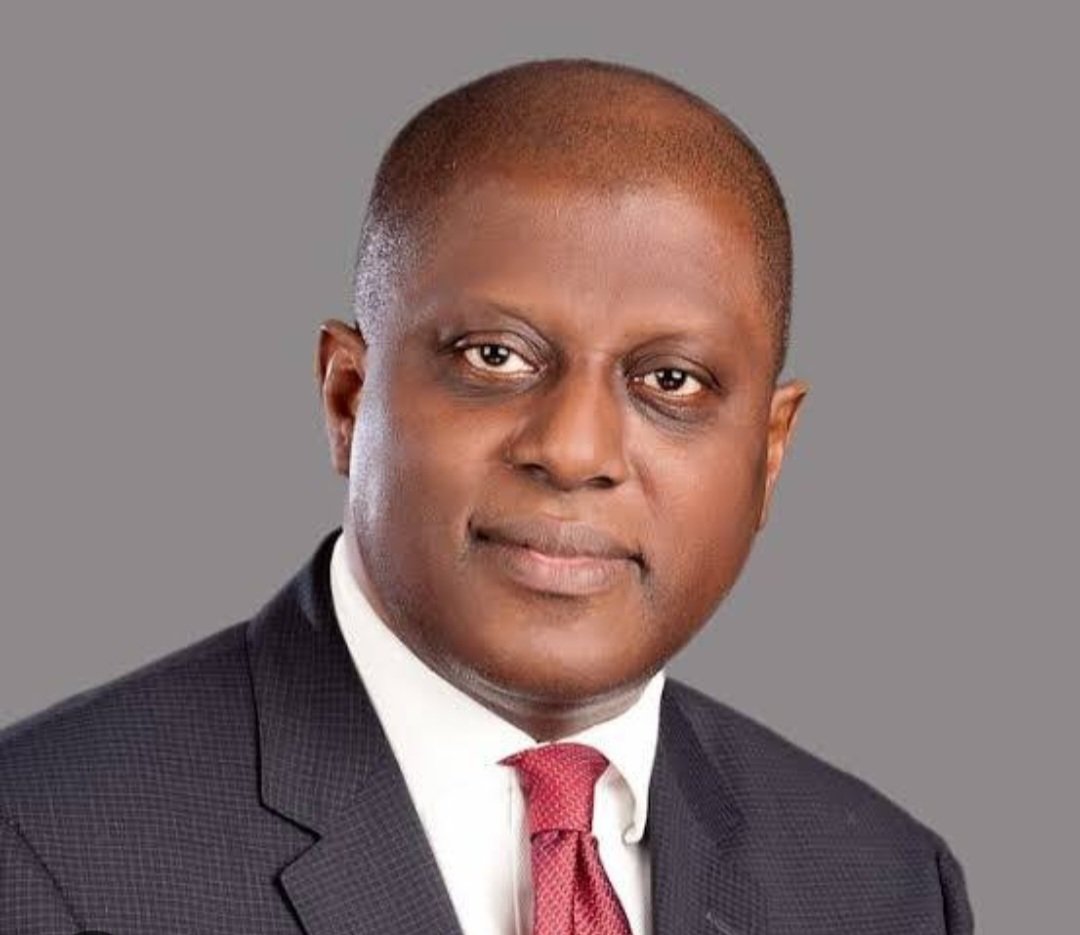
Dr. Olayemi Michael Cardoso
15/9/ 2023 – to date
12. On Friday, September 15, 2023, President Bola Tinubu approved the nomination of Dr. Olayemi Michael Cardoso as a replacement for the suspended Godwin Emefiele.
Cardoso assumed office on Friday, September 22 (acting capacity) while his nomination was approved by The Senate on September 26, 2023. Cardoso was a former commissioner in Lagos state when Tinubu was a governor.
He was also the former Chairman of the Board of Directors of CitiBank, Nigeria. Yemi Cardoso is the new Governor of CBN and the 12th CBN Governor to head the apex bank.
February 20, 2014, till June 3, 2014

Acting Governors of CBN
Sarah Alade
It’s on record that since its establishment no woman has ever headed the CBN except Mrs Sarah Alade who served in an acting capacity from February 20, 2014, till June 3, 2014, became the first woman to head CBN since 1958.
Mrs Sarah was deputy governor of the apex bank before he was appointed by former president Goodluck Jonathan after his administration sacked Alhaji Sanusi Lamido Sanusi for accusing the PDP-led government of financial misappropriation.
Mrs Sarah was in office till June 3, 2014, when a new governor was appointed.
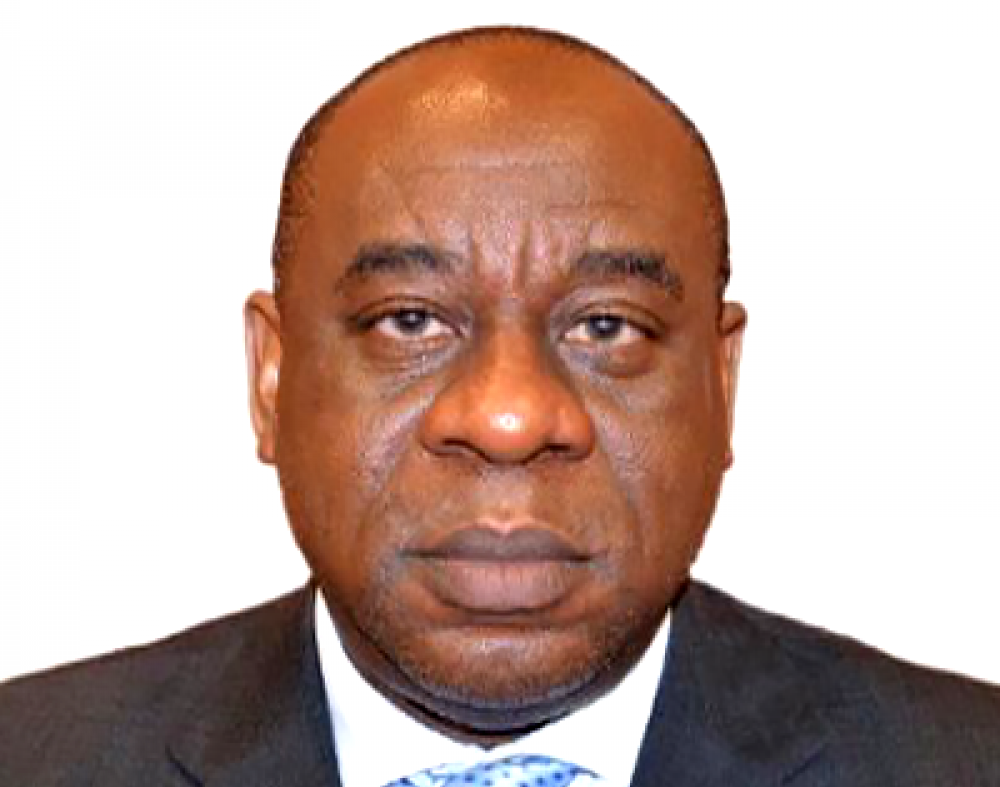
Folashodun Adebisi Shonubi
On the day Godwin Emefiele was suspended by President Bola Tinubu, Deputy Governor, Operations Directorate, Folashodun Adebisi Shonubi, was directed to take over in an acting capacity pending the conclusion of the investigation into the activities of the suspended ex-governor.


We Will Rebuild Plateau Communities, Bring Displaced Persons Home – Tinubu

FG Dismisses Viral Reports Claiming NUC Uncovered 2,000 Universities And Fake Professors

Preserve Your Frustrations And Vote Out APC In 2027, Aregbesola Tells Nigerians

Top 10 Stories From TheMatrix Newspapers, SATURDAY MORNING, OCTOBER 24, 2026
Top 10 Stories From TheMatrix Newspapers, SUNDAY MORNING, SEPTEMBER 20, 2026