- They Opened Fire On Everyone – Witness
- Explain Non-Implementation Of State’s Grazing Law – Group To Gov Alia
- We Also Have to Tell the Truth: Ndume, Gov. Zulum React
- 9 Killed, 11 Injured in Boko Haram Bomb Blast in Borno
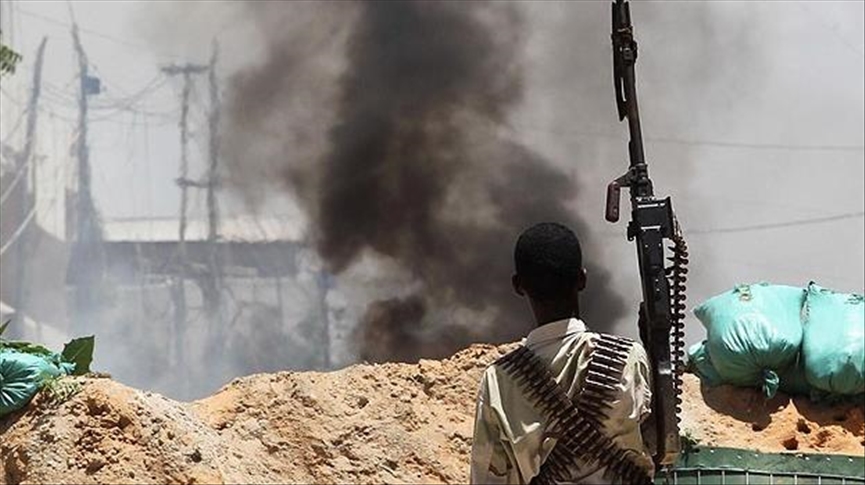
In the predawn stillness of Saturday, when the stars still hung over the quiet fields of Benue State, the peace of several rural communities was shattered by the staccato crackle of gunfire.
The villagers of Tombo Mbaya, Mbachoughu, and Mbanyagber in Buruku and Tarka Local Government Areas were jolted from sleep as armed men stormed their homes.
What followed was a nightmarish eruption of violence—houses burned, families scattered, lives lost.
From Ortese Mbaatsua to Tse Damkor, panic spread like wildfire. Mothers grabbed their children, elderly men stumbled through the dark, and entire families vanished into the thick bush, fleeing for their lives.
The lucky ones reached nearby towns with nothing but the clothes on their backs—traumatized, exhausted, and unsure of where to go next.
“We were asleep when the shooting began,” recounted one shaken resident. “They came without warning. They opened fire on everyone. They burned our homes while we ran. I don’t even know where my brother is.”
In the aftermath, scorched homes still smoldered. Charred belongings lay strewn in the dirt. The cries of the bereaved echoed faintly in the distance.
At the time of this report, at least three people were confirmed dead in the Mbasombo community of neighboring Gwer East, a grim continuation of the bloodshed that began a day earlier in Gwer West, where two more were killed.
READ MORE: Appeal Court Confirms IPOB As Terrorist Group
For the people of Benue, these tragedies are part of a pattern that has become all too familiar.
What was once rich, fertile land—home to generations of farmers—has become a battleground in a brutal conflict between armed herders and agrarian communities.
Each attack follows the same grim formula: night raids, gunfire, razed homes, mass displacements. In the morning, shallow graves are dug, survivors tally their losses, and the painful cycle resumes.
A Crisis Without End
Benue is bleeding—and it is not alone.
Across Nigeria’s north and central regions, rural communities are increasingly under siege. Banditry in the northwest, Boko Haram in the northeast, and rising separatist tensions in the southeast—all weave a web of insecurity that is tightening by the day.
In Benue, the scars are deepening. Thousands of internally displaced persons (IDPs) now fill makeshift camps. Many children are out of school. Food is growing scarce. In the absence of meaningful aid, some families are sleeping in open fields. Fear has become their daily bread.
Police spokesperson Catherine Anene confirmed the weekend’s attacks but gave no additional details beyond a brief statement: “Incident confirmed.” For the victims, that’s not enough.
“We don’t need confirmation,” said a local community elder, his face lined with weariness. “We need protection. We need to know someone will come if we scream.”
But help feels distant.
In the northeast, the conflict rages with fresh brutality. Just hours after the Benue attacks, tragedy struck again—this time on the Damboa-Maiduguri road in Borno State. A bomb planted by Boko Haram insurgents exploded, killing at least eight people and injuring several more. Vehicles were torn apart. Lives were ended in seconds.
Eyewitnesses described a scene of horror. One local, Ibn Maigana, posted online: “The road to my hometown, Damboa, has long been one of the most dangerous in Nigeria. Today, it took eight more innocent lives. This must stop.”
Senator Ali Ndume, speaking on national television, confirmed that three communities in Borno—Gudumbali, Marte, and Abadam—are now fully under Boko Haram control. “There is no civil authority in these areas,” he warned. “The authority is Boko Haram.”
Governor Babagana Zulum echoed the same concern: “Borno is losing ground.”
Between November 2024 and today, over 250 attacks have been recorded in the state.
More than 100 soldiers and nearly 300 civilians have been killed. While the military claims to have eliminated hundreds of insurgents, the reality on the ground remains grim.
READ ALSO: Tragedy As Gunmen Kill Two Chinese Expatriates, Police Escort In Uturu Ambush
Senator Ndume was blunt: “The security agencies are doing their best, but they are not well-equipped. Things are getting worse. We need a state of emergency—not just on security but on the economy and welfare. Our people are dying.”
The Human Cost
Back in Benue, the survivors of the latest attack are attempting to piece their lives back together. Many have lost everything—their homes, loved ones, livelihoods.
At an overcrowded makeshift camp, a young mother sat with her two children under a nylon sheet strung between sticks. Her husband was still missing. Her baby hadn’t eaten in over 24 hours.
“I don’t even know if my home is still standing,” she said quietly. “All I know is we ran, and we haven’t stopped running.”
The psychological toll is growing. Communities once built on trust and tradition are now suffused with suspicion and fear. Children draw pictures of men with guns.
Farmers carry more weapons than tools. Elders speak of a slow, creeping death—not of the body, but of identity, of peace, of hope.
“This isn’t just about security anymore,” the community elder said again, this time with a clenched fist. “It’s about survival.”
And so the question remains: How many more communities will be consumed before the nation truly wakes up?
How many more lives must be lost before “incident confirmed” turns into “problem solved”?
Until then, the people of Benue and countless others across Nigeria wait in fear. Their homes, now marked by the ashes of violence, stand as silent testaments to a country at war with itself.