Persons with disabilities (PWDs) who meet the minimum Unified Tertiary Matriculation Examination (UTME) scores for their selected programs are excluded from the usual post-UTME requirement, according to a directive from the Federal Government of Nigeria’s tertiary institutions.
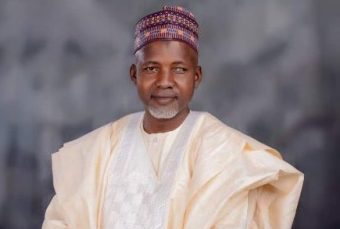
At the Joint Admissions and Matriculation Board (JAMB)-organized First Africa Regional Conference on Equal Opportunity of Access to Higher Education (ARCEAHED) in Abuja on Tuesday, Yusuf Sununu, the minister of state for education, reaffirmed the instruction.
He stated that the program showed the federal government’s commitment to equitable access to education, as did the aggressive enrolment goal of 825,000 students with disabilities over the course of the following five years.
Sununu said it was important to integrate assistive technologies and create economic opportunities tailored to PWDs’ skills and qualifications.
Read Also: FG, UK Agency Brainstorm Over Compensation Rates For Public Land Acquisition In Nigeria
“For persons with disabilities, the impediments to education are not only compounded by general societal stigmas but also by physical limitations and institutional challenges. But as we have seen in various contexts, when these barriers are removed and the right conditions are created, the potential within every individual blossom.
“Equal opportunity is a journey and never a destination. It is the collective responsibility of governments, academic institutions, the private sector, and civil society to ensure that persons with disabilities are not left behind.”
Is-haq Oluyede, registrar of JAMB, called on the Federal Government to establish a dedicated centre in all six geopolitical zones to support persons with disabilities to address the challenges they face in accessing higher education.
Read Also: FG To Earn $1.5bn Revenue From Halal By 2027
Oluyede proposed that the centre be attached to the National Commission for Persons with Disabilities and be equipped with state-of-the-art assistive technology to enhance educational access and inclusivity, making sure that no candidate is left behind due to their condition.
“Education remains the cornerstone of self-actualisation, and it is our collective responsibility to ensure that every individual, regardless of ability, has access to higher education,
“A realistic theory is the most practical way forward, I call on the Federal Government of Nigeria to establish and attach to the National Commission for Persons with Disabilities a centre for supporting services for persons with disabilities.